Labour to pay terror chief £130k for two-day workweek
The Labour government faces criticism for offering up to £130,000 annually for a part-time counter-terrorism oversight role despite Britain's severe threat level.
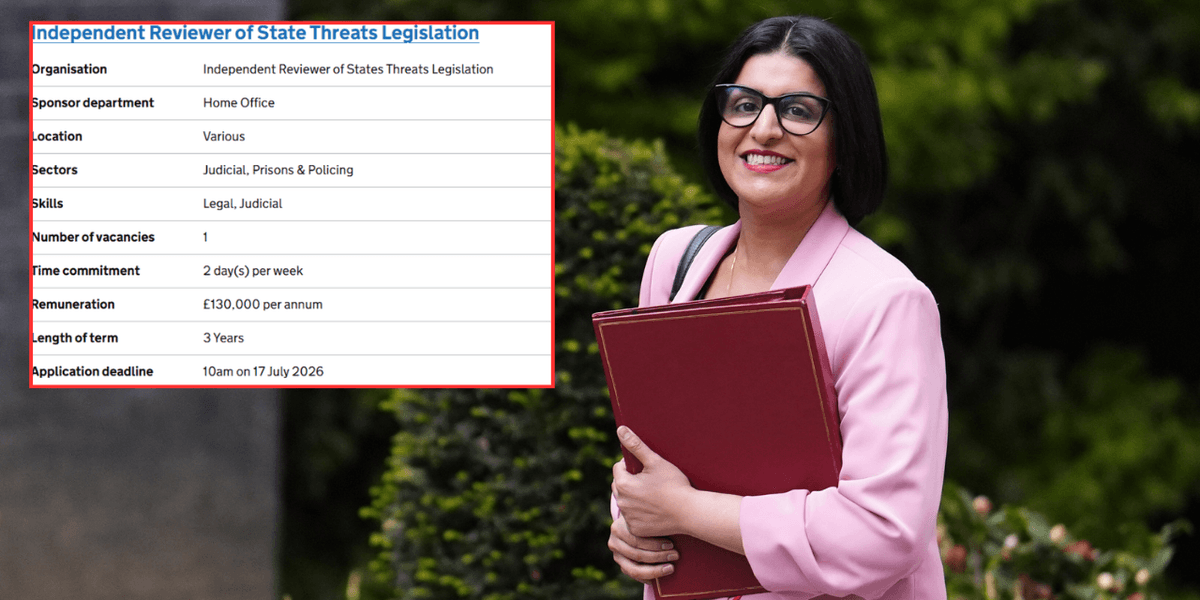

Home Secretary Shabana Mahmood is seeking to appoint a new Independent Reviewer of State Threats, according to Keith Bays writing in GB News. The position, advertised as requiring only two days of work per week, has drawn warnings from security experts that the government is sending the wrong message to hostile states.
The timing of the part-time appointment has raised eyebrows given that the Joint Terrorism Analysis Centre raised Britain’s National Threat Level from substantial to severe in May, indicating that a terrorist attack is now considered likely. The move came as illegal small boat crossings across the Channel continue at elevated levels.
The successful candidate will be tasked with reviewing the effectiveness of legislation designed to combat hostile state activity, including sabotage and foreign interference, before reporting findings to the Home Secretary. The Home Office-sponsored role pays £1,250 per day.
Based on the advertised two-day-per-week commitment, the position would generate annual earnings of approximately £130,000—more than triple the UK’s average annual salary of £39,000. Over the full three-year term, the appointee could collect nearly £400,000.
Former Superintendent and Counter Terrorism Adviser for Police Scotland Martin Gallagher delivered a scathing assessment of the arrangement. This is not a period in history for part-timers, Gallagher stated, calling instead for dedicated professionals to bring their full attention to countering new threats.
Gallagher emphasized that legislation needs continuous monitoring and development as the tactics of those intent on harming Britain become clearer. He concluded that in his expert opinion, the role should be full-time.
Terrorism and security expert Roger MacMillan echoed the criticism, arguing that the part-time appointment sends the wrong signal to hostile states at a time when Britain faces mounting security challenges.
One expert characterized the government’s approach as attempting to solve a “five-day problem” with a “two-day answer,” highlighting concerns that the limited time commitment may prove insufficient to address the scope and urgency of threats facing the nation.
The controversy adds to mounting pressure on the Labour government over its handling of national security issues, particularly as illegal migration continues and international terrorism threats remain at heightened levels.
With information from GB News