
Kocaeli Symposium: Huseinoglu’s Views and the Truth About Thrace
At the 5th International Symposium on Islamic Culture and Civilization in Kocaeli, Turkey, scholars from over 15 countries examined legal, social, and theological issues faced by Muslim minority communities worldwide.
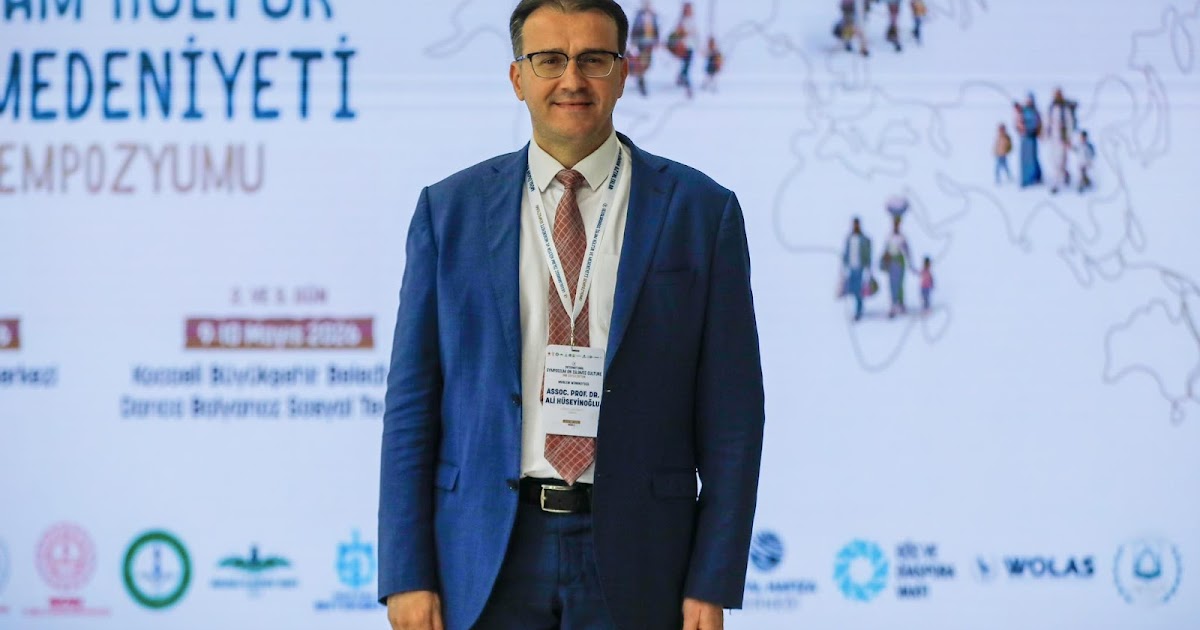

At the 5th International Symposium in Kocaeli, the Muslim Minority of Western Thrace – Hüseyinoğlu’s positions, the counterarguments, and the reality of the region
- Written by Nikos Arvanitis
With broad participation from academics, religious figures, representatives of international organizations, and researchers from more than 15 countries, the 5th International Symposium on Islamic Culture and Civilization took place in Kocaeli, Turkey, from May 8 to 10, 2026, with the central theme of “Muslim Minorities”.
The symposium was co-organized by the İHH İnsani Yardım Vakfı, Kocaeli Üniversitesi, and the university’s Faculty of Theology, in collaboration with numerous organizations, foundations, and institutions. According to the organizers, the objective of the three-day scientific meeting was to highlight the legal, social, psychological, and theological issues faced by Muslim communities living as minorities in various parts of the world.
During the proceedings, ten thematic sessions and panels were held, covering topics ranging from religious identity and international law to political representation, Islamophobia, migration, and the organizational structures of Muslim communities in the West. Participants included officials from the European Council of Fatwa and Research (Avrupa Fetva ve Araştırma Konseyi), academics from the UK, Russia, Malaysia, and the USA, as well as representatives of organizations from Kashmir, Arakan (Myanmar), Patani, and Mindanao. The opening event featured a speech by former OSCE special representative for combating Islamophobic hate crimes, Professor Bülent Şenay.
The Detailed Intervention of Ali Hüseyinoğlu
Of particular interest to our region was the second session on the second day titled “Muslim Minorities in the Contemporary World”. The keynote speaker was Associate Professor Ali Hüseyinoğlu from the Balkan Research Institute of Trakya Üniversitesi, with the topic: “The Muslim Turkish Minority of Western Thrace: The Example of Greece”.
Dr. Hüseyinoğlu, originally from Komotini, dedicated his presentation to the historical development, legal status, and contemporary religious and social challenges of the minority, structuring his argument around five main axes:
1. Historical and Legal Framework
-
Historical Depth & Expansion:
He emphasized that the Islamic presence in Greece is a very old reality compared to other European countries. The gradual expansion of the Greek state’s borders from 1830 onwards meant the incorporation of Muslim populations, for whom bilateral agreements were signed (such as the Constantinople Agreement in 1881 and the Athens Agreement in 1913), which granted some religious freedoms, albeit limited. -
The Minority’s Starting Point (1923):
He underlined that the official beginning of the presence of the Muslims of Western Thrace as an “official minority” is defined by the Treaty of Lausanne (1923). -
The Issue of Identity:
He pointed out that this is the only officially recognized minority in Greece. He noted the differentiation in terminology, stating that he himself uses the term “Muslim Turkish Minority” because the issue encompasses both religious and national dimensions, despite the fact that the Greek side in recent decades insists exclusively on the religious designation. -
Demographic Data:
He mentioned that in 1923 the minority population in Thrace was approximately 120,000, while today it is estimated around 150,000, showing a small but steady increase, in contrast to other Muslim populations (such as the Albanian Muslims of Thesprotia/Chameria), who left their homes after World War II.
2. The Issue of Muftiates (Dual Representation)
-
Absence of a Supreme Muftiate:
He explained that in Greece, unlike Bulgaria, there has never been an institution of “Chief Mufti” (Başmüftülük), as after the population exchange the small volume of the minority remaining in Thrace was adequately covered by the local Muftiates. -
The Rift of 1985/1990:
Until 1985, the selection of the Mufti was made through a list of candidates proposed by community leaders and approved by the Prefect, without problems arising. The situation changed in 1985 with the death of the then Mufti and the enactment of the 1990 law, under which the Greek state began appointing the Muftis. -
The Current Regime:
This led to a “dual-headed” regime. Today there are a total of 5 Mufti offices (two in Komotini, two in Xanthi, and one in Didymoteicho):-
The Appointed Muftis:
They are recognized as official religious leaders by the Greek state but are not recognized by the vast majority of the minority nor by Turkey. Dr. Hüseyinoğlu noted that the appointed muftis often cannot lead the prayer (serve as imams) in many mosques because people see them as “state employees.” -
The Elected Muftis:
They are elected by the minority itself, recognized by it and by Turkey, but lack any legal or administrative authority before the Greek authorities.
-
3. Management of Waqfs and Property Registry
-
Economic and Social Significance:
He emphasized that in the centers of Komotini and Xanthi there are waqf properties (real estate) worth millions of euros, the revenues of which are intended for the needs of the community. -
Appointed Committees:
From the period of the Colonels’ Junta (1967) until today, the administrations of the waqf committees are appointed by the state. The speaker criticized this regime, explaining that the appointees are accountable to the state and not to the community, resulting in serious transparency problems and unclear how much of the original property has been preserved. -
Legislative Inertia:
He mentioned that although a law was passed for the elections of waqf committees in 2008, it was never implemented in practice, which, in his opinion, demonstrates a lack of sincerity on the part of Athens.
4. Mosques, Worship, and Religious Education
-
Freedom of Worship:
He noted positively that Thrace never experienced a communist regime, therefore the mosques were never closed and the stereophonic broadcast of the Azan (call to prayer) takes place normally five times a day. There are approximately 300 active mosques in the region. -
Restrictions on Monuments & Minarets: He criticized the legislation that limits the height of new minarets (from 16 meters to 7.5 meters).
-
Ottoman Monuments Outside Thrace:
He denounced the policy of the Greek state to restore historic Ottoman mosques outside Thrace (e.g., in Kastoria, Didymoteicho) only to be used as museums or art spaces, systematically rejecting requests from the minority for even symbolic permission to pray during religious holidays. -
Downgrading of Madrasas:
He mentioned that the two remaining madrasas have lost their purely religious character and have been equated with regular schools, while the hours of Turkish language instruction have been reduced in favor of Greek.
5. Islamophobia and Hate Speech
-
As the author of the European Islamophobia Report (EIR) for Greece, he noted that although physical attacks have decreased, hate speech in the media and from far-right politicians remains intense.
-
He made particular reference to vandalism of minority cemeteries and graffiti on mosque walls (such as the well-known “A good Turk is a dead Turk”).
Presenter’s Conclusion
Dr. Hüseyinoğlu concluded by saying that the biggest problem is the complete lack of communication and cooperation between the Greek state and the minority. Athens’ mentality is summed up in the phrase: “We know your problems, we decide in Athens what will happen, and you will simply accept it in Thrace.” This unilateral policy, he said, has kept the same problems stagnant for 40-50 years.
Counterarguments and Political Reading of Hüseyinoğlu’s Intervention
However, beyond the political and ideological framework within which Ali Hüseyinoğlu’s statement moved, some obvious contradictions emerge from the very data and descriptions he provided.
He himself acknowledged that about 300 active mosques operate in Thrace, that the call to prayer (azan) is publicly heard five times a day, that the minority’s religious structures function normally, and that the region never experienced a regime banning worship, as happened in other Balkan countries under communist regimes. These same facts objectively indicate an environment of religious freedom and institutional functioning that hardly aligns with the image of “oppression” that was attempted to be presented.
At the same time, even the demographic data he cited — about the minority population increasing from approximately 120,000 in 1923 to about 150,000 today — rather function as an indication of the community’s stability and prosperity than as evidence of systematic marginalization.
It is also particularly significant that, despite the harsh rhetoric about “Islamophobia,” he was forced to admit that physical attacks have been significantly limited. The daily reality in Thrace — where Christians and Muslims have coexisted for decades in a stable social environment without religious conflicts or violence — reflects a model of coexistence that is difficult to compare with other areas of Europe or the Middle East.
References to “systematic hate speech” and “Islamophobia” appeared more as political and ideological constructs adapted to the symposium’s international audience than as a description of the real daily life in Thrace. In several parts of his speech, Ali Hüseyinoğlu’s argumentation seemed to follow the well-known line consistently promoted by Ankara regarding the Western Thrace minority, attempting to shift the issue from the field of religious protection to that of national and geopolitical confrontation.
Nevertheless, even within this rhetoric, it was not possible to conceal the reality experienced daily in Thrace: a region where the minority has dozens of institutions, active religious life, education, political representation, and full participation in social and economic activity, within a framework of peaceful coexistence that has been one of the region’s most stable characteristics over time.
Editor’s Comment
The presentation of the Western Thrace issue at international symposia in Turkey usually follows a predetermined trajectory aimed at internationalizing Ankara’s claims and portraying Greece as a country that suppresses religious freedoms. However, the very argumentation of Mr. Hüseyinoğlu contains elements that refute this. When a speaker admits the operation of 300 mosques, the free public broadcast of the azan, and the demographic increase of the community, he essentially describes a privileged regime compared to real minorities worldwide (e.g., Arakan, Kashmir) that the same conference supposedly examined. Thrace constitutes a European acquis of peaceful coexistence, and any administrative or institutional pending issues are resolved within the Greek and European legal framework, far from geopolitical agendas and external definitions.
Source: TAXIARHISpress





