Necessary Cookies

Required for the site to function. Cannot be disabled.

Analytics Cookies

Help us understand how visitors interact with our site (Google Analytics via GTM).

Marketing Cookies

Used to track visitors and deliver personalised advertisements.

We use cookies to enhance your browsing experience and analyse site traffic. By clicking Accept All, you consent to our use of cookies. Privacy Policy
NewsFire Global
Home News Europe World Christianity Culture Wars Opinion Video
Information
About Us Authors Advertising Terms & Conditions Privacy Policy Contact
R2B Media
R2B NEWSFIRE.GR PAPAFOTIS.GR THRACTION HELLENIC CONSERVATIVES RIGHT2THEBONE YT
News Culture Wars

Kelsey Grammer slams ‘exhausting’ revisionist history in films

Kelsey Grammer says Hollywood is learning audiences reject agenda-driven content after financial failures like Disney's "Snow White" remake lost approximately $170 million.
Stefanos Banos
Stefanos Banos Staff Writer
JULY 28, 2026 AT 7:56 AM

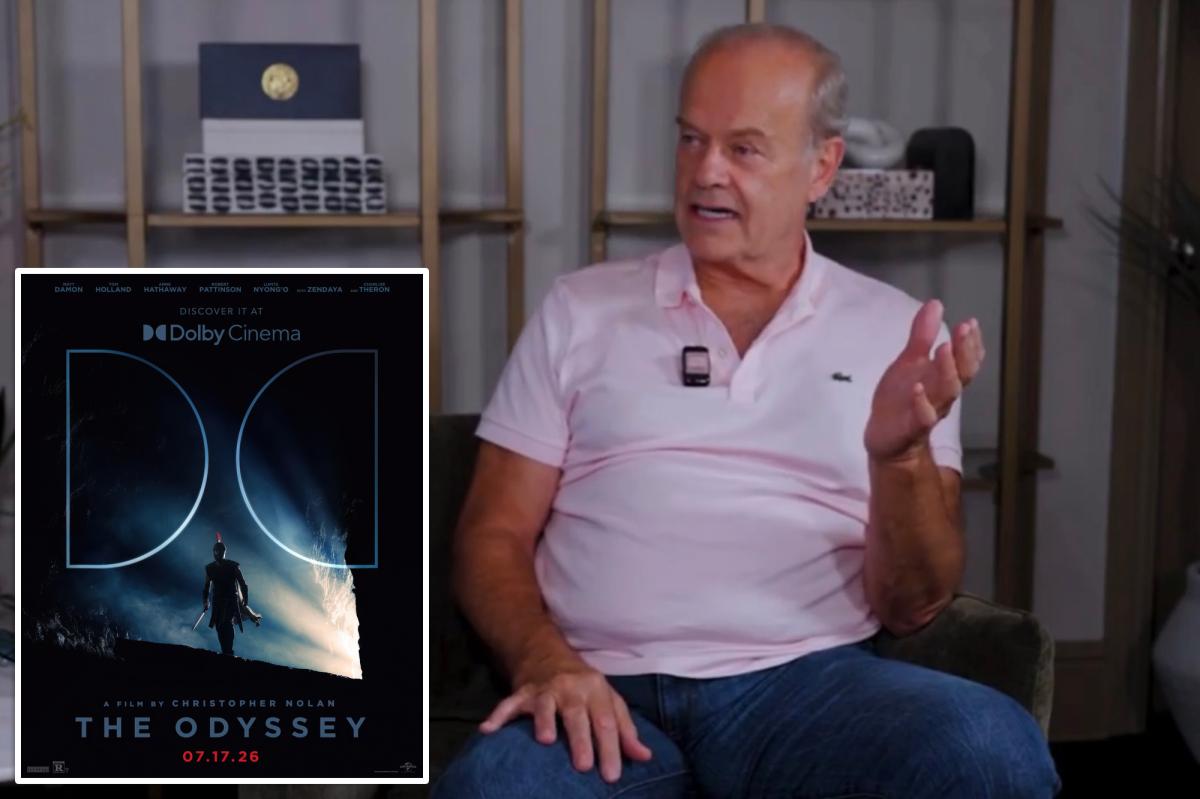
Hollywood veteran Kelsey Grammer has delivered a pointed critique of the entertainment industry’s ongoing obsession with reimagining classic stories through a progressive lens, warning that studios are finally learning the hard way that audiences reject their agenda-driven content.

The “Frasier” star appeared on “The Katie Miller Podcast” where he discussed the film industry’s consistent failure to respect historical and cultural authenticity in recent productions, according to New York Post.

Katie Miller, whose husband Stephen Miller serves as White House deputy chief of staff for policy, raised the issue of Hollywood’s compulsive need to remake classics with modern political sensibilities distorting the original works.

While Grammer admitted he hasn’t watched Christopher Nolan’s recent “The Odyssey” adaptation, he acknowledged that much of today’s entertainment has become overtly preachy to the point where it’s a little exhausting, as he put it.

The actor made a common-sense observation about historical accuracy that would have been uncontroversial just a decade ago: old England was predominantly populated by White people, and studios should show more respect for historical reality rather than impose contemporary diversity mandates on the past.

The Box Office Speaks

When Miller asked whether Hollywood would ever return to respecting source material and historical truth, Grammer pointed to the most powerful force in the entertainment business: financial failure.

Hollywood struggles to force audiences to consume content they don’t want, he noted, because those projects inevitably flop at the box office.

The evidence supports his assessment. Disney’s live-action “Snow White” remake reportedly lost the company approximately $170 million. The string of commercial disasters has been so severe that Pixar has begun reversing course on LGBTQ content and warned its creators against making films that amount to personal therapy sessions rather than entertainment.

Pete Docter, Pixar’s Chief Creative Officer, told The Wall Street Journal the studio needed to change direction because they’re in the business of making movies, not funding hundreds of millions of dollars worth of therapy.

Culture War Battleground

The backlash against ideologically-driven remakes spans multiple productions in recent years. Disney’s “The Little Mermaid,” the controversial “Cleopatra” series, and various other adaptations have all faced criticism for prioritizing political messaging over storytelling and historical authenticity.

Nolan’s “The Odyssey” has drawn particular scrutiny for its creative liberties with Homer’s epic. Critics have accused the film of using anachronistic modern American dialogue, transforming the heroic Odysseus into a trauma-focused character more suited to contemporary therapeutic culture, and stripping away mythological elements central to the original work.

Even Emily Wilson, whose feminist translation of “The Odyssey” influenced the film’s approach, criticized Nolan’s version for failing to capture the spirit of the source material.

Despite the creative controversy, Nolan’s film has managed commercial success, though audiences and critics remain sharply divided on whether the changes enhanced or diminished Homer’s timeless story.

Grammer expressed cautious optimism that Hollywood would eventually learn from its failures. Continuous box office disasters simply aren’t sustainable, he suggested, though he questioned whether some adaptations have strayed so far from their source material that they’ve lost connection with the original stories entirely.

The full interview will be available Tuesday evening on the podcast’s YouTube channel.

With information from New York Post

Share:
Stefanos Banos
Stefanos Banos

Stefanos Banos was born in Piraeus and is an editor at NewsFire.GR, specializing in political analysis and international relations. He graduated from the Department of Communication and Media at the University of Bremen in Germany, where he also completed his Master of Arts in Communication and Media Studies. Married to Zoi, he is a proud father of three boys.

Recent News

Hollywood veteran Kelsey Grammer has delivered a pointed critique of the entertainment industry’s ongoing obsession with reimagining classic stories through a progressive lens, warning that studios are finally learning the hard way that audiences reject their agenda-driven content.

The “Frasier” star appeared on “The Katie Miller Podcast” where he discussed the film industry’s consistent failure to respect historical and cultural authenticity in recent productions, according to New York Post.

Katie Miller, whose husband Stephen Miller serves as White House deputy chief of staff for policy, raised the issue of Hollywood’s compulsive need to remake classics with modern political sensibilities distorting the original works.

While Grammer admitted he hasn’t watched Christopher Nolan’s recent “The Odyssey” adaptation, he acknowledged that much of today’s entertainment has become overtly preachy to the point where it’s a little exhausting, as he put it.

The actor made a common-sense observation about historical accuracy that would have been uncontroversial just a decade ago: old England was predominantly populated by White people, and studios should show more respect for historical reality rather than impose contemporary diversity mandates on the past.

The Box Office Speaks

When Miller asked whether Hollywood would ever return to respecting source material and historical truth, Grammer pointed to the most powerful force in the entertainment business: financial failure.

Hollywood struggles to force audiences to consume content they don’t want, he noted, because those projects inevitably flop at the box office.

The evidence supports his assessment. Disney’s live-action “Snow White” remake reportedly lost the company approximately $170 million. The string of commercial disasters has been so severe that Pixar has begun reversing course on LGBTQ content and warned its creators against making films that amount to personal therapy sessions rather than entertainment.

Pete Docter, Pixar’s Chief Creative Officer, told The Wall Street Journal the studio needed to change direction because they’re in the business of making movies, not funding hundreds of millions of dollars worth of therapy.

Culture War Battleground

The backlash against ideologically-driven remakes spans multiple productions in recent years. Disney’s “The Little Mermaid,” the controversial “Cleopatra” series, and various other adaptations have all faced criticism for prioritizing political messaging over storytelling and historical authenticity.

Nolan’s “The Odyssey” has drawn particular scrutiny for its creative liberties with Homer’s epic. Critics have accused the film of using anachronistic modern American dialogue, transforming the heroic Odysseus into a trauma-focused character more suited to contemporary therapeutic culture, and stripping away mythological elements central to the original work.

Even Emily Wilson, whose feminist translation of “The Odyssey” influenced the film’s approach, criticized Nolan’s version for failing to capture the spirit of the source material.

Despite the creative controversy, Nolan’s film has managed commercial success, though audiences and critics remain sharply divided on whether the changes enhanced or diminished Homer’s timeless story.

Grammer expressed cautious optimism that Hollywood would eventually learn from its failures. Continuous box office disasters simply aren’t sustainable, he suggested, though he questioned whether some adaptations have strayed so far from their source material that they’ve lost connection with the original stories entirely.

The full interview will be available Tuesday evening on the podcast’s YouTube channel.

With information from New York Post