Kelin’s Exit Planned Before Drone Row Moscow Cites
Russia's ambassador to the UK announced his departure internally on June 11, more than two months before the August drone strikes that Western media cited as the reason for his exit.
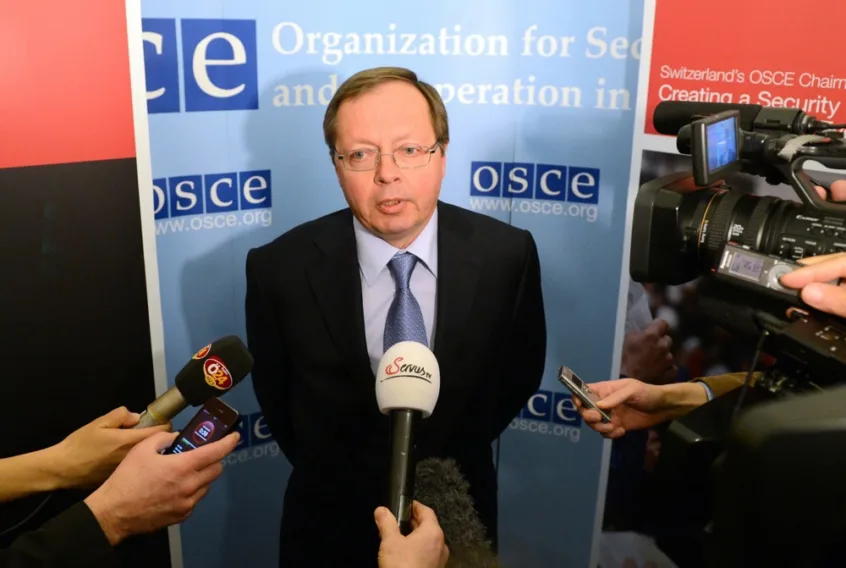

According to Brussels Signal, Andrey Kelin announced his departure internally during a Russia Day reception at the embassy on June 11, though no public statement was issued at the time. He formally concluded his mission on July 21 after nearly seven years in the position.
The timeline matters because Ukrainian forces did not deploy British-made long-range drones against Russian oil refineries in Volgograd and Yaroslavl until August 16. The embassy issued its warning about consequences for London the next day. That means Kelin’s exit had been settled well before either the strikes or Moscow’s public response, undermining the narrative that the vacancy represents retaliation for British arms shipments to Kyiv.
Age and Succession Planning
Kelin will turn 70 in May 2027, and retirement appears a more plausible explanation. Foreign Minister Sergei Lavrov himself is 76, and there has been speculation about Kelin receiving a seat in Russia’s Federation Council as part of his transition out of active diplomatic service.
His temporary replacement, chargé d’affaires Vasily Tsyganov, is 49 and previously worked as deputy director of the Russian foreign ministry’s Department of Pan-European Cooperation, a role Kelin once held. Observers have questioned whether Tsyganov has the experience required for a posting as sensitive as London.
A Pattern Across Europe
Moscow has left senior diplomatic posts unfilled elsewhere on the continent. Its permanent mission to the European Union has operated under an acting representative since Vladimir Chizhov departed Brussels in September 2022. The ambassadorship in Vilnius has remained vacant since Russia and Lithuania downgraded relations. Yet Moscow did appoint a new ambassador to Belgium in July 2025, suggesting selectivity rather than blanket disengagement.
Gaps between ambassadors are not without precedent. Around two months elapsed between Alexander Yakovenko leaving and Kelin arriving in 2019, as Brussels Signal reports.
John Foreman, a former British defence attaché in Moscow and Kyiv, noted that such intervals were not unusual historically, though the sharp deterioration in relations since 2018 left him wondering whether Moscow might choose to permanently downgrade the relationship this time.
The embassy in London has dismissed that interpretation, stating that such conclusions belong solely to the author while insisting that relations have fallen to an unprecedented low due to Britain’s own actions.
London Stands Firm on Kyiv
Britain has continued to deepen its support for Ukraine. Prime Minister Andy Burnham co-chaired the Coalition of the Willing on Ukrainian Independence Day, August 24, signaling no retreat from London’s commitment to Kyiv despite Moscow’s warnings.
With information from Brussels Signal