Necessary Cookies

Required for the site to function. Cannot be disabled.

Analytics Cookies

Help us understand how visitors interact with our site (Google Analytics via GTM).

Marketing Cookies

Used to track visitors and deliver personalised advertisements.

We use cookies to enhance your browsing experience and analyse site traffic. By clicking Accept All, you consent to our use of cookies. Privacy Policy
NewsFire Global
Home News Europe World Christianity Culture Wars Opinion Video
Information
About Us Authors Advertising Terms & Conditions Privacy Policy Contact
R2B Media
R2B NEWSFIRE.GR PAPAFOTIS.GR THRACTION HELLENIC CONSERVATIVES RIGHT2THEBONE YT
News Europe

ISIS Fighter Demands Expulsion to Algeria, France Refuses to Let Him Go

A former Islamic State fighter who renounced his French citizenship wants to leave France but cannot be deported because Algeria has not issued the required consular pass.

Dimitris Papafotis
Dimitris Papafotis Editor in Chief
AUGUST 14, 2026 AT 3:17 PM

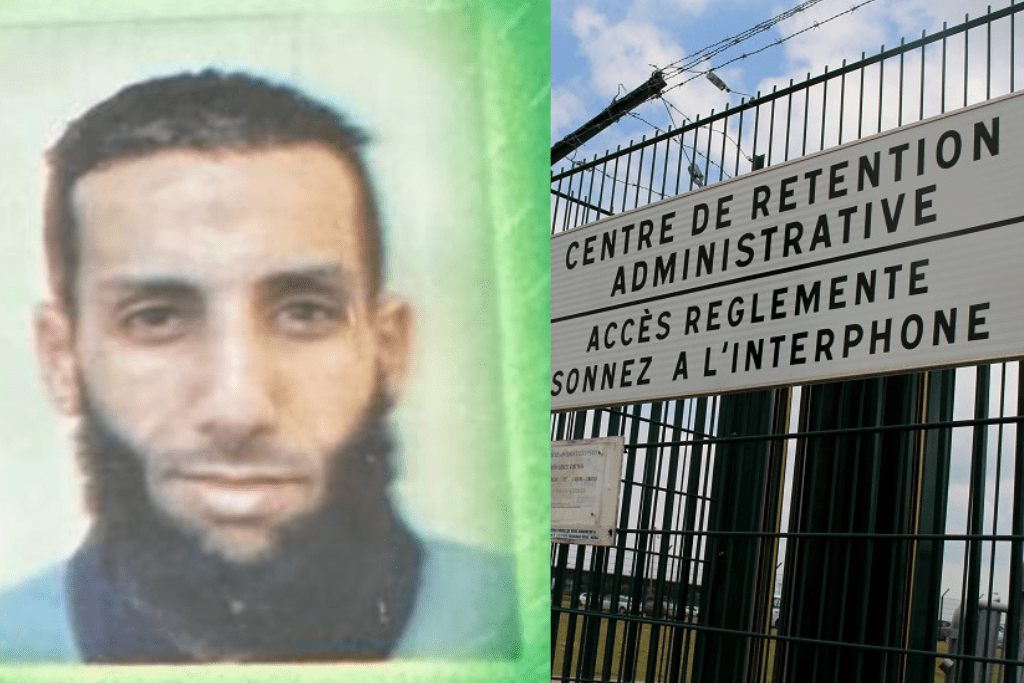
Tewffik Bouallag, an Algerian national born in Dreux in 1983, served with the Islamic State between 2013 and 2014 as part of the Katiba Al-Bittar unit, a formation notorious for its large French-speaking contingent. After serving a twelve-year criminal sentence, he was released from prison on April 10th, according to Valeurs Actuelles.

Now in irregular status, Bouallag has been held in an administrative detention center awaiting expulsion to Algeria. The twist: he is actively requesting deportation and wants it carried out as quickly as possible. However, the process has stalled because Algerian authorities have not issued the required consular pass.

Renounced French Nationality From Prison

This is not Bouallag’s first encounter with French bureaucratic procedures. Until November 2024, he held dual Franco-Algerian nationality. At his own request, a ministerial decree officially released him from his “bonds of allegiance” to France, using the official terminology.

While detained at the Saint-Maur central prison in Indre, he supported his application with a letter to the prefecture stating: “I have never felt French and I never will be.”

Speaking to Valeurs Actuelles, Bouallag described facing numerous obstacles during that procedure. He said he was forced to persistently contact the Châteauroux prefecture because officials were unfamiliar with such requests and suggested they may have viewed it as provocation.

Administrative Chaos Blocks Departure

Regarding his current situation, Bouallag claims he contacted administrative services repeatedly well before his prison release, anticipating the necessary procedures. He criticizes what he describes as administrative unpreparedness, saying authorities only began acting four months before his release.

A first request for a consular pass was reportedly filed on March 2nd, and a voluntary departure procedure was signed on July 1st. Algeria has yet to respond, creating a bureaucratic impasse of uncertain duration.

Romain Ruiz, Bouallag’s attorney, defended his client to Valeurs Actuelles by emphasizing the consistency of his approach and highlighting the unusual nature of the case, which “challenges administrative logic.” The lawyer regrets the automatic nature of the deportation order, explaining that without it, his client would have already left France voluntarily.

Due to his administrative detention, Bouallag reportedly missed an appointment at the Algerian consulate where he was to process his passport application. He told Valeurs Actuelles that a second appointment has been scheduled for August 19th at the Algerian Consulate in Nanterre, adding that he must handle the procedures himself since French authorities are doing nothing, as usual.

Diplomatic Tensions Complicate Case

The attorney noted that this singular case unfolds against particularly deteriorated diplomatic relations between France and Algeria. He placed responsibility on former Interior Minister Bruno Retailleau and criticized what he called an “inconsistent and ineffective policy,” overlooking the prior blockages that led the current presidential contender to adopt a hardline stance with Algiers.

Ruiz outlined two possible outcomes: either Algerian authorities resume issuing travel passes, or France persists and detains Bouallag for nearly a year. The maximum detention period in administrative centers is 90 days but can be extended to 180 or even 210 days for individuals convicted of terrorism-related offenses.

Unrepentant Terrorist Could Soon Walk Free

If the removal order is not executed by then and he is not placed under residential assignment, Bouallag could soon find himself free on French soil. This prospect raises serious concerns given his complete ideological break with the nation.

The former jihadist stated: “I am not a repentant, I am not a deserter, I have never regretted the acts,” before reaffirming his unconditional allegiance to ISIS.

In what may be another provocation, the terrorist claims to have warned authorities of the risk they are taking by keeping him on French territory. He says he declared before a judge: “Leave me in France and you take responsibility. Don’t cry when there’s an incident.”

The case exposes a glaring contradiction in French administrative practice: while thousands subject to deportation orders remain in France indefinitely without enforcement, an Islamic State veteran who genuinely wants to leave cannot do so because the same dysfunctional system has trapped him in bureaucratic limbo.

With information from Valeurs Actuelles

Share:
Dimitris Papafotis
Dimitris Papafotis

Dimitris Papafotis is the editor-in-chief of NewsFire.GR. He was born and raised in Athens. He studied at the Journalism Workshop (1991-1993). He currently lives in Pyrgos, Ilia, where he has been active in radio and various newspapers, while also maintaining his personal blog, Papafotis.gr.

Tewffik Bouallag, an Algerian national born in Dreux in 1983, served with the Islamic State between 2013 and 2014 as part of the Katiba Al-Bittar unit, a formation notorious for its large French-speaking contingent. After serving a twelve-year criminal sentence, he was released from prison on April 10th, according to Valeurs Actuelles.

Now in irregular status, Bouallag has been held in an administrative detention center awaiting expulsion to Algeria. The twist: he is actively requesting deportation and wants it carried out as quickly as possible. However, the process has stalled because Algerian authorities have not issued the required consular pass.

Renounced French Nationality From Prison

This is not Bouallag’s first encounter with French bureaucratic procedures. Until November 2024, he held dual Franco-Algerian nationality. At his own request, a ministerial decree officially released him from his “bonds of allegiance” to France, using the official terminology.

While detained at the Saint-Maur central prison in Indre, he supported his application with a letter to the prefecture stating: “I have never felt French and I never will be.”

Speaking to Valeurs Actuelles, Bouallag described facing numerous obstacles during that procedure. He said he was forced to persistently contact the Châteauroux prefecture because officials were unfamiliar with such requests and suggested they may have viewed it as provocation.

Administrative Chaos Blocks Departure

Regarding his current situation, Bouallag claims he contacted administrative services repeatedly well before his prison release, anticipating the necessary procedures. He criticizes what he describes as administrative unpreparedness, saying authorities only began acting four months before his release.

A first request for a consular pass was reportedly filed on March 2nd, and a voluntary departure procedure was signed on July 1st. Algeria has yet to respond, creating a bureaucratic impasse of uncertain duration.

Romain Ruiz, Bouallag’s attorney, defended his client to Valeurs Actuelles by emphasizing the consistency of his approach and highlighting the unusual nature of the case, which “challenges administrative logic.” The lawyer regrets the automatic nature of the deportation order, explaining that without it, his client would have already left France voluntarily.

Due to his administrative detention, Bouallag reportedly missed an appointment at the Algerian consulate where he was to process his passport application. He told Valeurs Actuelles that a second appointment has been scheduled for August 19th at the Algerian Consulate in Nanterre, adding that he must handle the procedures himself since French authorities are doing nothing, as usual.

Diplomatic Tensions Complicate Case

The attorney noted that this singular case unfolds against particularly deteriorated diplomatic relations between France and Algeria. He placed responsibility on former Interior Minister Bruno Retailleau and criticized what he called an “inconsistent and ineffective policy,” overlooking the prior blockages that led the current presidential contender to adopt a hardline stance with Algiers.

Ruiz outlined two possible outcomes: either Algerian authorities resume issuing travel passes, or France persists and detains Bouallag for nearly a year. The maximum detention period in administrative centers is 90 days but can be extended to 180 or even 210 days for individuals convicted of terrorism-related offenses.

Unrepentant Terrorist Could Soon Walk Free

If the removal order is not executed by then and he is not placed under residential assignment, Bouallag could soon find himself free on French soil. This prospect raises serious concerns given his complete ideological break with the nation.

The former jihadist stated: “I am not a repentant, I am not a deserter, I have never regretted the acts,” before reaffirming his unconditional allegiance to ISIS.

In what may be another provocation, the terrorist claims to have warned authorities of the risk they are taking by keeping him on French territory. He says he declared before a judge: “Leave me in France and you take responsibility. Don’t cry when there’s an incident.”

The case exposes a glaring contradiction in French administrative practice: while thousands subject to deportation orders remain in France indefinitely without enforcement, an Islamic State veteran who genuinely wants to leave cannot do so because the same dysfunctional system has trapped him in bureaucratic limbo.

With information from Valeurs Actuelles

