Necessary Cookies

Required for the site to function. Cannot be disabled.

Analytics Cookies

Help us understand how visitors interact with our site (Google Analytics via GTM).

Marketing Cookies

Used to track visitors and deliver personalised advertisements.

We use cookies to enhance your browsing experience and analyse site traffic. By clicking Accept All, you consent to our use of cookies. Privacy Policy
NewsFire Global
Home News Europe World Christianity Culture Wars Opinion Video
Information
About Us Authors Advertising Terms & Conditions Privacy Policy Contact
R2B Media
R2B NEWSFIRE.GR PAPAFOTIS.GR THRACTION HELLENIC CONSERVATIVES RIGHT2THEBONE YT
News World

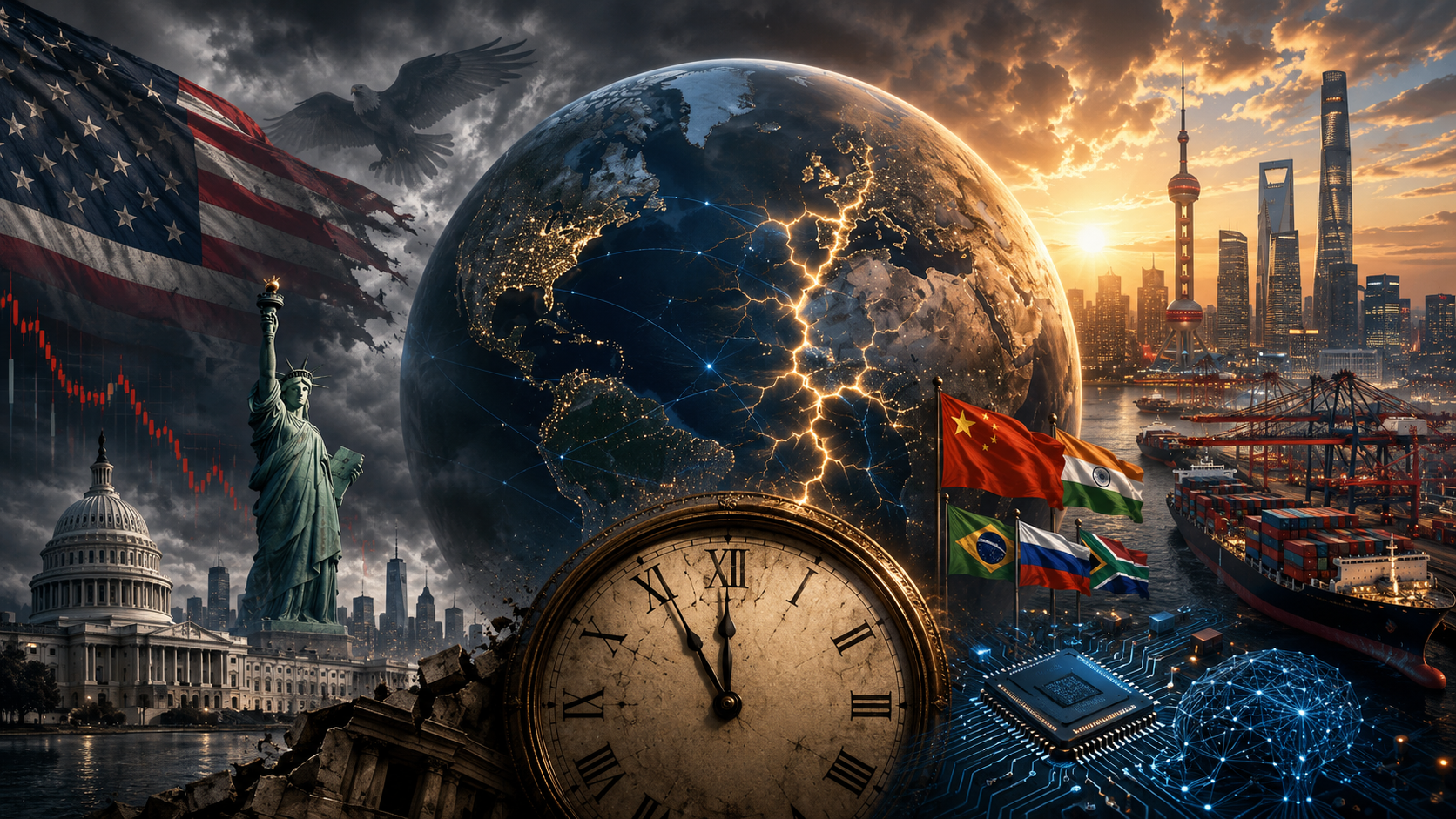
Is the American Century Coming to an End?

European commentators have renewed predictions of American decline that mirror identical warnings made for decades, substituting current figures for past ones without accounting for historical inaccuracy.

Newsroom
Newsroom Staff Writer
JUNE 19, 2026 AT 3:25 PM Updated: Jun 19, 2026 4:20 PM

Reports predicting the demise of American power have become a recurring theme in European commentary, yet history suggests such declarations deserve scrutiny rather than acceptance, particularly as the United States prepares to mark its 250th anniversary this Fourth of July.

According to Brussels Signal, commentators across Europe have once again settled into familiar warnings that American democracy faces its final hours, institutions are collapsing, and China stands ready to claim global leadership. The problem is that this narrative has been recycled repeatedly over recent decades with minimal variation.

Ralph Schoellhammer, writing for Brussels Signal, points out that these same arguments could have run virtually unchanged twenty years ago by simply replacing Donald Trump’s name with George W. Bush. Go back to the late 1970s and substitute China with Japan, and the doomsaying remains identical, warning how the Island of the Rising Sun would overtake America.

The genre has produced some particularly misguided predictions. Jeremy Rifkin claimed in 2004 that Europe’s vision was quietly eclipsing the American Dream. Analyst Parag Khanna announced in 2009 that the EU had become the world’s first metrosexual superpower, poised to strut past the bumbling United States on the catwalk of global diplomacy. John Kampfner published a 2020 book titled “Why the Germans Do It Better: Notes from a Grown-Up Country,” a claim that looks absurd given Germany’s self-inflicted energy crisis and migration disaster.

The announced end of the American republic ranks among the oldest recurring narratives in Western journalism. While that does not guarantee it can never materialize, it does demand that those making such predictions explain why circumstances have fundamentally changed.

Consolidation Rather Than Retreat

What has genuinely ended is the unipolar moment of the 1990s, when Washington expected the final word in every corner of the globe. That world will not return, but whether this represents decline depends entirely on what metrics matter most.

Within its own hemisphere, American influence appears far more likely to expand than contract in coming decades, as Brussels Signal reports. What is emerging resembles less a retreat than a consolidation: a fortress encompassing not just the United States of America but the United States of the Americas, stretching from Alaska to the southern tip of Latin America.

This raises an uncomfortable question for Europe, Australia and New Zealand that most prefer to avoid: Will they participate as partners in this American order, or merely exist as appendages to it?

McKinley and American Strategy

Trump’s foreign policy routinely gets dismissed as erratic and unpredictable, but the record suggests otherwise for those paying attention. Consider the president he has selected as his historical model: During his inaugural address, Trump announced he would restore the name of Mount McKinley and praised the 25th president as a man who made the country wealthy through tariffs and talent.

William McKinley was no isolationist. He served as president during the Spanish-American War of 1898, under whose leadership the United States annexed Hawaii and acquired the Philippines, Puerto Rico and Guam. McKinley transformed the republic into an overseas empire. A politician who reaches back past a century of predecessors to McKinley is not dreaming of retreat and isolationism.

America First never meant America Alone. While the Trump administration has rejected America’s role as a global development agency financed by US taxpayers, it has never embraced complete disengagement from the world. On Iran, Trump has advocated a harder line for roughly four decades, long before holding any office.

Strategic Dependencies Prevent Withdrawal

The United States could not withdraw from the world even if it wanted to. It depends on imported rare earths and semiconductor supply chains it does not fully control. Hence the renewed American interest in the chokepoints of global commerce: the Panama Canal, the Suez Canal, and the Strait of Hormuz, whose vulnerability the recent Gulf crisis demonstrated daily.

That crisis also serves as a caution against premature verdicts. The pattern of American strategy shows continuity running back through 1945 to the first Roosevelt, who served as McKinley’s vice president. A single defeat does not decide the fate of a great power, as Brussels Signal notes.

The question is not whether American power is ending, but rather what form it will take in the decades ahead. European commentators would serve their audiences better by preparing for a consolidated American hemisphere than by recycling decades-old predictions of American collapse that have consistently failed to materialize.

With information from Brussels Signal

Share:
Newsroom
Newsroom

NewsFire.GR is a website created with the hope that the media will rediscover their true identity, which is none other than informing the public about the real stakes of our times. Journalism and political analysis must hold power accountable, not serve it.

Reports predicting the demise of American power have become a recurring theme in European commentary, yet history suggests such declarations deserve scrutiny rather than acceptance, particularly as the United States prepares to mark its 250th anniversary this Fourth of July.

According to Brussels Signal, commentators across Europe have once again settled into familiar warnings that American democracy faces its final hours, institutions are collapsing, and China stands ready to claim global leadership. The problem is that this narrative has been recycled repeatedly over recent decades with minimal variation.

Ralph Schoellhammer, writing for Brussels Signal, points out that these same arguments could have run virtually unchanged twenty years ago by simply replacing Donald Trump’s name with George W. Bush. Go back to the late 1970s and substitute China with Japan, and the doomsaying remains identical, warning how the Island of the Rising Sun would overtake America.

The genre has produced some particularly misguided predictions. Jeremy Rifkin claimed in 2004 that Europe’s vision was quietly eclipsing the American Dream. Analyst Parag Khanna announced in 2009 that the EU had become the world’s first metrosexual superpower, poised to strut past the bumbling United States on the catwalk of global diplomacy. John Kampfner published a 2020 book titled “Why the Germans Do It Better: Notes from a Grown-Up Country,” a claim that looks absurd given Germany’s self-inflicted energy crisis and migration disaster.

The announced end of the American republic ranks among the oldest recurring narratives in Western journalism. While that does not guarantee it can never materialize, it does demand that those making such predictions explain why circumstances have fundamentally changed.

Consolidation Rather Than Retreat

What has genuinely ended is the unipolar moment of the 1990s, when Washington expected the final word in every corner of the globe. That world will not return, but whether this represents decline depends entirely on what metrics matter most.

Within its own hemisphere, American influence appears far more likely to expand than contract in coming decades, as Brussels Signal reports. What is emerging resembles less a retreat than a consolidation: a fortress encompassing not just the United States of America but the United States of the Americas, stretching from Alaska to the southern tip of Latin America.

This raises an uncomfortable question for Europe, Australia and New Zealand that most prefer to avoid: Will they participate as partners in this American order, or merely exist as appendages to it?

McKinley and American Strategy

Trump’s foreign policy routinely gets dismissed as erratic and unpredictable, but the record suggests otherwise for those paying attention. Consider the president he has selected as his historical model: During his inaugural address, Trump announced he would restore the name of Mount McKinley and praised the 25th president as a man who made the country wealthy through tariffs and talent.

William McKinley was no isolationist. He served as president during the Spanish-American War of 1898, under whose leadership the United States annexed Hawaii and acquired the Philippines, Puerto Rico and Guam. McKinley transformed the republic into an overseas empire. A politician who reaches back past a century of predecessors to McKinley is not dreaming of retreat and isolationism.

America First never meant America Alone. While the Trump administration has rejected America’s role as a global development agency financed by US taxpayers, it has never embraced complete disengagement from the world. On Iran, Trump has advocated a harder line for roughly four decades, long before holding any office.

Strategic Dependencies Prevent Withdrawal

The United States could not withdraw from the world even if it wanted to. It depends on imported rare earths and semiconductor supply chains it does not fully control. Hence the renewed American interest in the chokepoints of global commerce: the Panama Canal, the Suez Canal, and the Strait of Hormuz, whose vulnerability the recent Gulf crisis demonstrated daily.

That crisis also serves as a caution against premature verdicts. The pattern of American strategy shows continuity running back through 1945 to the first Roosevelt, who served as McKinley’s vice president. A single defeat does not decide the fate of a great power, as Brussels Signal notes.

The question is not whether American power is ending, but rather what form it will take in the decades ahead. European commentators would serve their audiences better by preparing for a consolidated American hemisphere than by recycling decades-old predictions of American collapse that have consistently failed to materialize.

With information from Brussels Signal

