Necessary Cookies

Required for the site to function. Cannot be disabled.

Analytics Cookies

Help us understand how visitors interact with our site (Google Analytics via GTM).

Marketing Cookies

Used to track visitors and deliver personalised advertisements.

We use cookies to enhance your browsing experience and analyse site traffic. By clicking Accept All, you consent to our use of cookies. Privacy Policy
NewsFire Global
Home News Europe World Christianity Culture Wars Opinion Video
Information
About Us Authors Advertising Terms & Conditions Privacy Policy Contact
R2B Media
R2B NEWSFIRE.GR PAPAFOTIS.GR THRACTION HELLENIC CONSERVATIVES RIGHT2THEBONE YT
News Europe

Interior Ministers Conference Prepares for First AfD Colleague

Germany's interior ministers are planning to exclude potential AfD regional governments from national security networks as the party leads polls before fall state elections.

Dimitris Papafotis
Dimitris Papafotis Editor in Chief
JUNE 19, 2026 AT 5:25 AM

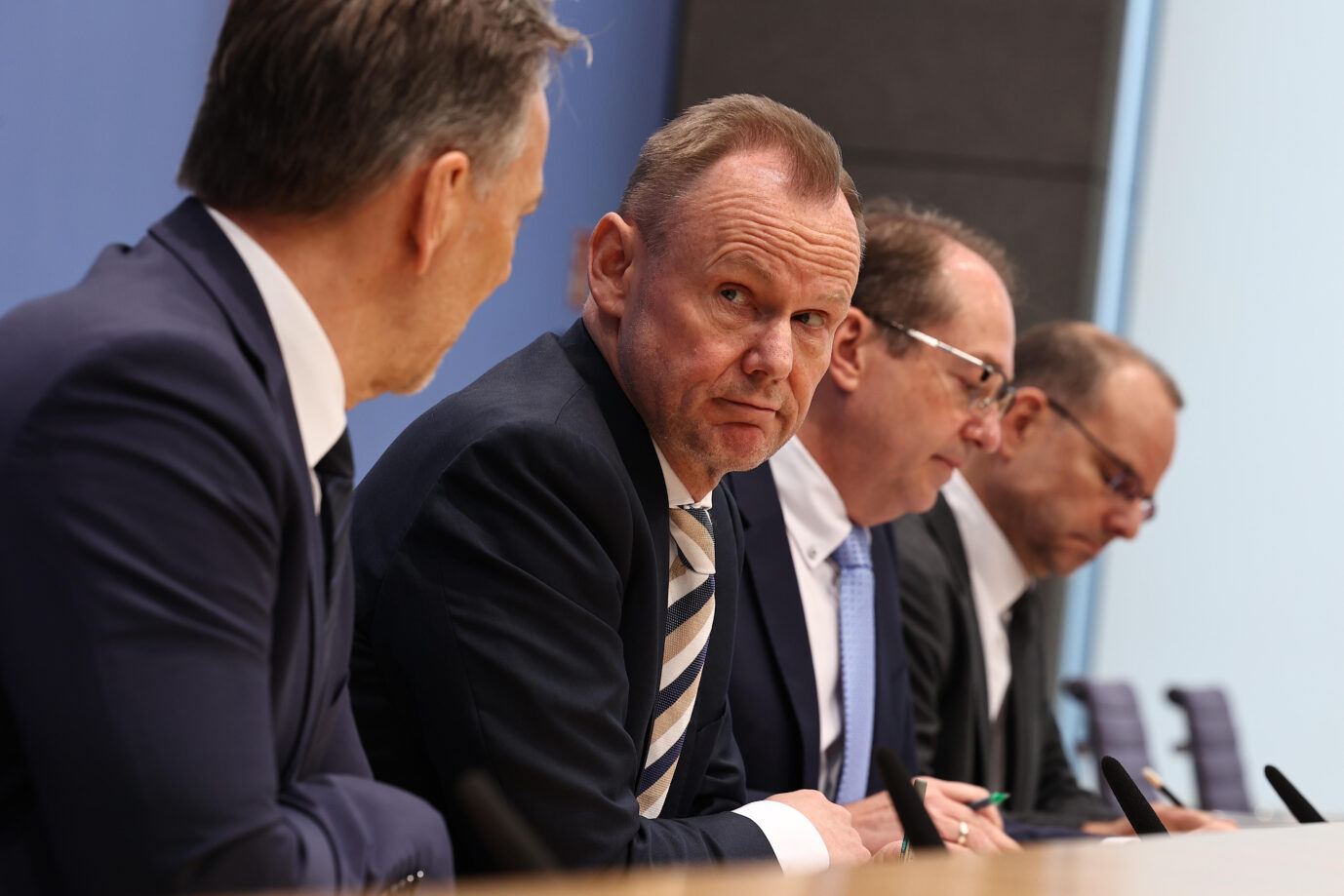
The Interior Ministers Conference currently meeting in Hamburg until Friday has placed “strengthening the constitutional protection network” on its agenda, according to Junge Freiheit. The network consists of sixteen state offices and one federal office responsible for domestic intelligence.

For months, interior ministers from the Christian Democratic Union, Christian Social Union, and Social Democratic Party have been concerned that at least one AfD colleague could join the information exchange after elections in Saxony-Anhalt on September 6 and Mecklenburg-Vorpommern on September 20. Current law requires all federal and state agencies to share intelligence, meaning the legislation would need to be amended or suspended to prevent this.

Hamburg’s Interior Senator Andy Grote of the SPD chairs the current conference. Federal Interior Minister Alexander Dobrindt of the CSU and even Defense Minister Boris Pistorius of the SPD are expected to attend.

An AfD interior minister would substantially disrupt domestic intelligence surveillance of the party itself. Informant reports, information about planted agents, and other sensitive material are stored on constitutional protection office IT systems, including the so-called Intelligence Information System and Knowledge Network (Nadis). Every interior minister and their closest staff currently have access to this system.

Each state and the federal interior minister can view information from the others. The AfD could thus learn nationwide what the constitutional protection office plans against them and how they are being monitored. However, these systems also share information about Islamist threats and possible attacks. An AfD-governed state would no longer receive this critical security intelligence either.

CDU Politician Suggests Rapid Expulsion

The chairman of the Parliamentary Control Committee in the Bundestag, the body that oversees intelligence services, Marc Henrichmann of the CDU, implicitly announced in Der Tagesspiegel a quick expulsion of any potential AfD-governed state. Should it become necessary and desired to disconnect a state constitutional protection office from the network, a rapid implementation would be possible from a purely technical perspective, he indicated.

A state could also be expelled very quickly and with minimal technical difficulty from the information exchange between state police forces and the federal police, sources say. Such a state would no longer be informed about manhunts, investigations, and raids, and would be completely on its own.

Security Trade-offs Under Consideration

Officials acknowledge this would also limit crime and terrorism prevention capabilities. Whether they would actually take this risk to internal security remains unclear, but is reportedly being discussed at the Interior Ministers Conference.

The planned changes also affect procedural matters. Currently, the Interior Ministers Conference operates on a unanimity principle. But what happens if an AfD interior minister refuses to support a resolution? An abolition of this requirement appears to be under consideration. Discussion centers on whether to convene an extraordinary conference after the Saxony-Anhalt election, where the AfD could win an absolute majority, with the old composition still in place.

Federal and state governments have practiced such maneuvers before. To approve massive debt increases last year, the Union and SPD allowed the outgoing Bundestag to convene in order to maintain a two-thirds majority with the Greens. In Rhineland-Palatinate, the outgoing state parliament increased the threshold for establishing investigative committees because the AfD had exceeded the previously valid twenty percent threshold after the election.

With information from Junge Freiheit

Share:
Dimitris Papafotis
Dimitris Papafotis

Dimitris Papafotis is the editor-in-chief of NewsFire.GR. He was born and raised in Athens. He studied at the Journalism Workshop (1991-1993). He currently lives in Pyrgos, Ilia, where he has been active in radio and various newspapers, while also maintaining his personal blog, Papafotis.gr.

The Interior Ministers Conference currently meeting in Hamburg until Friday has placed “strengthening the constitutional protection network” on its agenda, according to Junge Freiheit. The network consists of sixteen state offices and one federal office responsible for domestic intelligence.

For months, interior ministers from the Christian Democratic Union, Christian Social Union, and Social Democratic Party have been concerned that at least one AfD colleague could join the information exchange after elections in Saxony-Anhalt on September 6 and Mecklenburg-Vorpommern on September 20. Current law requires all federal and state agencies to share intelligence, meaning the legislation would need to be amended or suspended to prevent this.

Hamburg’s Interior Senator Andy Grote of the SPD chairs the current conference. Federal Interior Minister Alexander Dobrindt of the CSU and even Defense Minister Boris Pistorius of the SPD are expected to attend.

An AfD interior minister would substantially disrupt domestic intelligence surveillance of the party itself. Informant reports, information about planted agents, and other sensitive material are stored on constitutional protection office IT systems, including the so-called Intelligence Information System and Knowledge Network (Nadis). Every interior minister and their closest staff currently have access to this system.

Each state and the federal interior minister can view information from the others. The AfD could thus learn nationwide what the constitutional protection office plans against them and how they are being monitored. However, these systems also share information about Islamist threats and possible attacks. An AfD-governed state would no longer receive this critical security intelligence either.

CDU Politician Suggests Rapid Expulsion

The chairman of the Parliamentary Control Committee in the Bundestag, the body that oversees intelligence services, Marc Henrichmann of the CDU, implicitly announced in Der Tagesspiegel a quick expulsion of any potential AfD-governed state. Should it become necessary and desired to disconnect a state constitutional protection office from the network, a rapid implementation would be possible from a purely technical perspective, he indicated.

A state could also be expelled very quickly and with minimal technical difficulty from the information exchange between state police forces and the federal police, sources say. Such a state would no longer be informed about manhunts, investigations, and raids, and would be completely on its own.

Security Trade-offs Under Consideration

Officials acknowledge this would also limit crime and terrorism prevention capabilities. Whether they would actually take this risk to internal security remains unclear, but is reportedly being discussed at the Interior Ministers Conference.

The planned changes also affect procedural matters. Currently, the Interior Ministers Conference operates on a unanimity principle. But what happens if an AfD interior minister refuses to support a resolution? An abolition of this requirement appears to be under consideration. Discussion centers on whether to convene an extraordinary conference after the Saxony-Anhalt election, where the AfD could win an absolute majority, with the old composition still in place.

Federal and state governments have practiced such maneuvers before. To approve massive debt increases last year, the Union and SPD allowed the outgoing Bundestag to convene in order to maintain a two-thirds majority with the Greens. In Rhineland-Palatinate, the outgoing state parliament increased the threshold for establishing investigative committees because the AfD had exceeded the previously valid twenty percent threshold after the election.

With information from Junge Freiheit

