Necessary Cookies

Required for the site to function. Cannot be disabled.

Analytics Cookies

Help us understand how visitors interact with our site (Google Analytics via GTM).

Marketing Cookies

Used to track visitors and deliver personalised advertisements.

We use cookies to enhance your browsing experience and analyse site traffic. By clicking Accept All, you consent to our use of cookies. Privacy Policy
NewsFire Global
Home News Europe World Christianity Culture Wars Opinion Video
Information
About Us Authors Advertising Terms & Conditions Privacy Policy Contact
R2B Media
R2B NEWSFIRE.GR PAPAFOTIS.GR THRACTION HELLENIC CONSERVATIVES RIGHT2THEBONE YT
News Europe

Iceland’s Foreign Minister Warns of “Brexit Moment

Iceland's Foreign Minister has compared domestic EU membership opposition to Brexit misinformation ahead of the country's August 2026 referendum on resuming membership negotiations.

Dimitris Papafotis
Dimitris Papafotis Editor in Chief
JUNE 9, 2026 AT 1:20 PM

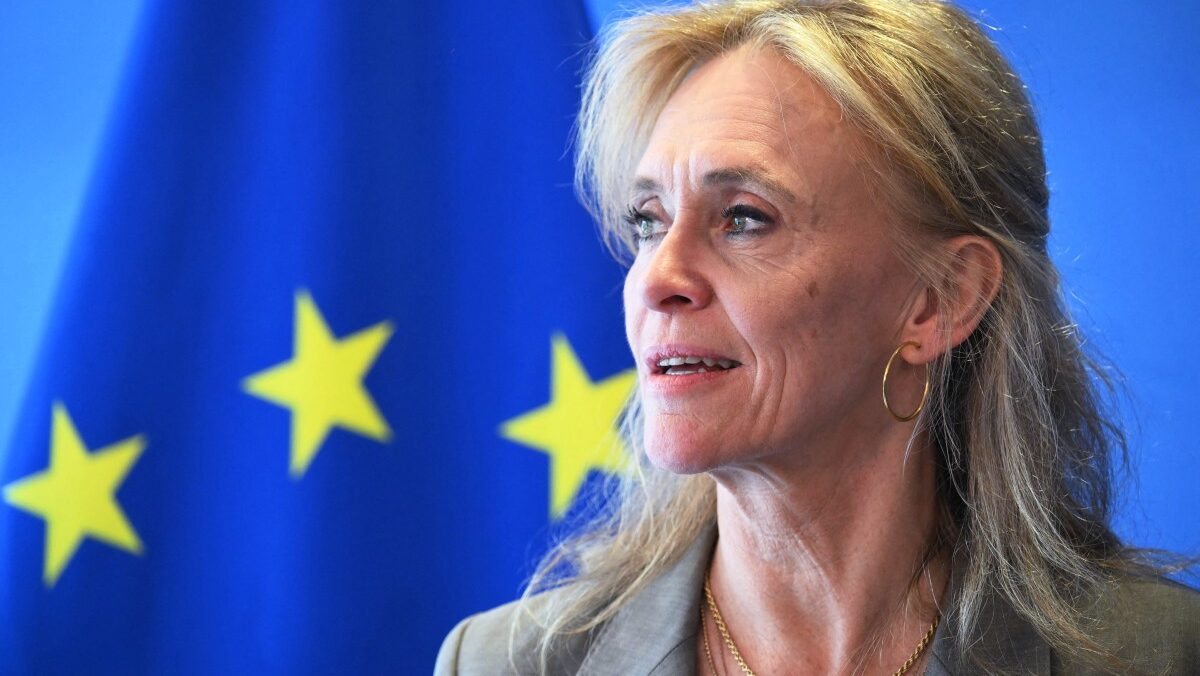
According to The European Conservative, Foreign Minister Þorgerður Katrín Gunnarsdóttir warned in a recent interview that Iceland might face a “Brexit moment” in the upcoming national vote. The referendum, approved by Iceland’s parliament—the Alþingi—asks voters whether the government should resume negotiations on European Union membership, talks that were suspended more than a decade ago.

The minister’s remarks portrayed opponents as fearmongers and raised concerns about foreign interference, AI-generated content, and rhetoric she compared to Nigel Farage and the UK’s Brexit campaign. For many Icelanders, however, the controversy reflects legitimate concerns about national sovereignty rather than disinformation.

Iceland’s Unique Position in Europe

Iceland is a North Atlantic island nation of roughly 380,000 to 400,000 people, renowned for its dramatic landscapes, strong democratic traditions, and economic reliance on renewable energy and fisheries. While not currently an EU member, Iceland maintains close ties through the European Economic Area, which grants access to the EU single market while allowing retention of certain sovereign controls.

Many Icelanders value this arrangement highly, particularly the ability to manage their own fishing quotas and natural resources independently. The fishing industry remains vital to Iceland’s identity and economy, making control over maritime resources a sensitive national issue.

From Financial Crisis to EU Bid and Withdrawal

The current debate traces back to the 2008 global financial crisis, when Iceland’s oversized banking sector collapsed spectacularly. The resulting economic downturn, currency devaluation, and widespread public anger led a left-leaning government to apply for EU membership in 2009, viewing it as a potential path to stability and deeper integration with European institutions. Accession talks began in 2010.

Public support was never overwhelming, as The European Conservative reports. As Iceland’s economy recovered and the eurozone faced its own crises, skepticism grew. Concerns about surrendering control of fisheries and agriculture—vital to Iceland’s identity and economy—to EU common policies intensified. In 2013, a more Eurosceptic government suspended negotiations. By 2015, Iceland formally notified the EU that it no longer intended to pursue membership, though the application was never fully withdrawn in a legal sense according to some EU interpretations.

Revival of EU Membership Push

A new coalition government in the mid-2020s, including pro-EU parties like Viðreisn or Reform Party led by Foreign Minister Gunnarsdóttir, revived the membership idea. The government has framed the August referendum not as a direct vote on joining the EU but as a mandate to begin exploratory negotiations—to assess what terms might be available.

Critics argue this framing is misleading. Once negotiations start, momentum toward full membership becomes difficult to stop, they contend. EU accession requires candidate countries to accept the acquis communautaire—the full body of EU law, including the Lisbon Treaty’s provisions on the division of powers between Brussels and member states.

Constitutional and Legal Questions

Full EU membership would necessitate changes to Iceland’s constitution. National laws in areas like fisheries management, resource rights, and potentially monetary policy would increasingly fall under EU oversight. While Iceland already participates in Schengen and the EEA, full membership would mean adopting the Common Fisheries Policy, eurozone-related obligations, and ceding veto power in many decisions.

Constitutional legal expert Logi Kjartansson has publicly questioned the legal basis for the government’s approach to the referendum, arguing it may lack proper authority under Iceland’s constitution. Furthermore, the governing parties had campaigned on a promise not to open EU negotiations during the current parliamentary term—a pledge now seemingly broken.

A Two-Step Process or Political Misdirection?

The minister insists the vote is merely procedural: open talks, assess terms, and presumably hold a later referendum on actual membership. Opponents, including many ordinary Icelanders and sovereignty-focused groups, see it as the thin end of the wedge.

This framing—that the referendum is not about membership itself—stands in contrast to past EU referendums in other countries, where voters were typically asked directly about joining. In Iceland, the unique two-step process fuels accusations of obfuscation and concerns that voters are being asked to authorize negotiations without understanding the full implications.

The minister’s appeal to international audiences, invoking Brexit as a cautionary tale and suggesting external forces including potential Russian interference or AI-driven disinformation were at play, has struck many Icelanders as dismissive of legitimate domestic concerns about sovereignty over their most valuable natural resources.

With information from The European Conservative

Share:
Dimitris Papafotis
Dimitris Papafotis

Dimitris Papafotis is the editor-in-chief of NewsFire.GR. He was born and raised in Athens. He studied at the Journalism Workshop (1991-1993). He currently lives in Pyrgos, Ilia, where he has been active in radio and various newspapers, while also maintaining his personal blog, Papafotis.gr.

According to The European Conservative, Foreign Minister Þorgerður Katrín Gunnarsdóttir warned in a recent interview that Iceland might face a “Brexit moment” in the upcoming national vote. The referendum, approved by Iceland’s parliament—the Alþingi—asks voters whether the government should resume negotiations on European Union membership, talks that were suspended more than a decade ago.

The minister’s remarks portrayed opponents as fearmongers and raised concerns about foreign interference, AI-generated content, and rhetoric she compared to Nigel Farage and the UK’s Brexit campaign. For many Icelanders, however, the controversy reflects legitimate concerns about national sovereignty rather than disinformation.

Iceland’s Unique Position in Europe

Iceland is a North Atlantic island nation of roughly 380,000 to 400,000 people, renowned for its dramatic landscapes, strong democratic traditions, and economic reliance on renewable energy and fisheries. While not currently an EU member, Iceland maintains close ties through the European Economic Area, which grants access to the EU single market while allowing retention of certain sovereign controls.

Many Icelanders value this arrangement highly, particularly the ability to manage their own fishing quotas and natural resources independently. The fishing industry remains vital to Iceland’s identity and economy, making control over maritime resources a sensitive national issue.

From Financial Crisis to EU Bid and Withdrawal

The current debate traces back to the 2008 global financial crisis, when Iceland’s oversized banking sector collapsed spectacularly. The resulting economic downturn, currency devaluation, and widespread public anger led a left-leaning government to apply for EU membership in 2009, viewing it as a potential path to stability and deeper integration with European institutions. Accession talks began in 2010.

Public support was never overwhelming, as The European Conservative reports. As Iceland’s economy recovered and the eurozone faced its own crises, skepticism grew. Concerns about surrendering control of fisheries and agriculture—vital to Iceland’s identity and economy—to EU common policies intensified. In 2013, a more Eurosceptic government suspended negotiations. By 2015, Iceland formally notified the EU that it no longer intended to pursue membership, though the application was never fully withdrawn in a legal sense according to some EU interpretations.

Revival of EU Membership Push

A new coalition government in the mid-2020s, including pro-EU parties like Viðreisn or Reform Party led by Foreign Minister Gunnarsdóttir, revived the membership idea. The government has framed the August referendum not as a direct vote on joining the EU but as a mandate to begin exploratory negotiations—to assess what terms might be available.

Critics argue this framing is misleading. Once negotiations start, momentum toward full membership becomes difficult to stop, they contend. EU accession requires candidate countries to accept the acquis communautaire—the full body of EU law, including the Lisbon Treaty’s provisions on the division of powers between Brussels and member states.

Constitutional and Legal Questions

Full EU membership would necessitate changes to Iceland’s constitution. National laws in areas like fisheries management, resource rights, and potentially monetary policy would increasingly fall under EU oversight. While Iceland already participates in Schengen and the EEA, full membership would mean adopting the Common Fisheries Policy, eurozone-related obligations, and ceding veto power in many decisions.

Constitutional legal expert Logi Kjartansson has publicly questioned the legal basis for the government’s approach to the referendum, arguing it may lack proper authority under Iceland’s constitution. Furthermore, the governing parties had campaigned on a promise not to open EU negotiations during the current parliamentary term—a pledge now seemingly broken.

A Two-Step Process or Political Misdirection?

The minister insists the vote is merely procedural: open talks, assess terms, and presumably hold a later referendum on actual membership. Opponents, including many ordinary Icelanders and sovereignty-focused groups, see it as the thin end of the wedge.

This framing—that the referendum is not about membership itself—stands in contrast to past EU referendums in other countries, where voters were typically asked directly about joining. In Iceland, the unique two-step process fuels accusations of obfuscation and concerns that voters are being asked to authorize negotiations without understanding the full implications.

The minister’s appeal to international audiences, invoking Brexit as a cautionary tale and suggesting external forces including potential Russian interference or AI-driven disinformation were at play, has struck many Icelanders as dismissive of legitimate domestic concerns about sovereignty over their most valuable natural resources.

With information from The European Conservative

