Necessary Cookies

Required for the site to function. Cannot be disabled.

Analytics Cookies

Help us understand how visitors interact with our site (Google Analytics via GTM).

Marketing Cookies

Used to track visitors and deliver personalised advertisements.

We use cookies to enhance your browsing experience and analyse site traffic. By clicking Accept All, you consent to our use of cookies. Privacy Policy
NewsFire Global
Home News Europe World Christianity Culture Wars Opinion Video
Information
About Us Authors Advertising Terms & Conditions Privacy Policy Contact
R2B Media
R2B NEWSFIRE.GR PAPAFOTIS.GR THRACTION HELLENIC CONSERVATIVES RIGHT2THEBONE YT
News Europe

Iceland Rejects EU Membership in Historic Vote

Iceland has rejected by 52.8% to 47.2% a proposal to reopen EU membership negotiations, with the August 2026 referendum drawing 82.5% turnout and reflecting strong national sovereignty concerns.

Dimitris Papafotis
Dimitris Papafotis Editor in Chief
AUGUST 31, 2026 AT 4:49 PM

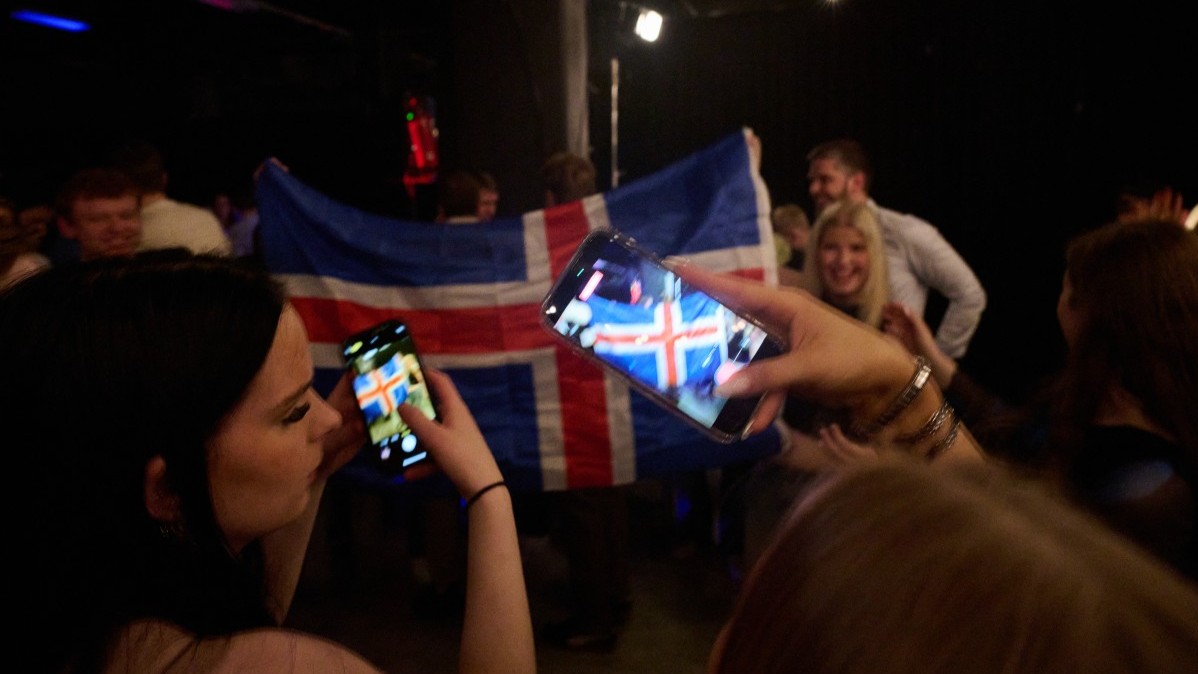
On August 29, 2026, Icelanders voted by 52.8% to 47.2% against resuming accession talks with Brussels, according to The European Conservative. The referendum drew an impressive 82.5% turnout, with the capital Reykjavík supporting renewed negotiations while the rest of the nation firmly opposed.

The vote was framed by pro-EU campaigners as merely exploratory, not a binding commitment to membership. Their slogan, “Já til að sjá” — Yes, to see — suggested Icelanders should simply examine what deal might be on offer. The proposal would have restarted an accession process suspended over a decade ago, allowing Iceland to negotiate terms before any final decision.

But this framing understates what was truly at stake. Iceland’s modern history is defined by the acquisition and fierce defense of sovereignty. After centuries under foreign rule, the island nation secured home rule from Denmark in 1904, became a sovereign state in 1918, and established its republic in 1944.

A Nation That Fought for Independence

Within living memory, Iceland confronted Britain — one of its closest allies — during the Cod Wars to establish control over surrounding waters. Just 82 years after establishing their republic, Icelanders were being asked to consider sharing powers currently exercised nationally with the institutions of the European Union.

Halldór Laxness, Iceland’s only Nobel laureate in literature, once observed in 1933 that Icelanders had historically endured oppression with remarkable politeness, never rebelling against foreign rule. Nearly a century later, that observation appears outdated. The referendum result demonstrates a population unwilling to compromise hard-won sovereignty.

Already Integrated, But Not Subordinated

Iceland’s relationship with Europe is complex and often misunderstood. The nation is not isolated from the continent — far from it. As a founding member of NATO and participant in the European Free Trade Association, the Schengen Area, and since 1994 the European Economic Area, Iceland already enjoys extensive European integration.

Through the EEA, Iceland participates in the EU Single Market and its four freedoms: movement of goods, services, capital, and people. Icelanders already live, study, work, and establish businesses throughout the EEA under existing free-movement arrangements. Much of the economic integration associated with EU membership is already part of daily Icelandic life.

This arrangement does create a democratic deficit. Much EU legislation relevant to the EEA eventually becomes applicable in Iceland, yet Iceland has no vote when the Union adopts that legislation. The country participates in expert work and has mechanisms for influencing legislation during preparation, but it has no commissioner, no members of the European Parliament, and no vote in the Council.

Pro-membership voices argue this is Iceland’s strongest case for joining: the country already pays part of the price of European integration without receiving political representation as an EU member.

Critical Areas Remain National

However, the EEA is not the European Union. Iceland remains outside the EU customs union and Common Commercial Policy. It retains its own currency and monetary policy. Most importantly, two areas of enormous economic, cultural, and political significance — agriculture and fisheries — remain outside the EEA framework and under full Icelandic control.

For an island nation whose identity and economy have been shaped by the sea, surrendering control over fisheries policy to Brussels would represent a fundamental transformation of national sovereignty. The referendum result suggests Icelanders remain unwilling to contemplate such a transfer of power.

The vote represents more than a rejection of EU membership. It affirms a distinctly Icelandic path: integrated with Europe economically where advantageous, but independent in areas deemed essential to national identity and prosperity.

With information from The European Conservative

Share:
Dimitris Papafotis
Dimitris Papafotis

Dimitris Papafotis is the editor-in-chief of NewsFire.GR. He was born and raised in Athens. He studied at the Journalism Workshop (1991-1993). He currently lives in Pyrgos, Ilia, where he has been active in radio and various newspapers, while also maintaining his personal blog, Papafotis.gr.

On August 29, 2026, Icelanders voted by 52.8% to 47.2% against resuming accession talks with Brussels, according to The European Conservative. The referendum drew an impressive 82.5% turnout, with the capital Reykjavík supporting renewed negotiations while the rest of the nation firmly opposed.

The vote was framed by pro-EU campaigners as merely exploratory, not a binding commitment to membership. Their slogan, “Já til að sjá” — Yes, to see — suggested Icelanders should simply examine what deal might be on offer. The proposal would have restarted an accession process suspended over a decade ago, allowing Iceland to negotiate terms before any final decision.

But this framing understates what was truly at stake. Iceland’s modern history is defined by the acquisition and fierce defense of sovereignty. After centuries under foreign rule, the island nation secured home rule from Denmark in 1904, became a sovereign state in 1918, and established its republic in 1944.

A Nation That Fought for Independence

Within living memory, Iceland confronted Britain — one of its closest allies — during the Cod Wars to establish control over surrounding waters. Just 82 years after establishing their republic, Icelanders were being asked to consider sharing powers currently exercised nationally with the institutions of the European Union.

Halldór Laxness, Iceland’s only Nobel laureate in literature, once observed in 1933 that Icelanders had historically endured oppression with remarkable politeness, never rebelling against foreign rule. Nearly a century later, that observation appears outdated. The referendum result demonstrates a population unwilling to compromise hard-won sovereignty.

Already Integrated, But Not Subordinated

Iceland’s relationship with Europe is complex and often misunderstood. The nation is not isolated from the continent — far from it. As a founding member of NATO and participant in the European Free Trade Association, the Schengen Area, and since 1994 the European Economic Area, Iceland already enjoys extensive European integration.

Through the EEA, Iceland participates in the EU Single Market and its four freedoms: movement of goods, services, capital, and people. Icelanders already live, study, work, and establish businesses throughout the EEA under existing free-movement arrangements. Much of the economic integration associated with EU membership is already part of daily Icelandic life.

This arrangement does create a democratic deficit. Much EU legislation relevant to the EEA eventually becomes applicable in Iceland, yet Iceland has no vote when the Union adopts that legislation. The country participates in expert work and has mechanisms for influencing legislation during preparation, but it has no commissioner, no members of the European Parliament, and no vote in the Council.

Pro-membership voices argue this is Iceland’s strongest case for joining: the country already pays part of the price of European integration without receiving political representation as an EU member.

Critical Areas Remain National

However, the EEA is not the European Union. Iceland remains outside the EU customs union and Common Commercial Policy. It retains its own currency and monetary policy. Most importantly, two areas of enormous economic, cultural, and political significance — agriculture and fisheries — remain outside the EEA framework and under full Icelandic control.

For an island nation whose identity and economy have been shaped by the sea, surrendering control over fisheries policy to Brussels would represent a fundamental transformation of national sovereignty. The referendum result suggests Icelanders remain unwilling to contemplate such a transfer of power.

The vote represents more than a rejection of EU membership. It affirms a distinctly Icelandic path: integrated with Europe economically where advantageous, but independent in areas deemed essential to national identity and prosperity.

With information from The European Conservative

