Necessary Cookies

Required for the site to function. Cannot be disabled.

Analytics Cookies

Help us understand how visitors interact with our site (Google Analytics via GTM).

Marketing Cookies

Used to track visitors and deliver personalised advertisements.

We use cookies to enhance your browsing experience and analyse site traffic. By clicking Accept All, you consent to our use of cookies. Privacy Policy
NewsFire Global
Home News Europe World Christianity Culture Wars Opinion Video
Information
About Us Authors Advertising Terms & Conditions Privacy Policy Contact
R2B Media
R2B NEWSFIRE.GR PAPAFOTIS.GR THRACTION HELLENIC CONSERVATIVES RIGHT2THEBONE YT
News Europe

Hundreds Stay in Ceuta After 60,000 Migrants Cross Border

At least 72 people died as approximately 60,000 migrants crossed into Spain's North African enclave Ceuta within days, overwhelming the territory before most were returned.

Dimitris Papafotis
Dimitris Papafotis Editor in Chief
AUGUST 3, 2026 AT 6:24 PM

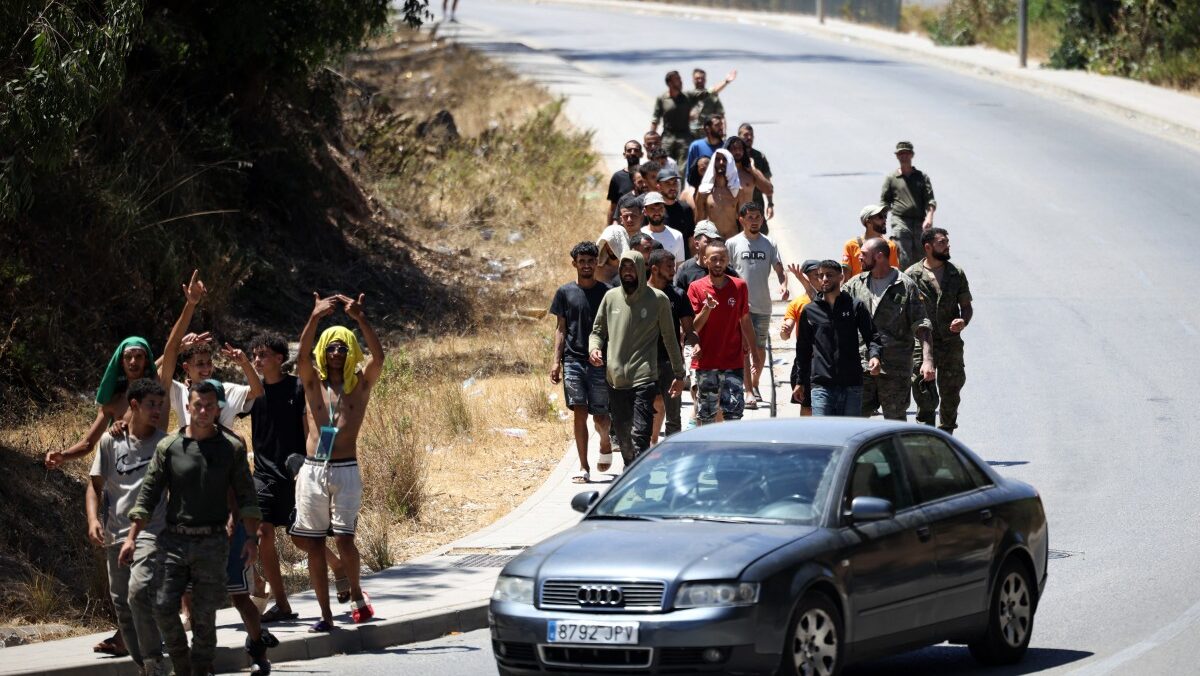
Spanish authorities have confirmed that at least 72 people died during an unprecedented wave of illegal migration into Ceuta, the Spanish enclave on the North African coast, as approximately 60,000 migrants flooded across the border within a span of just days.

According to The European Conservative, the massive influx has overwhelmed the small territory, with most of those who entered having already been returned.

The deaths underscore the human cost of the crisis that engulfed Ceuta, a strategic Spanish possession bordered by Morocco. The enclave, with a population of roughly 85,000, saw nearly its entire population matched by the number of illegal border crossers in an extraordinarily short period.

Spanish officials have been working to process and return the vast majority of those who entered unlawfully. The sudden surge placed immense strain on local infrastructure, security forces, and humanitarian resources in the compact territory.

Ceuta, along with Melilla, represents one of the European Union’s only land borders with Africa, making both enclaves frequent targets for mass migration attempts. The recent crisis marks one of the largest single influxes the territory has ever experienced.

The incident has reignited debate over border security, migration policy, and Spain’s relationship with Morocco, which controls the land surrounding both Spanish North African enclaves. Questions have been raised about how such a massive number of people were able to cross in such a compressed timeframe.

Spanish authorities continue to manage the aftermath of the crisis while working to prevent future mass crossings of similar scale.

With information from The European Conservative

Share:
Dimitris Papafotis
Dimitris Papafotis

Dimitris Papafotis is the editor-in-chief of NewsFire.GR. He was born and raised in Athens. He studied at the Journalism Workshop (1991-1993). He currently lives in Pyrgos, Ilia, where he has been active in radio and various newspapers, while also maintaining his personal blog, Papafotis.gr.

Spanish authorities have confirmed that at least 72 people died during an unprecedented wave of illegal migration into Ceuta, the Spanish enclave on the North African coast, as approximately 60,000 migrants flooded across the border within a span of just days.

According to The European Conservative, the massive influx has overwhelmed the small territory, with most of those who entered having already been returned.

The deaths underscore the human cost of the crisis that engulfed Ceuta, a strategic Spanish possession bordered by Morocco. The enclave, with a population of roughly 85,000, saw nearly its entire population matched by the number of illegal border crossers in an extraordinarily short period.

Spanish officials have been working to process and return the vast majority of those who entered unlawfully. The sudden surge placed immense strain on local infrastructure, security forces, and humanitarian resources in the compact territory.

Ceuta, along with Melilla, represents one of the European Union’s only land borders with Africa, making both enclaves frequent targets for mass migration attempts. The recent crisis marks one of the largest single influxes the territory has ever experienced.

The incident has reignited debate over border security, migration policy, and Spain’s relationship with Morocco, which controls the land surrounding both Spanish North African enclaves. Questions have been raised about how such a massive number of people were able to cross in such a compressed timeframe.

Spanish authorities continue to manage the aftermath of the crisis while working to prevent future mass crossings of similar scale.

With information from The European Conservative

