Necessary Cookies

Required for the site to function. Cannot be disabled.

Analytics Cookies

Help us understand how visitors interact with our site (Google Analytics via GTM).

Marketing Cookies

Used to track visitors and deliver personalised advertisements.

We use cookies to enhance your browsing experience and analyse site traffic. By clicking Accept All, you consent to our use of cookies. Privacy Policy
NewsFire Global
Home News Europe World Christianity Culture Wars Opinion Video
Information
About Us Authors Advertising Terms & Conditions Privacy Policy Contact
R2B Media
R2B NEWSFIRE.GR PAPAFOTIS.GR THRACTION HELLENIC CONSERVATIVES RIGHT2THEBONE YT
News Europe

How the Right Conquered Red Norway’s Welfare State

Norway's populist Progress Party has surged to 23.8 percent support under Sylvi Listhaug, overtaking Labour and becoming especially popular among young male voters with its anti-tax, anti-migration platform.

Dimitris Papafotis
Dimitris Papafotis Editor in Chief
JULY 25, 2026 AT 11:10 PM

According to Junge Freiheit, the Progress Party has doubled its electoral support since 2021, rising from 11.6 percent to 23.8 percent in the most recent parliamentary elections. The party now commands 47 seats and has even overtaken the historically dominant Labour Party. Current polling shows the FrP consistently between 26 and 31 percent, with July averages approaching 30 percent, while the conservative Høyre party has collapsed to below 15 percent.

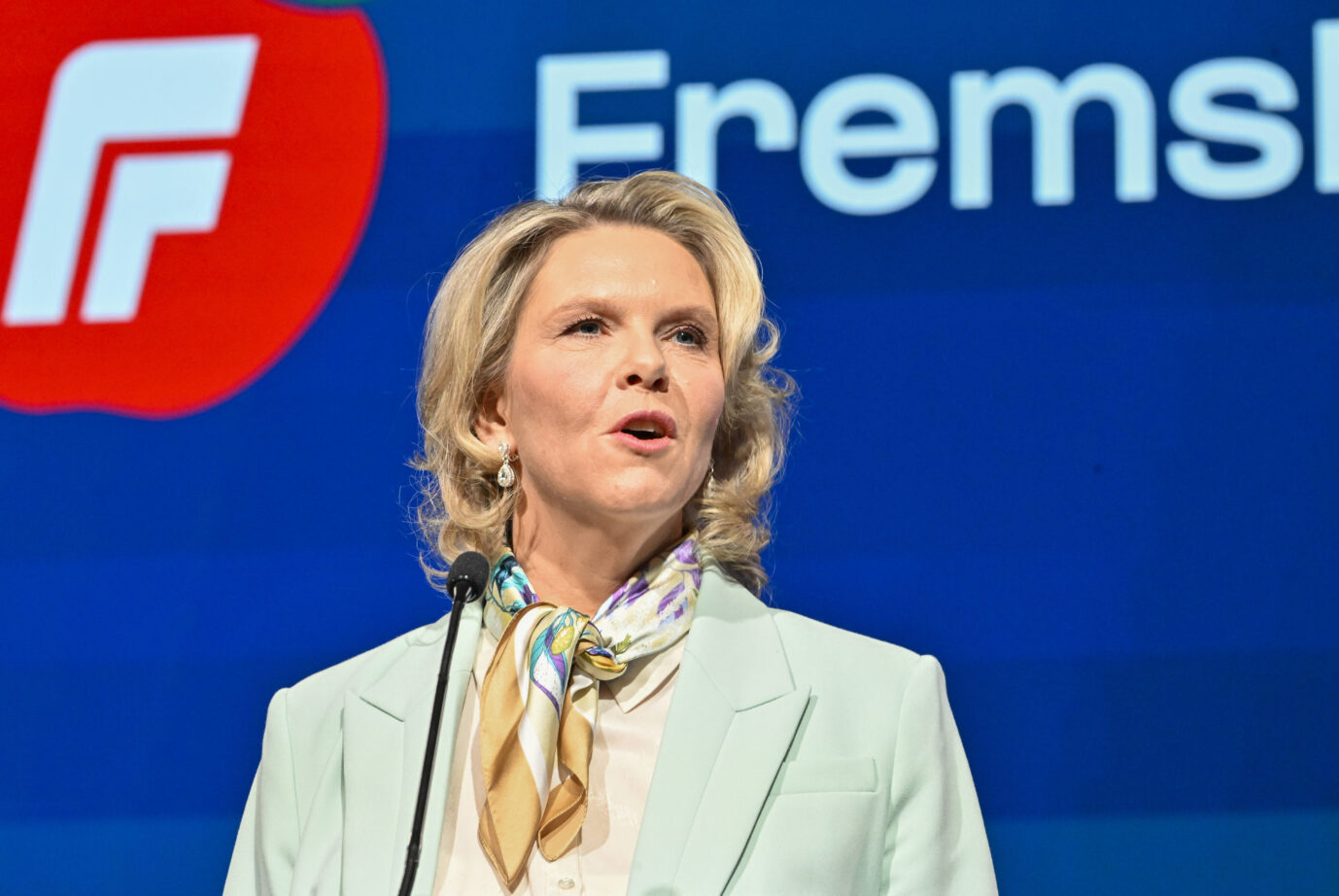
Listhaug, a woman in her late forties known for her polished appearance and uncompromising rhetoric, has transformed what was once dismissed as a collection of disgruntled older voters into Norway’s youth party. Among male voters under 35, FrP support skyrocketed from 15 percent in 2021 to 38 percent in 2025, making spectacular gains in vocational schools, skilled trades, and the private sector.

A Two-Pronged Attack on the Establishment

The party’s success stems from its ability to connect two distinct grievances that other parties typically address separately. On economic issues, the FrP campaigns against high taxes, expensive electricity, fuel costs, rising food prices, and a wealth tax that drives entrepreneurs out of the country. On cultural and security matters, the party focuses on migration, gang crime, and what it portrays as a state that lectures citizens while failing at core responsibilities.

The message resonates powerfully in one of the world’s wealthiest nations. Norway’s massive oil, gas, and sovereign wealth fund revenues make the question particularly damaging: why are ordinary citizens seeing less and less benefit from national prosperity?

Listhaug’s answer is direct: the state takes too much, wastes billions on development aid, immigration, and green prestige projects, while allowing police, hospitals, and infrastructure to deteriorate. At the party congress in May, she declared that while the Labour Party administers and defends the state, the Progress Party fights for the people. She even suggested renaming the Labour Party the “Administration Party,” arguing it no longer represents workers but rather bureaucrats and international conference attendees.

Reclaiming Working-Class Identity

The FrP is no longer fishing exclusively on the right side of the political spectrum. The party has successfully challenged the social democratic narrative of representing ordinary people. In a provocative move on May 1st, Listhaug quoted the Internationale and reminded audiences that the labour movement originally fought against oppressive taxation and state arbitrariness—a tradition she claims the FrP now continues.

The electoral gains reflect this broader appeal. One in five Høyre voters from 2021 switched to Listhaug in the last election. The party also attracted former Centre Party supporters, workers, and previous non-voters.

From Coalition Partner to Dominant Force

Unlike Portugal’s Chega party, which had to break into the political system from outside, the FrP has sat in parliament for decades and governed in coalition with Høyre from 2013 to 2020. Now it is poised to swallow its former coalition partner entirely. The party has professionalized its operation, expanded its platform to include healthcare, education, defence, and housing, and asserted an open claim to govern.

Yet Listhaug has not moderated her positions. On immigration and crime, the tone remains sharp. On taxes and climate policy, the party remains uncompromising. As Junge Freiheit reports, the FrP has not adapted itself to the political establishment—the establishment has adapted to the FrP.

The Path to Power

Obstacles remain before the party can take control. The red-green bloc narrowly defended its majority in 2025, and any centre-right government would require smaller parties whose positions on migration and climate differ significantly from the FrP’s stance. The venerable Høyre party must also decide whether it can accept a role as junior partner. The FrP remembers the dangers of governing: during its coalition with Høyre, the party’s profile faded, leading to the 2021 electoral collapse.

But the balance of power has fundamentally shifted. Listhaug no longer presents herself as an awkward coalition partner but as a potential head of government. At the party congress, she proclaimed that becoming prime minister is not a dream but a plan to be implemented from 2029 onward. Given current polling numbers, the declaration does not sound like hubris.

Norway’s decades-long domination by social democrats and conservatives is breaking down. What began as a protest party has evolved into a potential new people’s party—and it has achieved this transformation without putting on the velvet gloves.

With information from Junge Freiheit

Share:
Dimitris Papafotis
Dimitris Papafotis

Dimitris Papafotis is the editor-in-chief of NewsFire.GR. He was born and raised in Athens. He studied at the Journalism Workshop (1991-1993). He currently lives in Pyrgos, Ilia, where he has been active in radio and various newspapers, while also maintaining his personal blog, Papafotis.gr.

According to Junge Freiheit, the Progress Party has doubled its electoral support since 2021, rising from 11.6 percent to 23.8 percent in the most recent parliamentary elections. The party now commands 47 seats and has even overtaken the historically dominant Labour Party. Current polling shows the FrP consistently between 26 and 31 percent, with July averages approaching 30 percent, while the conservative Høyre party has collapsed to below 15 percent.

Listhaug, a woman in her late forties known for her polished appearance and uncompromising rhetoric, has transformed what was once dismissed as a collection of disgruntled older voters into Norway’s youth party. Among male voters under 35, FrP support skyrocketed from 15 percent in 2021 to 38 percent in 2025, making spectacular gains in vocational schools, skilled trades, and the private sector.

A Two-Pronged Attack on the Establishment

The party’s success stems from its ability to connect two distinct grievances that other parties typically address separately. On economic issues, the FrP campaigns against high taxes, expensive electricity, fuel costs, rising food prices, and a wealth tax that drives entrepreneurs out of the country. On cultural and security matters, the party focuses on migration, gang crime, and what it portrays as a state that lectures citizens while failing at core responsibilities.

The message resonates powerfully in one of the world’s wealthiest nations. Norway’s massive oil, gas, and sovereign wealth fund revenues make the question particularly damaging: why are ordinary citizens seeing less and less benefit from national prosperity?

Listhaug’s answer is direct: the state takes too much, wastes billions on development aid, immigration, and green prestige projects, while allowing police, hospitals, and infrastructure to deteriorate. At the party congress in May, she declared that while the Labour Party administers and defends the state, the Progress Party fights for the people. She even suggested renaming the Labour Party the “Administration Party,” arguing it no longer represents workers but rather bureaucrats and international conference attendees.

Reclaiming Working-Class Identity

The FrP is no longer fishing exclusively on the right side of the political spectrum. The party has successfully challenged the social democratic narrative of representing ordinary people. In a provocative move on May 1st, Listhaug quoted the Internationale and reminded audiences that the labour movement originally fought against oppressive taxation and state arbitrariness—a tradition she claims the FrP now continues.

The electoral gains reflect this broader appeal. One in five Høyre voters from 2021 switched to Listhaug in the last election. The party also attracted former Centre Party supporters, workers, and previous non-voters.

From Coalition Partner to Dominant Force

Unlike Portugal’s Chega party, which had to break into the political system from outside, the FrP has sat in parliament for decades and governed in coalition with Høyre from 2013 to 2020. Now it is poised to swallow its former coalition partner entirely. The party has professionalized its operation, expanded its platform to include healthcare, education, defence, and housing, and asserted an open claim to govern.

Yet Listhaug has not moderated her positions. On immigration and crime, the tone remains sharp. On taxes and climate policy, the party remains uncompromising. As Junge Freiheit reports, the FrP has not adapted itself to the political establishment—the establishment has adapted to the FrP.

The Path to Power

Obstacles remain before the party can take control. The red-green bloc narrowly defended its majority in 2025, and any centre-right government would require smaller parties whose positions on migration and climate differ significantly from the FrP’s stance. The venerable Høyre party must also decide whether it can accept a role as junior partner. The FrP remembers the dangers of governing: during its coalition with Høyre, the party’s profile faded, leading to the 2021 electoral collapse.

But the balance of power has fundamentally shifted. Listhaug no longer presents herself as an awkward coalition partner but as a potential head of government. At the party congress, she proclaimed that becoming prime minister is not a dream but a plan to be implemented from 2029 onward. Given current polling numbers, the declaration does not sound like hubris.

Norway’s decades-long domination by social democrats and conservatives is breaking down. What began as a protest party has evolved into a potential new people’s party—and it has achieved this transformation without putting on the velvet gloves.

With information from Junge Freiheit