Necessary Cookies

Required for the site to function. Cannot be disabled.

Analytics Cookies

Help us understand how visitors interact with our site (Google Analytics via GTM).

Marketing Cookies

Used to track visitors and deliver personalised advertisements.

We use cookies to enhance your browsing experience and analyse site traffic. By clicking Accept All, you consent to our use of cookies. Privacy Policy
NewsFire Global
Home News Europe World Christianity Culture Wars Opinion
Information
About Us Authors Advertising Terms & Conditions Privacy Policy Contact
R2B Media
R2B NEWSFIRE.GR PAPAFOTIS.GR THRACTION HELLENIC CONSERVATIVES RIGHT2THEBONE YT
News World

Houthi Rebels Vow to Block Israeli Ships in Red Sea

The Iran-backed Houthis have declared a complete ban on Israeli shipping through the Red Sea's strategic Bab el-Mandeb strait after launching missiles at Central Israel this week.

Newsroom
Newsroom Staff Writer
JUNE 8, 2026 AT 5:00 PM

Yahya Saree, the terror group’s spokesman, announced the blockade after claiming strikes against what he described as sensitive targets in Jaffa, according to New York Post.

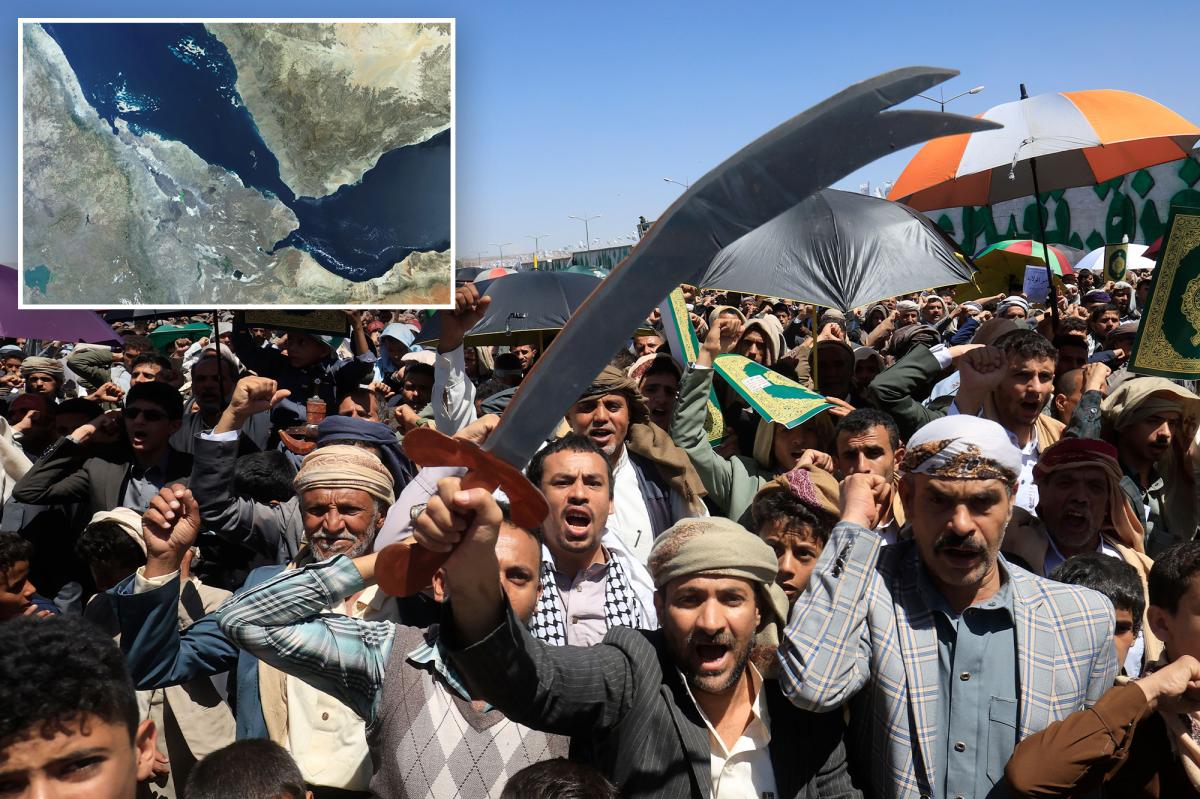
The Houthis declared they would treat any Israeli vessel attempting passage as a legitimate military target. The announcement effectively closes the Bab el-Mandeb strait to Israeli shipping—a waterway known in Arabic as the Gate of Tears due to its hazardous navigation conditions.

The strait sits between Yemen on the Arabian Peninsula and Djibouti and Eritrea on the African coast, serving as the southern gateway of the Red Sea.

Critical Global Chokepoint Threatened

The threatened blockade imperils one of the world’s most vital maritime trade routes. An estimated 3.3 million barrels of oil transit through the strait daily, with crude oil and fuel from Gulf states bound for the Mediterranean via the Suez Canal or Egypt’s SUMED pipeline representing a significant portion of traffic.

Should the passage be effectively blocked, vessels would face detours around Africa’s Cape of Good Hope, adding up to two weeks to journey times and substantially increasing shipping costs.

Houthi leadership justified their escalation as retaliation for Israeli military operations against Iran and Lebanon, as New York Post reports.

Retaliation for Regional Operations

The terror group vowed to match escalation with escalation, promising intensified military operations coordinated with what they termed the axis of jihad and resistance spanning Palestine, Gaza, Iran, Lebanon, and Iraq.

The threats come amid the most serious deterioration in Israeli-Iranian relations since an April ceasefire. Israeli Defense Forces announced completion of large-scale strikes against Iranian strategic defense systems recently deployed to restore capabilities degraded during Operation Roaring Lion.

Tehran subsequently claimed targeting of Israel’s Nevatim and Tel Nof air bases under Operation Nasr, calling the action a response to Israeli missile strikes against radar installations at three Iranian locations.

Washington Blamed for Escalation

Israeli forces confirmed striking a petrochemical facility in Mahshahr in southern Iran, though details remained limited.

Esmail Baghaei, Iran’s foreign ministry spokesman, attempted to shift responsibility for regional tensions onto Washington, claiming the Israeli regime takes no action without American coordination.

The regime spokesperson insisted the United States bears responsibility both for Israeli military operations and any resulting escalation in regional hostilities.

With information from New York Post

Share:
Newsroom
Newsroom

NewsFire.GR is a website created with the hope that the media will rediscover their true identity, which is none other than informing the public about the real stakes of our times. Journalism and political analysis must hold power accountable, not serve it.

Yahya Saree, the terror group’s spokesman, announced the blockade after claiming strikes against what he described as sensitive targets in Jaffa, according to New York Post.

The Houthis declared they would treat any Israeli vessel attempting passage as a legitimate military target. The announcement effectively closes the Bab el-Mandeb strait to Israeli shipping—a waterway known in Arabic as the Gate of Tears due to its hazardous navigation conditions.

The strait sits between Yemen on the Arabian Peninsula and Djibouti and Eritrea on the African coast, serving as the southern gateway of the Red Sea.

Critical Global Chokepoint Threatened

The threatened blockade imperils one of the world’s most vital maritime trade routes. An estimated 3.3 million barrels of oil transit through the strait daily, with crude oil and fuel from Gulf states bound for the Mediterranean via the Suez Canal or Egypt’s SUMED pipeline representing a significant portion of traffic.

Should the passage be effectively blocked, vessels would face detours around Africa’s Cape of Good Hope, adding up to two weeks to journey times and substantially increasing shipping costs.

Houthi leadership justified their escalation as retaliation for Israeli military operations against Iran and Lebanon, as New York Post reports.

Retaliation for Regional Operations

The terror group vowed to match escalation with escalation, promising intensified military operations coordinated with what they termed the axis of jihad and resistance spanning Palestine, Gaza, Iran, Lebanon, and Iraq.

The threats come amid the most serious deterioration in Israeli-Iranian relations since an April ceasefire. Israeli Defense Forces announced completion of large-scale strikes against Iranian strategic defense systems recently deployed to restore capabilities degraded during Operation Roaring Lion.

Tehran subsequently claimed targeting of Israel’s Nevatim and Tel Nof air bases under Operation Nasr, calling the action a response to Israeli missile strikes against radar installations at three Iranian locations.

Washington Blamed for Escalation

Israeli forces confirmed striking a petrochemical facility in Mahshahr in southern Iran, though details remained limited.

Esmail Baghaei, Iran’s foreign ministry spokesman, attempted to shift responsibility for regional tensions onto Washington, claiming the Israeli regime takes no action without American coordination.

The regime spokesperson insisted the United States bears responsibility both for Israeli military operations and any resulting escalation in regional hostilities.

With information from New York Post