
Homeless Camps Threaten Public Safety, Demand Real Action
Former LA County Sheriff Alex Villanueva reports that homeless housing developments and encampments are consuming disproportionate emergency resources, with 54% of fire calls now homeless-related.
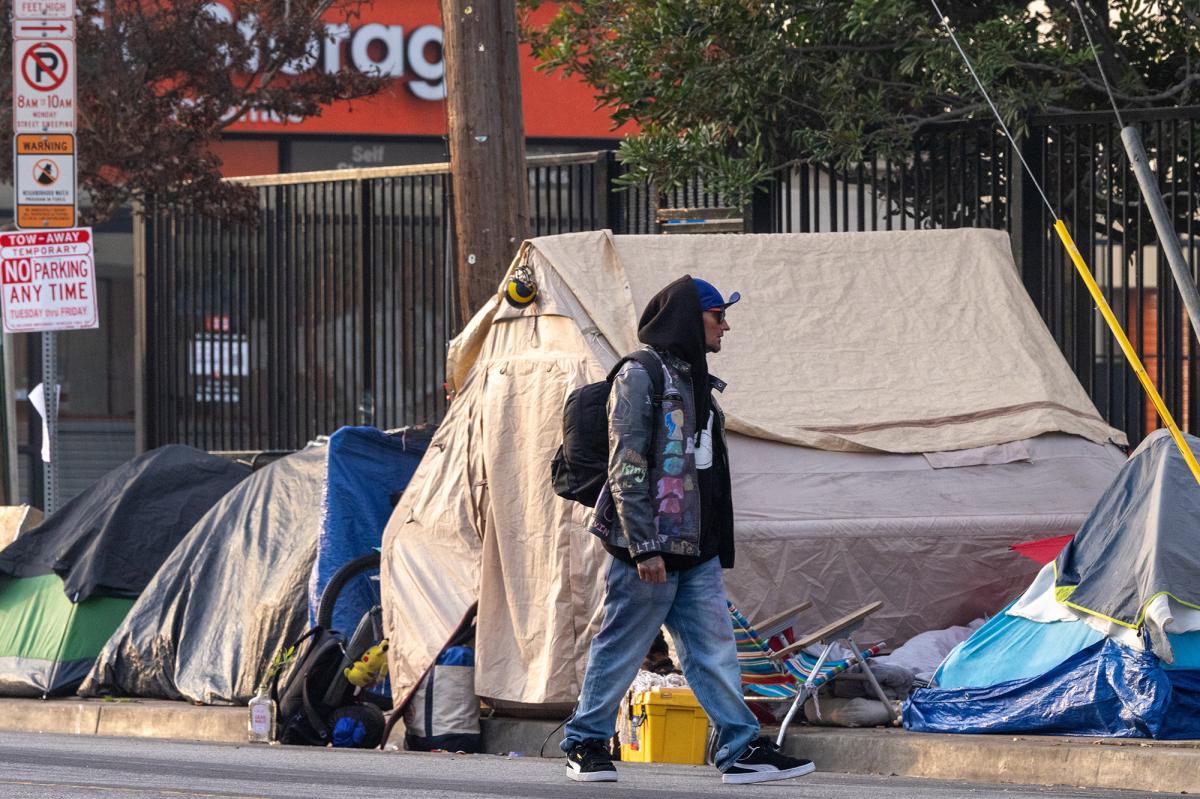

Recent reporting from local and national outlets has documented the severe impact of homelessness on Los Angeles, from rising crime rates to urban decay and widespread fear among residents. Investigative work by The California Post has revealed that certain homeless housing facilities, including properties purchased by city and state authorities specifically for this purpose, are generating hundreds of emergency calls involving violent crimes.
Alex Villanueva, who served as LA County Sheriff from 2018 to 2022, pointed to his own experience as watch commander at Pico Rivera Station in 2014. He described a dedicated halfway house for mentally ill individuals known as Pico Gardens, located on a busy Rosemead Boulevard intersection, which generated an extraordinary volume of service calls.
The multistory facility averaged at least two calls daily throughout the year, with patients regularly involved in disturbances both inside the facility and in adjacent business parking lots. This forced an already understaffed patrol station to dedicate hundreds of man-hours to a single property while other pressing issues across the city and unincorporated areas went unaddressed.
The problem has only intensified. In 2025, the Los Angeles Fire Department acknowledged that 54% of its service calls were homeless encampment-related. First responders from both police and fire departments are devoting growing portions of their resources to mental health disturbances at homeless housing developments and encampments that pose direct threats to public safety.
Routine Calls Take Back Seat to Mental Health Crises
The prioritization system means that when residents report suspicious activity in their neighborhoods, those calls receive lower priority than incidents at facilities like Pico Gardens. All routine service calls are subordinated to priority calls involving individuals experiencing mental health crises.
When calls require deployment of a Mental Evaluation Team, entire units can be tied up for substantial portions of their shifts. Involuntary 72-hour detentions under California Welfare and Institutions Code Section 5150 create additional administrative burdens for officers, further reducing time available for emergency response and community presence that deters crime.
With law enforcement agencies nationwide struggling to maintain adequate staffing, mental health-related calls are consuming resources that exceed what is available for basic, consistent patrol services.
Deinstitutionalization’s Failed Promise
Villanueva traced the roots of the current crisis to the deinstitutionalization of psychiatric hospitals beginning in the 1960s. Then-Governor Ronald Reagan signed the bipartisan Lanterman-Petris-Short Act with the stated goal of guaranteeing and protecting public safety.
Instead, the closure of psychiatric facilities has increased threats to public safety. Individuals suffering from severe mental illnesses such as paranoid schizophrenia have been left without institutional care, placing them in direct contact with the public on city streets.
While politicians promote “community-based alternatives,” few communities are willing to host such facilities. The reality is predictable: physical threats increase, property values decline, and neighborhoods are left dealing with the consequences after housing alternatives are imposed on them with little warning.
Call for Psychiatric Facility Restoration
The former sheriff called for the restoration of psychiatric facilities with comprehensive treatment capabilities, including step-down capacities for acute patients, forensic inpatient services, and outpatient treatment options. He argued it is time to stop pretending communities will willingly accept quantifiable threats to their safety.
Villanueva urged real, permanent action to remove homeless encampments that endanger both their own residents and surrounding neighborhoods. The recent homeless population increase documented by the Los Angeles Homeless Services Authority only underscores the growing public safety threat these developments represent.
Villanueva, who switched party affiliation from Democrat to Republican, is running for sheriff again in 2026.
With information from New York Post





