Necessary Cookies

Required for the site to function. Cannot be disabled.

Analytics Cookies

Help us understand how visitors interact with our site (Google Analytics via GTM).

Marketing Cookies

Used to track visitors and deliver personalised advertisements.

We use cookies to enhance your browsing experience and analyse site traffic. By clicking Accept All, you consent to our use of cookies. Privacy Policy
NewsFire Global
Home News Europe World Christianity Culture Wars Opinion Video
Information
About Us Authors Advertising Terms & Conditions Privacy Policy Contact
R2B Media
R2B NEWSFIRE.GR PAPAFOTIS.GR THRACTION HELLENIC CONSERVATIVES RIGHT2THEBONE YT
News Europe

Germany Must Learn From FCAS Arms Project Disaster

Germany's trilateral fighter jet program with France and Spain collapsed over disputes about industrial control and intellectual property rights, jeopardizing Europe's air defense.

Dimitris Papafotis
Dimitris Papafotis Editor in Chief
JUNE 11, 2026 AT 4:40 AM

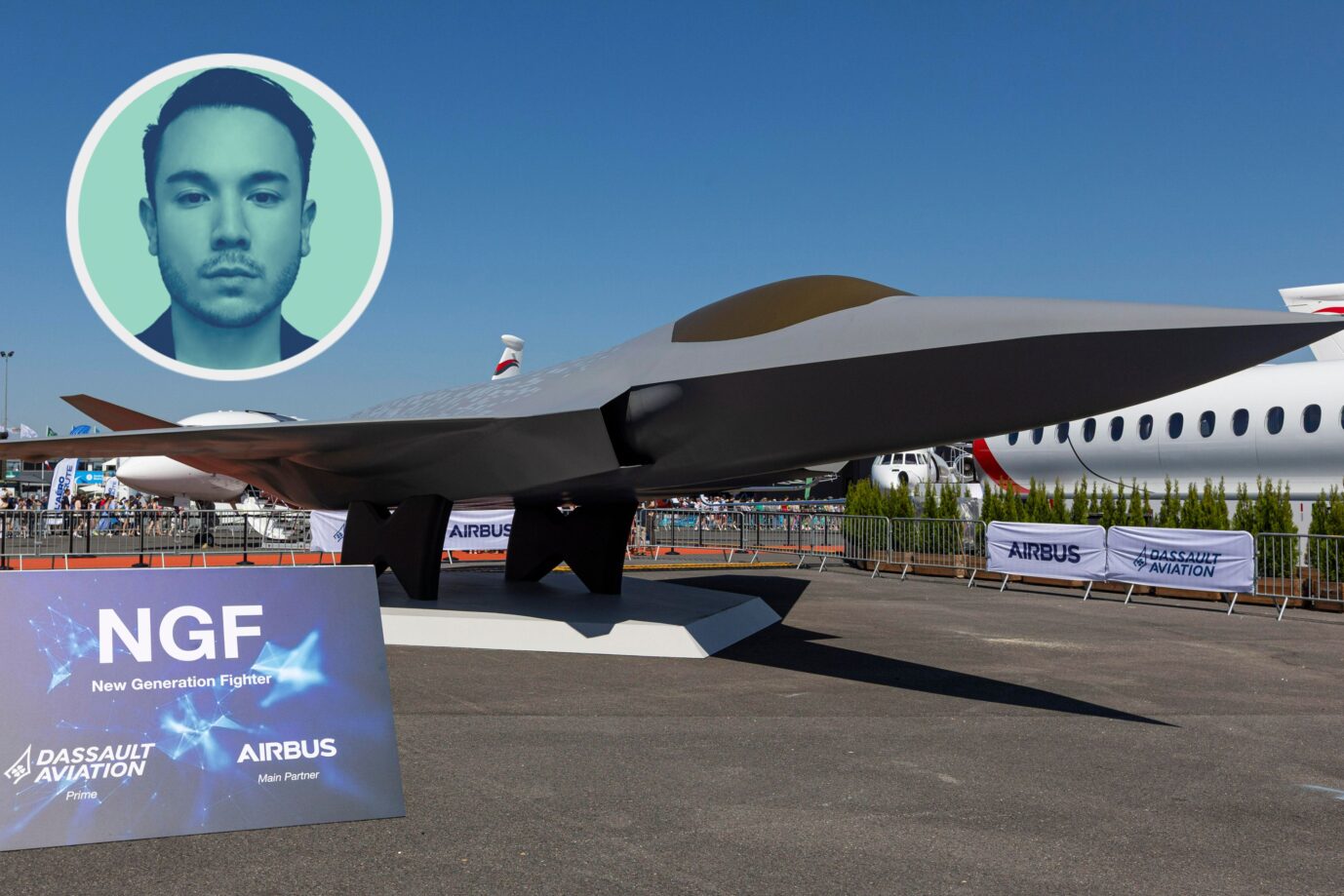
The Future Combat Air System, known as FCAS, was unveiled several years ago as a showcase of European defense cooperation. The sixth-generation fighter jet was designed to operate alongside drone swarms, artificial intelligence systems, networked sensors, and advanced weapons systems that would redefine 21st-century air warfare. According to Junge Freiheit, what began as a technological grand promise has ended in disillusionment.

The project has effectively failed due to diverging national interests and conflicting demands from the participating defense contractors. French manufacturer Dassault insisted for years on retaining control over the critical development areas of the aircraft and the intellectual property rights associated with it.

Berlin Pays, Paris Rules

Germany found itself increasingly relegated to the role of financier and supplier, while Paris claimed the decisive rights and industrial leadership. As Junge Freiheit reports, Berlin was expected to pay while Paris wanted to rule. In European Sunday speeches, this arrangement is called partnership.

The German government’s decision to abandon joint fighter development with France comes as little surprise to industry insiders. Behind closed doors, FCAS has been regarded for years as a textbook case of how major European defense projects can fail when national vanities, complicated work-sharing arrangements, industrial turf protection, and endless negotiations over technology rights and export controls destroy otherwise promising initiatives.

France has traditionally proven itself an uncompromising partner in such matters. Paris views defense policy not as a charitable European community exercise but as an instrument of national power. This cannot be held against the French, but it must finally be understood and acted upon accordingly.

Bitter Setback for Germany and Europe

For Germany and all of Europe, the debacle remains bitter. The need for next-generation combat aircraft persists. The Eurofighter will not fly forever. The Tornado is disappearing. The F-35 is being procured for nuclear sharing, but it does not replace an independent European aerospace industry.

While Europe debates, the United States, China, and other powers are already developing the next generation of their air forces. Meanwhile, the war in Ukraine demonstrates that modern air warfare consists not only of one large combat aircraft but of drones, sensor fusion, electronic warfare, AI-supported target acquisition, data networking, and the ability to adapt quickly to new threats. Time is not working in Europe’s favor, and certainly not for German procurement bureaucracies.

Despite all justified criticism of the FCAS project, one insight must not be lost: Europe can hardly avoid developing its own next-generation fighter aircraft in the long term. The alternative would be increasing dependence on American platforms. In the short term, this seems convenient because the F-35 exists, flies, is available in quantity, and has capabilities that Europe currently cannot deliver alone. In the long term, however, convenience is rarely sovereignty.

Industrial Capabilities at Stake

Those who no longer develop their own combat aircraft lose not just a product but entire industrial capabilities. Eventually, modern aircraft are flown but with foreign spare parts chains, foreign software, foreign certifications, and foreign political priorities. This is standard for many nations that are completely dependent on other countries for defense equipment and other areas.

Precisely for this reason, a new initiative by German industry is noteworthy. Under the leadership of Airbus Defence and Space, an alliance called Team Gen 6 has formed to fill the vacuum. Participating companies include MBDA, Hensoldt, Diehl Defence, Liebherr, MTU Aero Engines, Rohde & Schwarz, and Autoflug.

These are firms that already cover essential capabilities for a modern air combat system today: sensors, missiles, engines, electronics, communication systems, protection systems, and integration. This is not yet a finished program but initially an industrial policy signal to the German government. The signal alone shows that Germany has understood that a failed FCAS must not automatically mean surrendering the next generation of European air combat capability to Washington without a fight.

Pragmatic Alternative in Development

These plans remain in their infancy, and the shock of FCAS’s collapse must still be digested. It is by no means certain that this will result in a viable program. Germany will likely not want to initially build a full-scale German FCAS but rather develop a less overloaded, more pragmatic concept.

The war in Ukraine argues against the old defense logic that every new system must automatically become larger, heavier, more expensive, and more complex. The future lies not only in one golden super-jet that can do everything but in the interaction between manned platforms and affordable unmanned systems.

With information from Junge Freiheit

Share:
Dimitris Papafotis
Dimitris Papafotis

Dimitris Papafotis is the editor-in-chief of NewsFire.GR. He was born and raised in Athens. He studied at the Journalism Workshop (1991-1993). He currently lives in Pyrgos, Ilia, where he has been active in radio and various newspapers, while also maintaining his personal blog, Papafotis.gr.

The Future Combat Air System, known as FCAS, was unveiled several years ago as a showcase of European defense cooperation. The sixth-generation fighter jet was designed to operate alongside drone swarms, artificial intelligence systems, networked sensors, and advanced weapons systems that would redefine 21st-century air warfare. According to Junge Freiheit, what began as a technological grand promise has ended in disillusionment.

The project has effectively failed due to diverging national interests and conflicting demands from the participating defense contractors. French manufacturer Dassault insisted for years on retaining control over the critical development areas of the aircraft and the intellectual property rights associated with it.

Berlin Pays, Paris Rules

Germany found itself increasingly relegated to the role of financier and supplier, while Paris claimed the decisive rights and industrial leadership. As Junge Freiheit reports, Berlin was expected to pay while Paris wanted to rule. In European Sunday speeches, this arrangement is called partnership.

The German government’s decision to abandon joint fighter development with France comes as little surprise to industry insiders. Behind closed doors, FCAS has been regarded for years as a textbook case of how major European defense projects can fail when national vanities, complicated work-sharing arrangements, industrial turf protection, and endless negotiations over technology rights and export controls destroy otherwise promising initiatives.

France has traditionally proven itself an uncompromising partner in such matters. Paris views defense policy not as a charitable European community exercise but as an instrument of national power. This cannot be held against the French, but it must finally be understood and acted upon accordingly.

Bitter Setback for Germany and Europe

For Germany and all of Europe, the debacle remains bitter. The need for next-generation combat aircraft persists. The Eurofighter will not fly forever. The Tornado is disappearing. The F-35 is being procured for nuclear sharing, but it does not replace an independent European aerospace industry.

While Europe debates, the United States, China, and other powers are already developing the next generation of their air forces. Meanwhile, the war in Ukraine demonstrates that modern air warfare consists not only of one large combat aircraft but of drones, sensor fusion, electronic warfare, AI-supported target acquisition, data networking, and the ability to adapt quickly to new threats. Time is not working in Europe’s favor, and certainly not for German procurement bureaucracies.

Despite all justified criticism of the FCAS project, one insight must not be lost: Europe can hardly avoid developing its own next-generation fighter aircraft in the long term. The alternative would be increasing dependence on American platforms. In the short term, this seems convenient because the F-35 exists, flies, is available in quantity, and has capabilities that Europe currently cannot deliver alone. In the long term, however, convenience is rarely sovereignty.

Industrial Capabilities at Stake

Those who no longer develop their own combat aircraft lose not just a product but entire industrial capabilities. Eventually, modern aircraft are flown but with foreign spare parts chains, foreign software, foreign certifications, and foreign political priorities. This is standard for many nations that are completely dependent on other countries for defense equipment and other areas.

Precisely for this reason, a new initiative by German industry is noteworthy. Under the leadership of Airbus Defence and Space, an alliance called Team Gen 6 has formed to fill the vacuum. Participating companies include MBDA, Hensoldt, Diehl Defence, Liebherr, MTU Aero Engines, Rohde & Schwarz, and Autoflug.

These are firms that already cover essential capabilities for a modern air combat system today: sensors, missiles, engines, electronics, communication systems, protection systems, and integration. This is not yet a finished program but initially an industrial policy signal to the German government. The signal alone shows that Germany has understood that a failed FCAS must not automatically mean surrendering the next generation of European air combat capability to Washington without a fight.

Pragmatic Alternative in Development

These plans remain in their infancy, and the shock of FCAS’s collapse must still be digested. It is by no means certain that this will result in a viable program. Germany will likely not want to initially build a full-scale German FCAS but rather develop a less overloaded, more pragmatic concept.

The war in Ukraine argues against the old defense logic that every new system must automatically become larger, heavier, more expensive, and more complex. The future lies not only in one golden super-jet that can do everything but in the interaction between manned platforms and affordable unmanned systems.

With information from Junge Freiheit

