
French Commentator: Music Festival Hijacked as Republic Dances on Its Own Ruins
France's Music Day festival, established in 1982 as a unifying cultural celebration, has been transformed into a political platform by far-left activists staging ideological demonstrations.
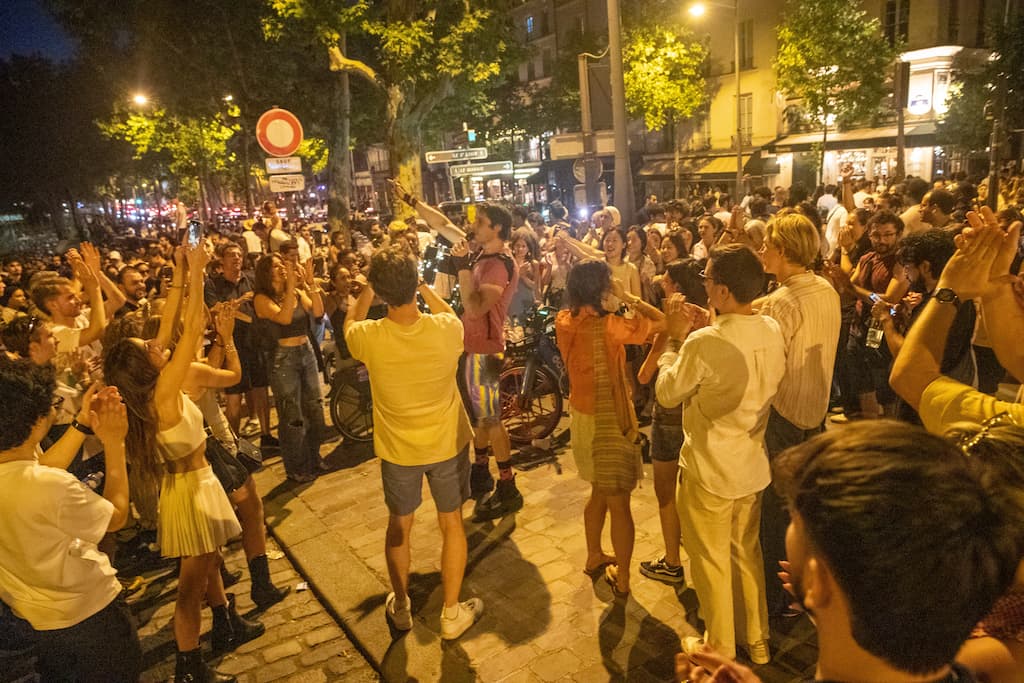

According to Valeurs Actuelles, when Jack Lang first invited the French people to flood the streets with music, song, and dance to mark the arrival of summer more than four decades ago, few could have predicted that this popular celebration designed to unite the nation would become a theater for political, communitarian, and ideological posturing.
The Music Day festival originally belonged to everyone. From children scattered across village squares to accordion players along the banks of the Marne, from municipal brass bands echoing through small towns to amateur rock groups in provincial alleys, the celebration animated the entire country with shared joy. It was a French festival in the noblest sense: popular without vulgarity, joyful without aggression, collective without militancy.
Revolutionary Tactics Applied to French Tradition
Today, Valeurs Actuelles reports, this festival finds itself violated and transformed into a giant political rally draped in the deceptive garments of antiracism. The tactic is not new but as old as revolution itself. First, symbols are seized and emptied of their substance, then turned against those who forged them.
The Bolsheviks employed this method with traditional Russian festivals, substituting revolutionary rituals for religious celebrations. The Jacobins during the Terror transformed Christian feasts into cults of Reason or the Supreme Being. Mao Zedong during the Cultural Revolution called for destroying the “four olds” to erase the past and impose a new narrative. The mechanism remains constant: erase common memory to impose a new story.
What should be celebration becomes reeducation. What should be festivity becomes profession of faith. What should be music becomes the din of propaganda.
LFI’s Political Operation
The supposedly antiracist concert is not a musical event but a political operation, Valeurs Actuelles reveals. It represents an ideological show of force orchestrated by those who have long considered France not a nation to love but a guilt to expiate. Behind conventional slogans and syrupy speeches about living together lies the same obsession: deconstructing historical France to substitute a fragmented, communitarian, and uprooted society.
Mélenchon’s Dangerous Insinuations
Jean-Luc Mélenchon has given this affair an even more troubling dimension. When he suggests that the prohibition of this gathering was obtained under the influence of CRIF, when he implies the existence of hidden forces acting in the shadows of institutions to censure his movement, when he implicitly designates a representative organization of French Jews as responsible for his troubles, he revives the old demons of the most sordid antisemitism that once led Europe to the abyss.
This music is much older than the Music Day festival. It has traversed centuries in various forms, always consisting of designating a minority as a hidden power, subterranean influence, or invisible hand pulling society’s strings. Drumont employed it in La France juive. Propagandists of the 1930s did likewise. Europe’s most dubious populist movements have never ceased using it.
Naturally, the words change and rhetorical precautions multiply. But the insinuations remain. When some perceive lobbies, networks, hidden influences, and concealed groups manipulating institutions everywhere, everyone understands perfectly what fantasies are at play.
Modern Antisemitism’s Elegant Disguise
Modern antisemitism no longer always wears the crude uniform of old caricatures. It now borrows the more elegant garments of insinuation, preferring the wink to the insult, suggestion to accusation. But its scent remains recognizable. Certain ideas, as critics note, always smell just as foul.
The transformation of a unifying national celebration into a vehicle for political division and antisemitic dog whistles represents more than cultural appropriation. It signals a deliberate strategy to fragment French national identity and replace shared tradition with ideological warfare.
With information from Valeurs Actuelles





