Necessary Cookies

Required for the site to function. Cannot be disabled.

Analytics Cookies

Help us understand how visitors interact with our site (Google Analytics via GTM).

Marketing Cookies

Used to track visitors and deliver personalised advertisements.

We use cookies to enhance your browsing experience and analyse site traffic. By clicking Accept All, you consent to our use of cookies. Privacy Policy
NewsFire Global
Home News Europe World Christianity Culture Wars Opinion Video
Information
About Us Authors Advertising Terms & Conditions Privacy Policy Contact
R2B Media
R2B NEWSFIRE.GR PAPAFOTIS.GR THRACTION HELLENIC CONSERVATIVES RIGHT2THEBONE YT
News Europe

France Joins Rising Global Nationalist Movement

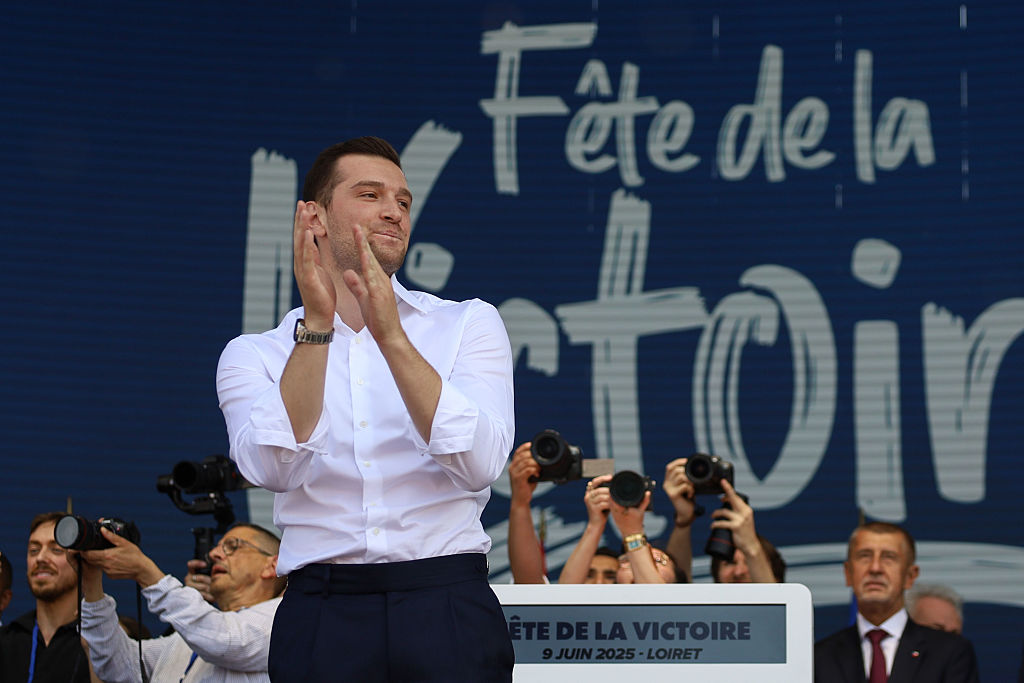
French nationalist leader Jordan Bardella has publicly distanced himself from Donald Trump, calling the U.S. president erratic and rejecting any American endorsement ahead of France's presidential race.

Dimitris Papafotis
Dimitris Papafotis Editor in Chief
JUNE 16, 2026 AT 4:45 PM

According to Brussels Signal, Bardella criticized Trump this week for being unpredictable and constantly shifting in his positions, while explicitly rejecting the idea of a presidential endorsement from across the Atlantic.

The 31-year-old leader of the National Rally has yet to secure his party’s nomination, with Marine Le Pen still refusing to clarify whether she will step aside even if French courts permit her to run. A judicial decision on Le Pen’s eligibility is expected this summer. Should she remain barred or choose to withdraw, Bardella stands as the frontrunner according to current polling data.

His calculated rejection of American support has reignited debate over whether a so-called nationalist international can function coherently. Critics argue that unlike the socialist international, which operates toward a unified globalist agenda, nationalist movements inherently prioritize their own national interests and cannot sustain genuine cooperation without inevitable fractures.

French Ambitions and American Influence

Bardella’s wariness toward Washington reflects France’s longstanding desire to reassert itself as an independent great power. The 20th century proved bruising for Paris: reliant on American intervention in both world wars, humiliated at Suez, defeated in Algeria, and forced to cede Southeast Asia after losing Vietnam. France now seeks to reclaim strategic autonomy in the 21st century.

As Brussels Signal reports, an American endorsement could actually damage Bardella’s electoral prospects domestically, where French voters would likely react negatively to overt U.S. involvement. More critically, such ties could constrain his freedom of action as president.

Eric Zemmour, the nationalist commentator and former presidential candidate, recently visited Washington and addressed multiple conservative think tanks. He similarly dismissed the notion that French nationalism requires American backing, noting that anti-migration politics in France predates the Trump movement entirely.

The Limits of Nationalist Cooperation

The contrast with other European nationalist leaders is striking. Polish President Karol Nawrocki actively pursued Trump’s endorsement, securing photo opportunities in the Oval Office just weeks before his election. The divergent approaches highlight fundamental tensions within any attempted nationalist alliance.

While left-wing internationalism operates seamlessly toward centralized global governance, nationalist governments cannot and will not subordinate their national interests to collective action. Doing so would betray their core principles and the voters who elevated them to power.

France’s position is particularly distinctive. Paris has been working to expand its nuclear umbrella, preserve remaining influence in Africa, and exploit growing cracks in the European Union. Friction between France and Germany has already derailed joint defense projects, including cooperation on a new fighter jet.

The fracturing of the EU under multipolar pressures presents Paris with an opportunity to reassert continental leadership. Bardella’s government, should he win, would likely pursue greater strategic independence from both Brussels and Washington while selectively cooperating with like-minded governments on specific issues where French interests align.

This approach defines the realistic scope of nationalist cooperation: tactical partnerships on shared priorities rather than institutional subordination to any international framework. For Bardella, maintaining distance from Trump may prove essential to both electoral victory and presidential effectiveness.

With information from Brussels Signal

Share:
Dimitris Papafotis
Dimitris Papafotis

Dimitris Papafotis is the editor-in-chief of NewsFire.GR. He was born and raised in Athens. He studied at the Journalism Workshop (1991-1993). He currently lives in Pyrgos, Ilia, where he has been active in radio and various newspapers, while also maintaining his personal blog, Papafotis.gr.

According to Brussels Signal, Bardella criticized Trump this week for being unpredictable and constantly shifting in his positions, while explicitly rejecting the idea of a presidential endorsement from across the Atlantic.

The 31-year-old leader of the National Rally has yet to secure his party’s nomination, with Marine Le Pen still refusing to clarify whether she will step aside even if French courts permit her to run. A judicial decision on Le Pen’s eligibility is expected this summer. Should she remain barred or choose to withdraw, Bardella stands as the frontrunner according to current polling data.

His calculated rejection of American support has reignited debate over whether a so-called nationalist international can function coherently. Critics argue that unlike the socialist international, which operates toward a unified globalist agenda, nationalist movements inherently prioritize their own national interests and cannot sustain genuine cooperation without inevitable fractures.

French Ambitions and American Influence

Bardella’s wariness toward Washington reflects France’s longstanding desire to reassert itself as an independent great power. The 20th century proved bruising for Paris: reliant on American intervention in both world wars, humiliated at Suez, defeated in Algeria, and forced to cede Southeast Asia after losing Vietnam. France now seeks to reclaim strategic autonomy in the 21st century.

As Brussels Signal reports, an American endorsement could actually damage Bardella’s electoral prospects domestically, where French voters would likely react negatively to overt U.S. involvement. More critically, such ties could constrain his freedom of action as president.

Eric Zemmour, the nationalist commentator and former presidential candidate, recently visited Washington and addressed multiple conservative think tanks. He similarly dismissed the notion that French nationalism requires American backing, noting that anti-migration politics in France predates the Trump movement entirely.

The Limits of Nationalist Cooperation

The contrast with other European nationalist leaders is striking. Polish President Karol Nawrocki actively pursued Trump’s endorsement, securing photo opportunities in the Oval Office just weeks before his election. The divergent approaches highlight fundamental tensions within any attempted nationalist alliance.

While left-wing internationalism operates seamlessly toward centralized global governance, nationalist governments cannot and will not subordinate their national interests to collective action. Doing so would betray their core principles and the voters who elevated them to power.

France’s position is particularly distinctive. Paris has been working to expand its nuclear umbrella, preserve remaining influence in Africa, and exploit growing cracks in the European Union. Friction between France and Germany has already derailed joint defense projects, including cooperation on a new fighter jet.

The fracturing of the EU under multipolar pressures presents Paris with an opportunity to reassert continental leadership. Bardella’s government, should he win, would likely pursue greater strategic independence from both Brussels and Washington while selectively cooperating with like-minded governments on specific issues where French interests align.

This approach defines the realistic scope of nationalist cooperation: tactical partnerships on shared priorities rather than institutional subordination to any international framework. For Bardella, maintaining distance from Trump may prove essential to both electoral victory and presidential effectiveness.

With information from Brussels Signal

