Necessary Cookies

Required for the site to function. Cannot be disabled.

Analytics Cookies

Help us understand how visitors interact with our site (Google Analytics via GTM).

Marketing Cookies

Used to track visitors and deliver personalised advertisements.

We use cookies to enhance your browsing experience and analyse site traffic. By clicking Accept All, you consent to our use of cookies. Privacy Policy
NewsFire Global
Home News Europe World Christianity Culture Wars Opinion Video
Information
About Us Authors Advertising Terms & Conditions Privacy Policy Contact
R2B Media
R2B NEWSFIRE.GR PAPAFOTIS.GR THRACTION HELLENIC CONSERVATIVES RIGHT2THEBONE YT
News Europe

France in Full Decline

A French mayor fled under armed protection after death threats from drug traffickers, highlighting what analysts call France's descent into a narco-state with criminal groups challenging government authority.

Dimitris Papafotis
Dimitris Papafotis Editor in Chief
JULY 22, 2026 AT 12:56 PM

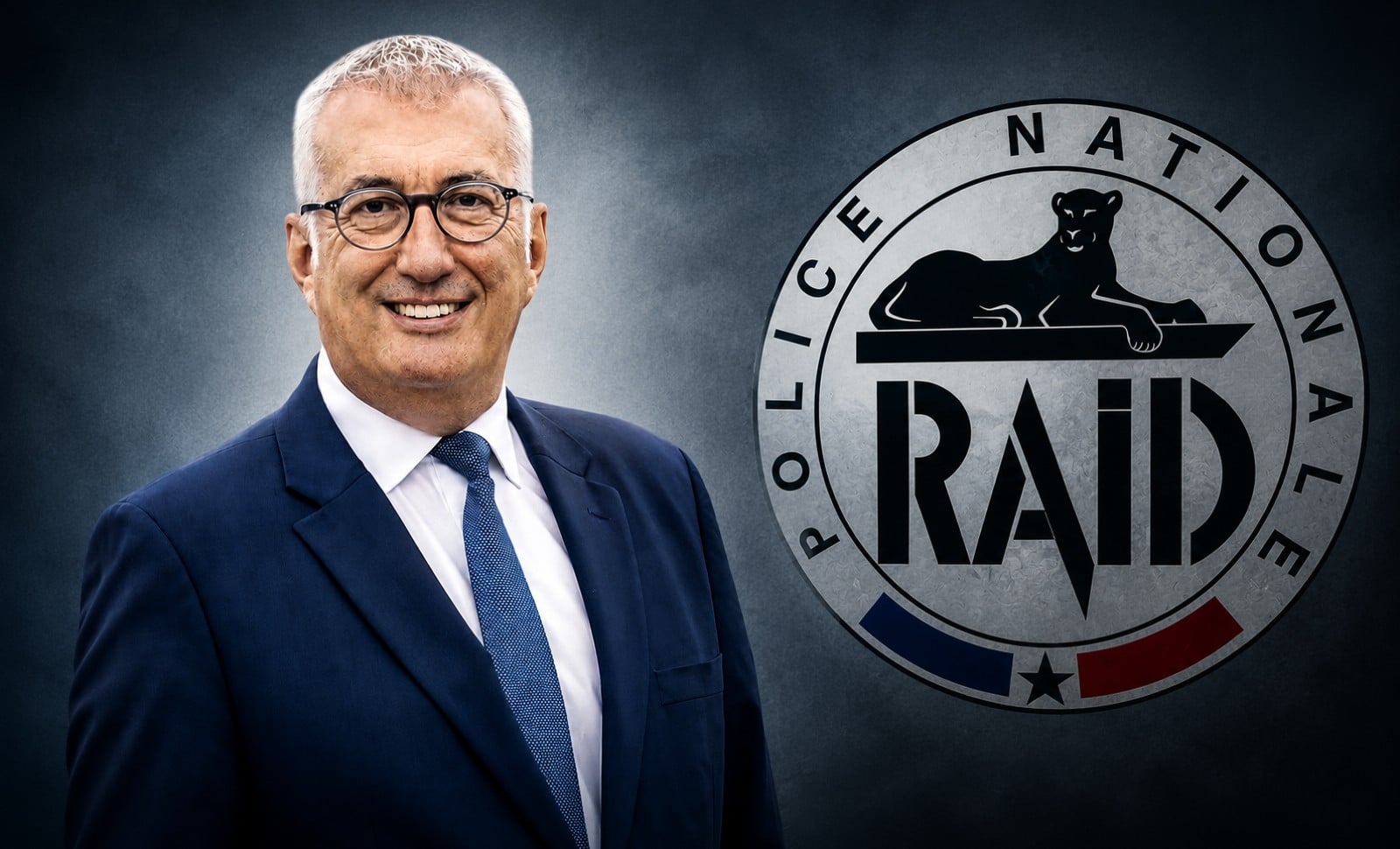
Christophe Rivenq, mayor of Alès in southern France, was evacuated in the middle of the night by France’s elite RAID police unit after enduring a sustained campaign of intimidation that included 9mm bullets deposited in his mailbox, threatening emails and text messages, revenge graffiti sprayed on his home, and a potentially booby-trapped vehicle parked outside his residence, according to Causeur.

The threats came after Rivenq dared to confront drug traffickers operating in his municipality. But what makes this incident significant goes far beyond the immediate danger to one elected official.

Competing Sovereignty on French Soil

When a criminal organization publicly designates a mayor as a target, it is not merely attempting to terrorize an individual. It is announcing to the entire population that the French state no longer holds a monopoly on power, and that in certain territories a competing authority now exists—one that collects its own taxes, distributes its own revenues, recruits its own soldiers, imposes its own rules, and punishes those who resist.

Territory by territory, this substitute sovereignty is being established quietly across France. Historian and analyst Charles Rojzman notes in Causeur that civilizations initially refuse to acknowledge such warning signs because they contradict the reassuring self-image societies maintain about themselves.

States do not always die from foreign invasion, as Causeur reports. More often they decompose when parallel sovereignty takes root in marginal areas before gradually advancing toward the center. Mexico and certain regions of Latin America and Italy have long provided this spectacle. France has persisted in believing it would escape through some form of historical exception, even as symptoms of slow disintegration accumulate.

Beyond Ordinary Criminality

Narcotrafficking networks no longer constitute just another form of criminality. They possess considerable financial power, intimidation capacity that now reaches elected officials themselves, and corrupting influence that progressively infiltrates the mechanisms of economic life and sometimes institutions. Entire neighborhoods now live directly or indirectly from this clandestine economy.

Traffickers are no longer content to circumvent the state. They are already experimenting with what resembles substitute sovereignty. They do not occupy a void—they actively seek to create one.

Islamization Filling the Sovereignty Vacuum

Parallel to the drug networks, and sometimes in complicity with them, the Islamization of these separated territories also contributes to filling this sovereignty vacuum, Causeur notes.

The French state faces organizations that do not merely contest particular rules but challenge sovereignty itself. The instruments of an ordinary rule-of-law state were designed to protect individual freedoms in a society where adversaries of the law still recognized, even negatively, that law’s legitimacy. France now confronts entities that recognize no such legitimacy.

The Clientele Behind the Cartels

Yet even necessary reconquest operations by security forces will not suffice if authorities persist in examining only the visible face of the phenomenon. For years, France has scrutinized cartels, importation networks, weapons, dealing points, and score-settling violence. Officials speak constantly of traffickers but almost never of those who make their prosperity possible.

No market survives without clientele. Why do millions of French citizens feel the need to chemically modify their relationship with the world? Why do so many men and women seek in cocaine, cannabis, diverted medications, alcohol or other addictions what existence itself seems incapable of offering them?

The fuel for the DZ Mafia, Causeur observes, comes from French society itself—from a civilization that may be surrendering the will to maintain its own authority and coherence.

The question is no longer whether isolated criminal incidents will occur, but whether France will follow the path of nations where state sovereignty has been permanently compromised by narco-criminal parallel power structures. The case of Mayor Rivenq demonstrates that this transformation is already well underway.

With information from Causeur

Share:
Dimitris Papafotis
Dimitris Papafotis

Dimitris Papafotis is the editor-in-chief of NewsFire.GR. He was born and raised in Athens. He studied at the Journalism Workshop (1991-1993). He currently lives in Pyrgos, Ilia, where he has been active in radio and various newspapers, while also maintaining his personal blog, Papafotis.gr.

Christophe Rivenq, mayor of Alès in southern France, was evacuated in the middle of the night by France’s elite RAID police unit after enduring a sustained campaign of intimidation that included 9mm bullets deposited in his mailbox, threatening emails and text messages, revenge graffiti sprayed on his home, and a potentially booby-trapped vehicle parked outside his residence, according to Causeur.

The threats came after Rivenq dared to confront drug traffickers operating in his municipality. But what makes this incident significant goes far beyond the immediate danger to one elected official.

Competing Sovereignty on French Soil

When a criminal organization publicly designates a mayor as a target, it is not merely attempting to terrorize an individual. It is announcing to the entire population that the French state no longer holds a monopoly on power, and that in certain territories a competing authority now exists—one that collects its own taxes, distributes its own revenues, recruits its own soldiers, imposes its own rules, and punishes those who resist.

Territory by territory, this substitute sovereignty is being established quietly across France. Historian and analyst Charles Rojzman notes in Causeur that civilizations initially refuse to acknowledge such warning signs because they contradict the reassuring self-image societies maintain about themselves.

States do not always die from foreign invasion, as Causeur reports. More often they decompose when parallel sovereignty takes root in marginal areas before gradually advancing toward the center. Mexico and certain regions of Latin America and Italy have long provided this spectacle. France has persisted in believing it would escape through some form of historical exception, even as symptoms of slow disintegration accumulate.

Beyond Ordinary Criminality

Narcotrafficking networks no longer constitute just another form of criminality. They possess considerable financial power, intimidation capacity that now reaches elected officials themselves, and corrupting influence that progressively infiltrates the mechanisms of economic life and sometimes institutions. Entire neighborhoods now live directly or indirectly from this clandestine economy.

Traffickers are no longer content to circumvent the state. They are already experimenting with what resembles substitute sovereignty. They do not occupy a void—they actively seek to create one.

Islamization Filling the Sovereignty Vacuum

Parallel to the drug networks, and sometimes in complicity with them, the Islamization of these separated territories also contributes to filling this sovereignty vacuum, Causeur notes.

The French state faces organizations that do not merely contest particular rules but challenge sovereignty itself. The instruments of an ordinary rule-of-law state were designed to protect individual freedoms in a society where adversaries of the law still recognized, even negatively, that law’s legitimacy. France now confronts entities that recognize no such legitimacy.

The Clientele Behind the Cartels

Yet even necessary reconquest operations by security forces will not suffice if authorities persist in examining only the visible face of the phenomenon. For years, France has scrutinized cartels, importation networks, weapons, dealing points, and score-settling violence. Officials speak constantly of traffickers but almost never of those who make their prosperity possible.

No market survives without clientele. Why do millions of French citizens feel the need to chemically modify their relationship with the world? Why do so many men and women seek in cocaine, cannabis, diverted medications, alcohol or other addictions what existence itself seems incapable of offering them?

The fuel for the DZ Mafia, Causeur observes, comes from French society itself—from a civilization that may be surrendering the will to maintain its own authority and coherence.

The question is no longer whether isolated criminal incidents will occur, but whether France will follow the path of nations where state sovereignty has been permanently compromised by narco-criminal parallel power structures. The case of Mayor Rivenq demonstrates that this transformation is already well underway.

With information from Causeur

