Necessary Cookies

Required for the site to function. Cannot be disabled.

Analytics Cookies

Help us understand how visitors interact with our site (Google Analytics via GTM).

Marketing Cookies

Used to track visitors and deliver personalised advertisements.

We use cookies to enhance your browsing experience and analyse site traffic. By clicking Accept All, you consent to our use of cookies. Privacy Policy
NewsFire Global
Home News Europe World Christianity Culture Wars Opinion Video
Information
About Us Authors Advertising Terms & Conditions Privacy Policy Contact
R2B Media
R2B NEWSFIRE.GR PAPAFOTIS.GR THRACTION HELLENIC CONSERVATIVES RIGHT2THEBONE YT
News Europe

France Funds Islamist Books Teaching Beheading via Culture Pass

A French government cultural program faces criticism for providing teenagers access to Islamic texts containing violent passages, which officials defend as historically ancient works.
Stefanos Banos
Stefanos Banos Staff Writer
JUNE 22, 2026 AT 1:38 PM

The controversy erupted when Nicolas Dragon, a deputy from the National Rally party, submitted a written question on February 24, 2026, to the Minister of Culture, according to Valeurs Actuelles. Dragon challenged whether offering religious books discussing jihad to 15-year-olds through the Pass Culture program truly constitutes cultural enrichment.

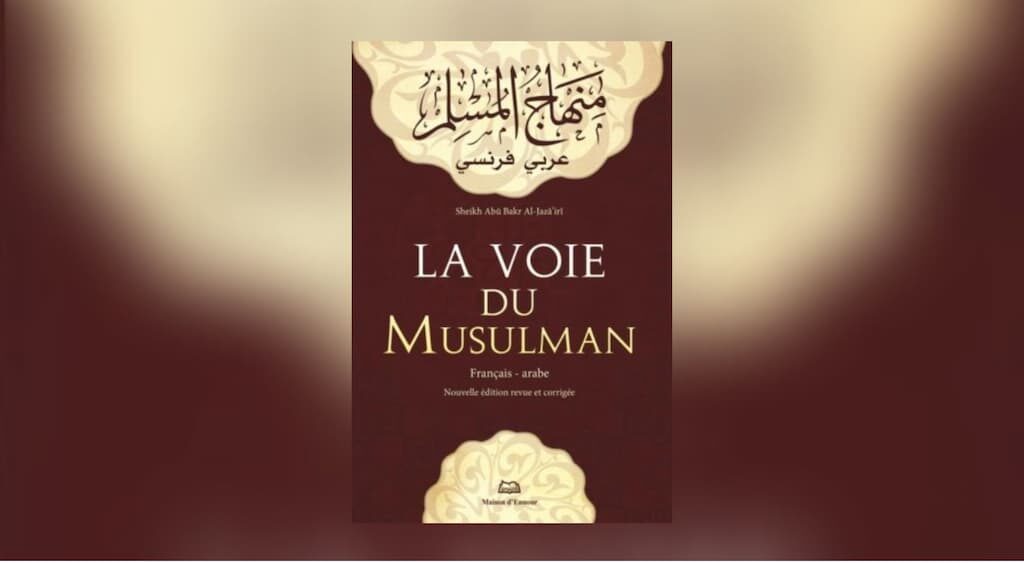
The Pass Culture initiative, entirely funded by public money and aimed at minors, has provided access to several controversial Islamic religious texts. Among them are The Way of the Muslim by Abou Bakr al-Djazairi, Sins and Healing by Ibn al-Qayyim, and Al-Muwatta by Imam Malik.

Prominent voices including philosopher Élisabeth Badinter and Mickaëlle Paty have denounced passages in these works as antisemitic, anti-Christian, homophobic, or calling for jihad, despite multiple formal complaints. The publications reportedly contain excerpts such as: “When you kill, do it well. When you slaughter, do it well,” “Homosexuality is worse than murder,” and “Whoever changes his religion, cut off his head.”

Government Defends Historical Context

After approximately two months of deliberation, the government responded to Dragon’s inquiry on April 14. The executive argued that these statements, however violent, corresponded to an ancient value system from seven centuries ago. Officials maintained that highlighting certain marginal content among millions of offerings on the platform should not overshadow the fact that Pass Culture serves as a tremendous tool for introducing young people to France’s cultural richness, with over 90 percent of 18-year-olds enrolled.

Only one book, Sins and Healing, has been temporarily removed from the Pass Culture catalog without permanent deletion. That text included passages stating it is the duty of all Muslims to acquire all types of military armaments and that the primary objective of jihad is to confront unbelievers. The government has not yet committed to permanently removing the book, whose connection to French cultural heritage remains unclear.

Double Standards in Western Society

Alexandre del Valle, an Islamic studies scholar and geopolitics professor, described the situation as a form of social pathology. The West defends values characterized as ultra-liberal while simultaneously making ample room for Salafist currents that directly contest these same values, del Valle noted.

While acknowledging that all religions contain violent passages, including in the Old Testament, del Valle emphasized that Western societies today offer primarily historical, symbolic, and pacified readings of their Judeo-Christian heritage. The problem lies in recent writings or literal interpretations adopted by radical Islamist movements, he argued.

Radical Preacher’s Works Remain Available

Del Valle pointed to the works of Youssef al-Qaradawi, whom he calls the pope of European Muslims, as a prime example. This historical preacher of the Muslim Brotherhood regularly outlines situations in which a Muslim could resort to murder. His book The Lawful and Prohibited in Islam states that there is no dialogue between Muslims and Jews except through the sword and the rifle. That book remains available in bookstores, as French courts have not seen fit to ban it.

The controversy raises fundamental questions about how far the state can guarantee freedom of expression without exposing minors to texts calling for violence, as Valeurs Actuelles reports. The debate continues over whether publicly funded programs should facilitate teenage access to religious texts promoting values fundamentally at odds with Western democratic principles.

With information from Valeurs Actuelles

Share:
Stefanos Banos
Stefanos Banos

Stefanos Banos was born in Piraeus and is an editor at NewsFire.GR, specializing in political analysis and international relations. He graduated from the Department of Communication and Media at the University of Bremen in Germany, where he also completed his Master of Arts in Communication and Media Studies. Married to Zoi, he is a proud father of three boys.

The controversy erupted when Nicolas Dragon, a deputy from the National Rally party, submitted a written question on February 24, 2026, to the Minister of Culture, according to Valeurs Actuelles. Dragon challenged whether offering religious books discussing jihad to 15-year-olds through the Pass Culture program truly constitutes cultural enrichment.

The Pass Culture initiative, entirely funded by public money and aimed at minors, has provided access to several controversial Islamic religious texts. Among them are The Way of the Muslim by Abou Bakr al-Djazairi, Sins and Healing by Ibn al-Qayyim, and Al-Muwatta by Imam Malik.

Prominent voices including philosopher Élisabeth Badinter and Mickaëlle Paty have denounced passages in these works as antisemitic, anti-Christian, homophobic, or calling for jihad, despite multiple formal complaints. The publications reportedly contain excerpts such as: “When you kill, do it well. When you slaughter, do it well,” “Homosexuality is worse than murder,” and “Whoever changes his religion, cut off his head.”

Government Defends Historical Context

After approximately two months of deliberation, the government responded to Dragon’s inquiry on April 14. The executive argued that these statements, however violent, corresponded to an ancient value system from seven centuries ago. Officials maintained that highlighting certain marginal content among millions of offerings on the platform should not overshadow the fact that Pass Culture serves as a tremendous tool for introducing young people to France’s cultural richness, with over 90 percent of 18-year-olds enrolled.

Only one book, Sins and Healing, has been temporarily removed from the Pass Culture catalog without permanent deletion. That text included passages stating it is the duty of all Muslims to acquire all types of military armaments and that the primary objective of jihad is to confront unbelievers. The government has not yet committed to permanently removing the book, whose connection to French cultural heritage remains unclear.

Double Standards in Western Society

Alexandre del Valle, an Islamic studies scholar and geopolitics professor, described the situation as a form of social pathology. The West defends values characterized as ultra-liberal while simultaneously making ample room for Salafist currents that directly contest these same values, del Valle noted.

While acknowledging that all religions contain violent passages, including in the Old Testament, del Valle emphasized that Western societies today offer primarily historical, symbolic, and pacified readings of their Judeo-Christian heritage. The problem lies in recent writings or literal interpretations adopted by radical Islamist movements, he argued.

Radical Preacher’s Works Remain Available

Del Valle pointed to the works of Youssef al-Qaradawi, whom he calls the pope of European Muslims, as a prime example. This historical preacher of the Muslim Brotherhood regularly outlines situations in which a Muslim could resort to murder. His book The Lawful and Prohibited in Islam states that there is no dialogue between Muslims and Jews except through the sword and the rifle. That book remains available in bookstores, as French courts have not seen fit to ban it.

The controversy raises fundamental questions about how far the state can guarantee freedom of expression without exposing minors to texts calling for violence, as Valeurs Actuelles reports. The debate continues over whether publicly funded programs should facilitate teenage access to religious texts promoting values fundamentally at odds with Western democratic principles.

With information from Valeurs Actuelles

