Necessary Cookies

Required for the site to function. Cannot be disabled.

Analytics Cookies

Help us understand how visitors interact with our site (Google Analytics via GTM).

Marketing Cookies

Used to track visitors and deliver personalised advertisements.

We use cookies to enhance your browsing experience and analyse site traffic. By clicking Accept All, you consent to our use of cookies. Privacy Policy
NewsFire Global
Home News Europe World Christianity Culture Wars Opinion Video
Information
About Us Authors Advertising Terms & Conditions Privacy Policy Contact
R2B Media
R2B NEWSFIRE.GR PAPAFOTIS.GR THRACTION HELLENIC CONSERVATIVES RIGHT2THEBONE YT
News Europe

Foreigners Receive Double in Welfare Benefits Than Germans

Two-thirds of Germany's supplementary welfare subsidies for furniture and household items are going to foreign nationals, according to new data that has drawn criticism from opposition lawmakers.

Dimitris Papafotis
Dimitris Papafotis Editor in Chief
MAY 25, 2026 AT 6:45 PM Updated: May 25, 2026 8:23 PM

The figures, obtained by Reinhard Mixl, an AfD member of the Bundestag, and Johannes Meier, an AfD representative in the Bavarian state parliament, reveal that of approximately 225 million euros allocated in 2025 for so-called “miscellaneous municipal benefits” under the Bürgergeld programme, 67.3 percent or 151.6 million euros went to non-German recipients, as Nius reports. German citizens received 73.7 million euros, representing just one-third of the total distribution.

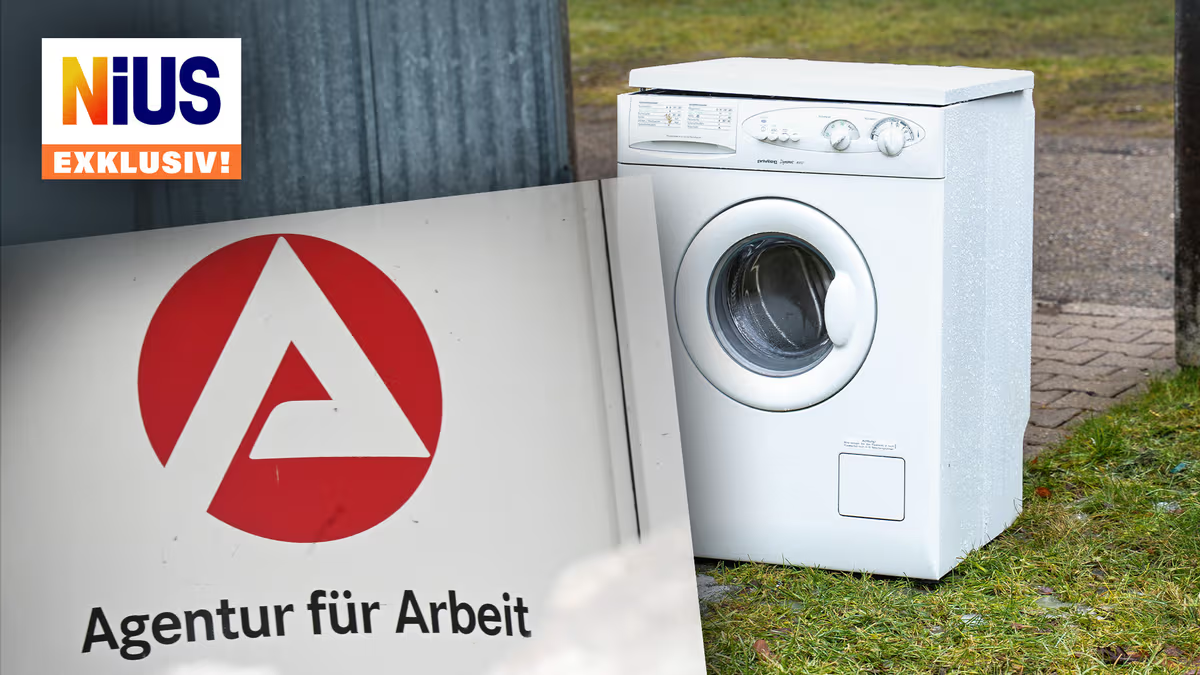
These supplementary payments cover items such as furniture, household appliances, and initial housing furnishings for benefit recipients. The disparity is even more pronounced at the regional level: in Bavaria, 75 percent of the 21.3 million euros in such benefits flowed to foreign nationals, with only a quarter going to German citizens.

Sharp criticism from opposition lawmakers

The data has drawn sharp criticism from Reinhard Mixl, who described the allocation pattern as fundamentally unjust. It is a crying injustice that hard-working Germans must pay for their own furnishings after taxes and deductions, while foreigners receive these things as gifts from the taxpayer, Mixl told Nius. He has called on the federal government to review eligibility criteria and prioritize German citizens in the distribution of such benefits.

The Bürgergeld system, which replaced the previous Hartz IV welfare scheme, has been a contentious political issue since its introduction. While the overall Bürgergeld budget sees nearly half of all payments going to foreign nationals, the proportion for supplementary municipal benefits is significantly higher, according to the Federal Employment Agency analysis.

Broader welfare debate intensifies

The findings add fuel to ongoing debates in Germany over immigration costs, benefit eligibility, and the fiscal burden on taxpayers. Critics argue that the current system creates perverse incentives and places an unfair burden on German workers, while supporters maintain that humanitarian obligations and legal frameworks require equal treatment of all legal residents regardless of nationality.

The disparity in benefit distribution comes amid broader concerns about migration costs and integration challenges facing Germany. The country has seen record levels of immigration in recent years, placing increased pressure on social welfare systems and municipal budgets across the federal states.

With information from Nius

Share:
Dimitris Papafotis
Dimitris Papafotis

Dimitris Papafotis is the editor-in-chief of NewsFire.GR. He was born and raised in Athens. He studied at the Journalism Workshop (1991-1993). He currently lives in Pyrgos, Ilia, where he has been active in radio and various newspapers, while also maintaining his personal blog, Papafotis.gr.

The figures, obtained by Reinhard Mixl, an AfD member of the Bundestag, and Johannes Meier, an AfD representative in the Bavarian state parliament, reveal that of approximately 225 million euros allocated in 2025 for so-called “miscellaneous municipal benefits” under the Bürgergeld programme, 67.3 percent or 151.6 million euros went to non-German recipients, as Nius reports. German citizens received 73.7 million euros, representing just one-third of the total distribution.

These supplementary payments cover items such as furniture, household appliances, and initial housing furnishings for benefit recipients. The disparity is even more pronounced at the regional level: in Bavaria, 75 percent of the 21.3 million euros in such benefits flowed to foreign nationals, with only a quarter going to German citizens.

Sharp criticism from opposition lawmakers

The data has drawn sharp criticism from Reinhard Mixl, who described the allocation pattern as fundamentally unjust. It is a crying injustice that hard-working Germans must pay for their own furnishings after taxes and deductions, while foreigners receive these things as gifts from the taxpayer, Mixl told Nius. He has called on the federal government to review eligibility criteria and prioritize German citizens in the distribution of such benefits.

The Bürgergeld system, which replaced the previous Hartz IV welfare scheme, has been a contentious political issue since its introduction. While the overall Bürgergeld budget sees nearly half of all payments going to foreign nationals, the proportion for supplementary municipal benefits is significantly higher, according to the Federal Employment Agency analysis.

Broader welfare debate intensifies

The findings add fuel to ongoing debates in Germany over immigration costs, benefit eligibility, and the fiscal burden on taxpayers. Critics argue that the current system creates perverse incentives and places an unfair burden on German workers, while supporters maintain that humanitarian obligations and legal frameworks require equal treatment of all legal residents regardless of nationality.

The disparity in benefit distribution comes amid broader concerns about migration costs and integration challenges facing Germany. The country has seen record levels of immigration in recent years, placing increased pressure on social welfare systems and municipal budgets across the federal states.

With information from Nius

