Necessary Cookies

Required for the site to function. Cannot be disabled.

Analytics Cookies

Help us understand how visitors interact with our site (Google Analytics via GTM).

Marketing Cookies

Used to track visitors and deliver personalised advertisements.

We use cookies to enhance your browsing experience and analyse site traffic. By clicking Accept All, you consent to our use of cookies. Privacy Policy
NewsFire Global
Home News Europe World Christianity Culture Wars Opinion Video
Information
About Us Authors Advertising Terms & Conditions Privacy Policy Contact
R2B Media
R2B NEWSFIRE.GR PAPAFOTIS.GR THRACTION HELLENIC CONSERVATIVES RIGHT2THEBONE YT
News Europe

EU’s Kallas Faces Backlash Over Israel ‘Apartheid’ Claims

EU foreign policy chief Kaja Kallas faces criticism for allegedly comparing Israeli policies to apartheid during private diplomatic meetings in Mexico, diverging from the bloc's established stance.
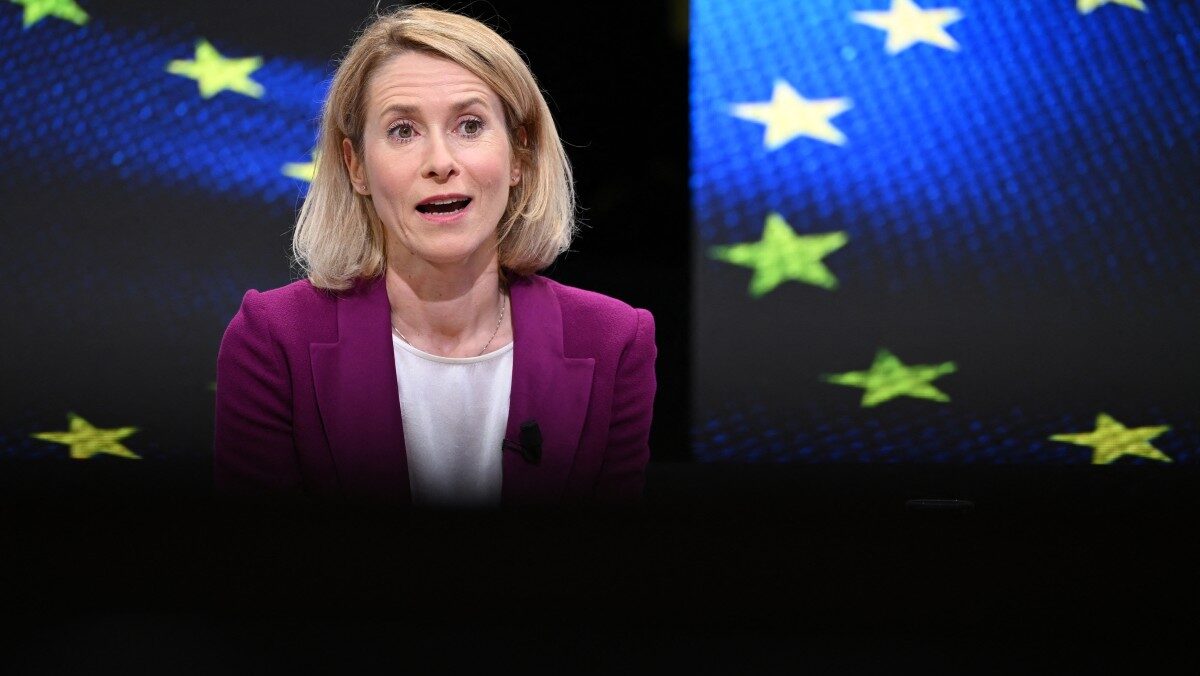

Dimitris Papafotis
Dimitris Papafotis Editor in Chief
JUNE 12, 2026 AT 6:51 PM

Kaja Kallas, the former Estonian prime minister now serving as the EU’s top diplomat, reportedly drew parallels between Israeli policies toward Palestinians and the racial segregation system that governed South Africa until the early 1990s. The remarks were allegedly made during confidential meetings with Mexican officials in Mexico City in late May, where Kallas was attending a summit as part of a senior EU delegation.

Diplomats and officials with knowledge of the discussions confirmed to The European Conservative that Kallas specifically compared Israel’s actions in Gaza and the West Bank to the apartheid regime. The characterization has triggered alarm among EU diplomatic circles because it represents a significant departure from the bloc’s established stance on the Israeli-Palestinian conflict.

While the European Union has long criticized Israeli settlement expansion and consistently advocated for a two-state solution, Brussels has carefully avoided endorsing accusations that Israel operates an apartheid system. Several major EU member states, notably Germany and France, have explicitly rejected such comparisons as inaccurate and inflammatory.

The controversy surrounding Kallas’s alleged remarks emerges at a particularly sensitive moment for European-Israeli relations and raises questions about whether the EU’s foreign policy leadership is diverging from the consensus positions of key member states on Middle Eastern affairs.

With information from The European Conservative

Share:
Dimitris Papafotis
Dimitris Papafotis

Dimitris Papafotis is the editor-in-chief of NewsFire.GR. He was born and raised in Athens. He studied at the Journalism Workshop (1991-1993). He currently lives in Pyrgos, Ilia, where he has been active in radio and various newspapers, while also maintaining his personal blog, Papafotis.gr.

Kaja Kallas, the former Estonian prime minister now serving as the EU’s top diplomat, reportedly drew parallels between Israeli policies toward Palestinians and the racial segregation system that governed South Africa until the early 1990s. The remarks were allegedly made during confidential meetings with Mexican officials in Mexico City in late May, where Kallas was attending a summit as part of a senior EU delegation.

Diplomats and officials with knowledge of the discussions confirmed to The European Conservative that Kallas specifically compared Israel’s actions in Gaza and the West Bank to the apartheid regime. The characterization has triggered alarm among EU diplomatic circles because it represents a significant departure from the bloc’s established stance on the Israeli-Palestinian conflict.

While the European Union has long criticized Israeli settlement expansion and consistently advocated for a two-state solution, Brussels has carefully avoided endorsing accusations that Israel operates an apartheid system. Several major EU member states, notably Germany and France, have explicitly rejected such comparisons as inaccurate and inflammatory.

The controversy surrounding Kallas’s alleged remarks emerges at a particularly sensitive moment for European-Israeli relations and raises questions about whether the EU’s foreign policy leadership is diverging from the consensus positions of key member states on Middle Eastern affairs.

With information from The European Conservative