Necessary Cookies

Required for the site to function. Cannot be disabled.

Analytics Cookies

Help us understand how visitors interact with our site (Google Analytics via GTM).

Marketing Cookies

Used to track visitors and deliver personalised advertisements.

We use cookies to enhance your browsing experience and analyse site traffic. By clicking Accept All, you consent to our use of cookies. Privacy Policy
NewsFire Global
Home News Europe World Christianity Culture Wars Opinion
Information
About Us Authors Advertising Terms & Conditions Privacy Policy Contact
R2B Media
R2B NEWSFIRE.GR PAPAFOTIS.GR THRACTION HELLENIC CONSERVATIVES RIGHT2THEBONE YT
News Europe

Europe Seeks to Free Uzbekistan from China’s Influence

The EU’s strategic pact with Uzbekistan aims to reduce Chinese dominance by enhancing trade ties and resource access, positioning Europe as a key player in Central Asia’s shifting economic landscape.

Newsroom
Newsroom Staff Writer
OCTOBER 28, 2025 AT 6:57 PM Updated: May 19, 2026 3:10 PM

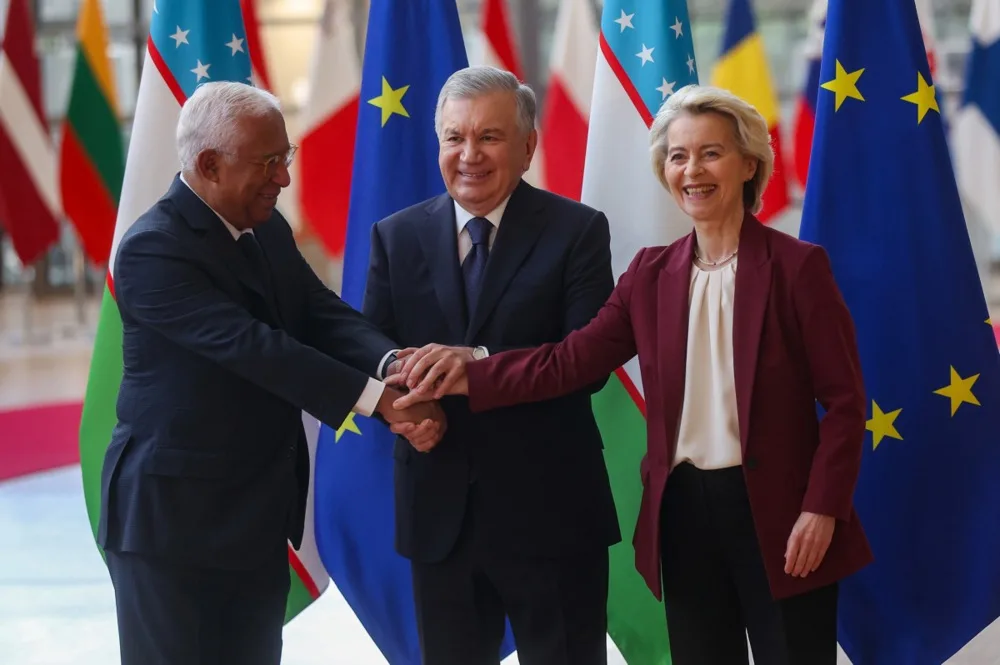
The European Union is moving forward with a strategic partnership with Uzbekistan aimed at reducing its dependence on China’s influence. The agreement, signed on October 24, targets cooperation in critical areas such as raw materials and market access, strengthening Uzbekistan’s position within the European economic sphere.

Significant Agreement on Raw Materials

On October 24, the EU signed a comprehensive agreement with Uzbekistan covering essential raw materials and market access. This move is part of a broader strategy to bring the country, which holds a strategic location in Central Asia, closer to the EU’s economic and regulatory sphere.

Support from the European Commission

The President of the European Commission, Ursula von der Leyen, described the agreement as a framework “for mutual benefit.” She also emphasized the EU’s support for Uzbekistan’s accession to the World Trade Organization (WTO), which will strengthen Tashkent’s alignment with the EU’s “rules-based” system, distancing it from China’s state-led economic model.

Policy of “Multidimensional” Foreign Relations

Uzbekistan, located in the heart of Central Asia, has historically balanced its relationships between major powers. Russia remains a key partner, historically the primary investor and security ally, while China’s influence has rapidly expanded through investments in infrastructure and mining. Brussels is now seeking to tilt this balance toward the West, positioning the EU as a strategic counterweight to Beijing’s growing presence.

Dependence on China and Strategic Risks

Uzbekistan’s acceptance into the World Trade Organization requires the completion of bilateral negotiations on market access for goods and services. China already has deep roots in Uzbekistan’s mining sector, with projects such as an iron ore complex near Tashkent and a non-ferrous metals plant. A $2.7 billion proposal from China for further mining development remains on the table.

Impacts of Dependence on Chinese Supplies

China’s dominance in global raw materials is viewed as a strategic risk by European policymakers. Brussels bureaucracy states it is responding “to global problems caused by China through their export restrictions.” China’s export restrictions on rare earths and other critical materials have revealed the world’s—and especially Europe’s—dependence on Beijing’s supply chains.

The International Energy Agency estimates that China processes about 70% of the world’s strategic metals and produces over 90% of the rare earth magnets used in electric vehicles, wind turbines, and defense systems—making global markets “vulnerable to shocks or trade restrictions.”

Economic Reality for Businesses

Varg Folkman, an analyst at the European Policy Center in Brussels, told Brussels Signal:

Businesses will continue to purchase Chinese raw materials if they are available and cheaper than European ones.


Share:
Newsroom
Newsroom

NewsFire.GR is a website created with the hope that the media will rediscover their true identity, which is none other than informing the public about the real stakes of our times. Journalism and political analysis must hold power accountable, not serve it.

The European Union is moving forward with a strategic partnership with Uzbekistan aimed at reducing its dependence on China’s influence. The agreement, signed on October 24, targets cooperation in critical areas such as raw materials and market access, strengthening Uzbekistan’s position within the European economic sphere.

Significant Agreement on Raw Materials

On October 24, the EU signed a comprehensive agreement with Uzbekistan covering essential raw materials and market access. This move is part of a broader strategy to bring the country, which holds a strategic location in Central Asia, closer to the EU’s economic and regulatory sphere.

Support from the European Commission

The President of the European Commission, Ursula von der Leyen, described the agreement as a framework “for mutual benefit.” She also emphasized the EU’s support for Uzbekistan’s accession to the World Trade Organization (WTO), which will strengthen Tashkent’s alignment with the EU’s “rules-based” system, distancing it from China’s state-led economic model.

Policy of “Multidimensional” Foreign Relations

Uzbekistan, located in the heart of Central Asia, has historically balanced its relationships between major powers. Russia remains a key partner, historically the primary investor and security ally, while China’s influence has rapidly expanded through investments in infrastructure and mining. Brussels is now seeking to tilt this balance toward the West, positioning the EU as a strategic counterweight to Beijing’s growing presence.

Dependence on China and Strategic Risks

Uzbekistan’s acceptance into the World Trade Organization requires the completion of bilateral negotiations on market access for goods and services. China already has deep roots in Uzbekistan’s mining sector, with projects such as an iron ore complex near Tashkent and a non-ferrous metals plant. A $2.7 billion proposal from China for further mining development remains on the table.

Impacts of Dependence on Chinese Supplies

China’s dominance in global raw materials is viewed as a strategic risk by European policymakers. Brussels bureaucracy states it is responding “to global problems caused by China through their export restrictions.” China’s export restrictions on rare earths and other critical materials have revealed the world’s—and especially Europe’s—dependence on Beijing’s supply chains.

The International Energy Agency estimates that China processes about 70% of the world’s strategic metals and produces over 90% of the rare earth magnets used in electric vehicles, wind turbines, and defense systems—making global markets “vulnerable to shocks or trade restrictions.”

Economic Reality for Businesses

Varg Folkman, an analyst at the European Policy Center in Brussels, told Brussels Signal:

Businesses will continue to purchase Chinese raw materials if they are available and cheaper than European ones.
