
Democrats Filter Reality Rather Than Engage in Debate
Andrew Moore argues in the Washington Examiner that the Democratic Party's moderate wing has disappeared, leaving politicians who suppress free speech under the guise of fighting misinformation.
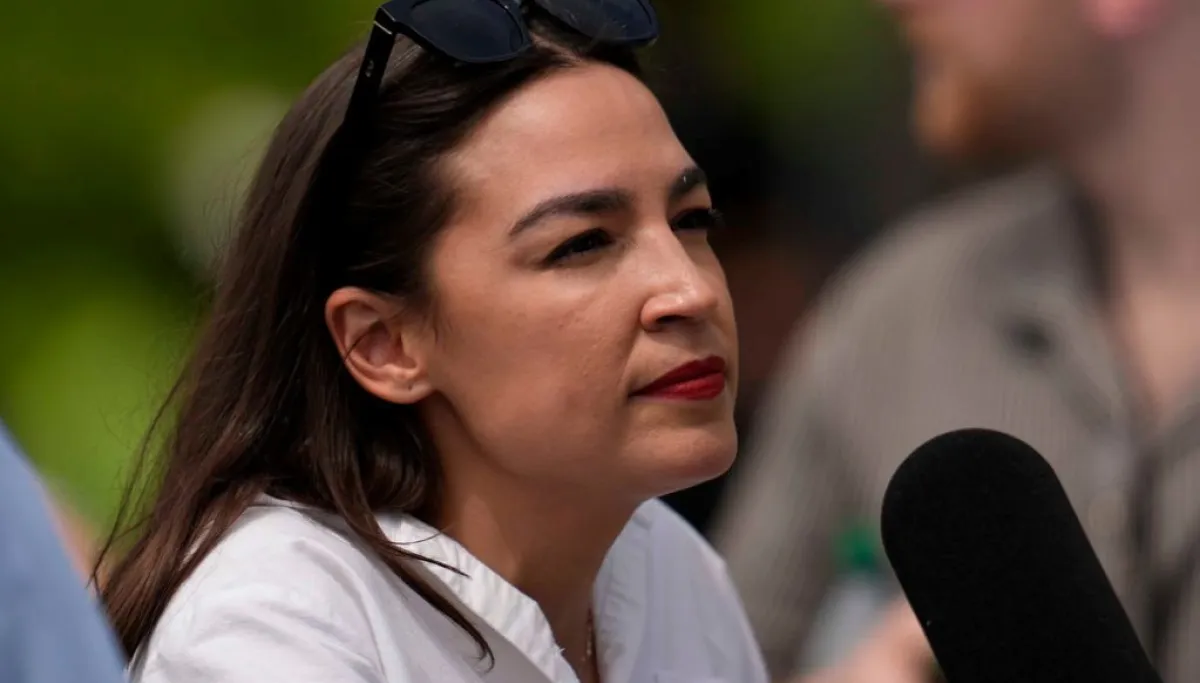

The Democratic Party’s supposed moderate wing has become little more than a phantom limb—a sensation of restraint that no longer exists in any meaningful institutional form, according to Andrew Moore writing in Washington Examiner.
In a sharp critique of contemporary progressive politics, Moore draws on Hannah Arendt’s concept of “the banality of evil” to describe what he terms the banality of modern political thought. Just as Arendt observed that great evil need not come from sadistic monsters but from ordinary people who cease thinking critically, today’s politicians surrender independent moral judgment to conform to party authority.
The analysis focuses particularly on the growing contradiction within the Democratic Party, where politicians profess deep commitment to free expression while systematically working to restrict it. Under the banner of public safety and the fight against so-called misinformation, these figures have institutionalized what amounts to narrative curation, treating Americans not as autonomous individuals capable of critical thinking but as fragile subjects requiring protection from competing viewpoints.

The party’s moderate wing, once a structural force capable of restraining its more radical elements, has largely vanished. What remains is institutional memory without functional muscle. High-profile figures like Senator Cory Booker of New Jersey increasingly function as disciplined pipelines of centralized messaging rather than independent legislators, relying on focus-grouped optimism and pre-scripted talking points that collapse under serious intellectual examination.
Meanwhile, institutional leaders like Chuck Schumer appear to occupy transitional rather than defining roles. The party’s center of gravity continues moving leftward, with ideas once confined to the socialist fringe now seamlessly integrated into mainstream policy discussions. Labels may matter less than governing philosophy, but the coalition’s trajectory speaks for itself—one need not formally adopt socialist language to implement policies increasingly reflecting those traditions in practice.
This evolution may ultimately weaken Democrats electorally. American democracy functions best when both major parties nominate intellectually serious and politically competent candidates. Governors such as Josh Shapiro illustrate executive leadership that even ideological opponents can recognize as capable. Yet coalition dynamics that reward ideological conformity simultaneously discourage nominating candidates whose broader appeal could strengthen the party nationally. Competence appears increasingly secondary to orthodoxy.
A stark example of this authoritarian drift emerged on July 16, 2026, during a primetime presidential address on election security. When the sitting executive used his platform to criticize the press and threaten broadcast licenses of non-compliant networks, Representative Alexandria Ocasio-Cortez and several colleagues pressured major broadcasters to preemptively deny the president a platform entirely, citing an ethical obligation to silence the broadcast.
This response exposes the core danger of the contemporary left. Rather than defending free speech against executive overreach, they seek to replace executive control with their own institutional silencing, operating on the premise that information distribution is a prize to be won by whoever holds bureaucratic power.
The transformation reveals how far the modern progressive wing has detached from traditional liberal moderation, abandoning constitutional checks in favor of preemptive censorship justified through claims of ethical necessity.
With information from Washington Examiner





