Necessary Cookies

Required for the site to function. Cannot be disabled.

Analytics Cookies

Help us understand how visitors interact with our site (Google Analytics via GTM).

Marketing Cookies

Used to track visitors and deliver personalised advertisements.

We use cookies to enhance your browsing experience and analyse site traffic. By clicking Accept All, you consent to our use of cookies. Privacy Policy
NewsFire Global
Home News Europe World Christianity Culture Wars Opinion Video
Information
About Us Authors Advertising Terms & Conditions Privacy Policy Contact
R2B Media
R2B NEWSFIRE.GR PAPAFOTIS.GR THRACTION HELLENIC CONSERVATIVES RIGHT2THEBONE YT
News World

Democrats Face Steep Climb: Need 57 of 77 Seats for House Majority

Democrats' prospects for winning the House have narrowed as mid-decade redistricting reduced competitive districts from 87 to 77, requiring them to win 57 seats for a majority.
Stefanos Banos
Stefanos Banos Staff Writer
JULY 29, 2026 AT 10:03 PM

According to findings from the nonpartisan Cook Political Report, as reported by Hailey Bullis in Washington Examiner, recently redrawn electoral maps spanning 10 states have reduced the total number of competitive swing districts from 87 down to 77. To secure a House majority, Democrats would now need to capture at least 57 of those 77 battleground seats.

The Cook Political Report’s methodology classifies competitive seats as congressional districts where either major party prevailed by a margin of 5 percentage points or less in the two most recent presidential election cycles. Under the previous district boundaries, Democrats would have been required to win 59 out of 87 such seats to claim control.

The Republican Party stands to gain approximately eight seats through the mid-decade redistricting process, while Democrats face a potential net gain of only two seats. The redistricting conflict was initiated after President Donald Trump called on the Texas state legislature to redraw congressional boundaries in a manner more advantageous to Republican candidates.

Redistricting Battle Expands Across States

Following Texas’s lead, both North Carolina and Missouri pursued similar redistricting initiatives. The GOP-dominated state efforts prompted a swift Democratic countermove when California undertook its own map revision. The partisan back-and-forth intensified as additional states entered the redistricting arena.

Democrats suffered significant setbacks when the Virginia Supreme Court invalidated a map that favored Democratic candidates, followed by a U.S. Supreme Court ruling that weakened enforcement provisions of the Voting Rights Act.

The Supreme Court decision enabled Republican-controlled legislatures in Alabama, Louisiana, and Tennessee to move forward with plans to eliminate one Democratic-leaning seat in each state, substantially advancing Republican gains in the nationwide redistricting effort.

Democrats Retain Path to Victory Despite Challenges

Despite the unfavorable redistricting landscape, the Cook Political Report analysis maintains that Democrats still possess a viable route to reclaiming the lower chamber. Several districts redrawn by Republicans remain competitive, particularly given what analysts describe as a challenging national political climate for the party currently holding power.

The analysis suggests that Democratic victories in a portion of seats rated as R+5 or more favorable represents a realistic scenario during midterm election cycles, which historically tend to favor the opposition party.

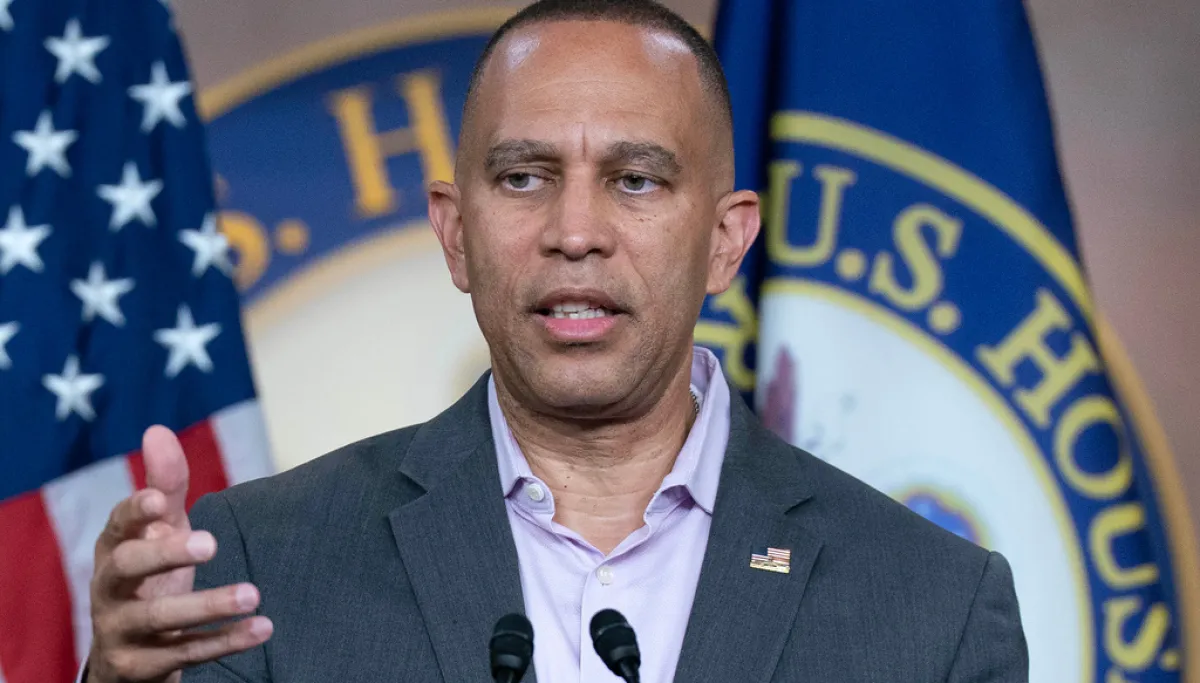
House Minority Leader Hakeem Jeffries, a New York Democrat, has previously vowed that his party will continue fighting through Election Day in November amid the redistricting disputes. This week, Jeffries announced that should Democrats regain House control, the party intends to reverse Medicaid funding reductions and cuts to Affordable Care Act subsidies enacted under the Republican One Big Beautiful Bill Act.

Johnson Frames Election as Existential Battle

House Speaker Mike Johnson, Republican of Louisiana, has characterized the 2026 congressional elections in stark terms as he works to preserve his party’s majority. Johnson has portrayed the contest as fundamentally about whether freedom will endure in America.

Addressing reporters earlier this month, Johnson emphasized the profound philosophical differences separating the parties. He stressed that the modern Democratic Party bears little resemblance to its predecessor, noting that contemporary political debates extend far beyond marginal adjustments to tax policy.

Johnson described the current political moment as a philosophical struggle to preserve the nation’s founding principles. He highlighted Republican efforts to recruit high-caliber candidates and raise record fundraising totals as evidence of the party’s recognition that the stakes have never been higher.

With information from Washington Examiner

Share:
Stefanos Banos
Stefanos Banos

Stefanos Banos was born in Piraeus and is an editor at NewsFire.GR, specializing in political analysis and international relations. He graduated from the Department of Communication and Media at the University of Bremen in Germany, where he also completed his Master of Arts in Communication and Media Studies. Married to Zoi, he is a proud father of three boys.

According to findings from the nonpartisan Cook Political Report, as reported by Hailey Bullis in Washington Examiner, recently redrawn electoral maps spanning 10 states have reduced the total number of competitive swing districts from 87 down to 77. To secure a House majority, Democrats would now need to capture at least 57 of those 77 battleground seats.

The Cook Political Report’s methodology classifies competitive seats as congressional districts where either major party prevailed by a margin of 5 percentage points or less in the two most recent presidential election cycles. Under the previous district boundaries, Democrats would have been required to win 59 out of 87 such seats to claim control.

The Republican Party stands to gain approximately eight seats through the mid-decade redistricting process, while Democrats face a potential net gain of only two seats. The redistricting conflict was initiated after President Donald Trump called on the Texas state legislature to redraw congressional boundaries in a manner more advantageous to Republican candidates.

Redistricting Battle Expands Across States

Following Texas’s lead, both North Carolina and Missouri pursued similar redistricting initiatives. The GOP-dominated state efforts prompted a swift Democratic countermove when California undertook its own map revision. The partisan back-and-forth intensified as additional states entered the redistricting arena.

Democrats suffered significant setbacks when the Virginia Supreme Court invalidated a map that favored Democratic candidates, followed by a U.S. Supreme Court ruling that weakened enforcement provisions of the Voting Rights Act.

The Supreme Court decision enabled Republican-controlled legislatures in Alabama, Louisiana, and Tennessee to move forward with plans to eliminate one Democratic-leaning seat in each state, substantially advancing Republican gains in the nationwide redistricting effort.

Democrats Retain Path to Victory Despite Challenges

Despite the unfavorable redistricting landscape, the Cook Political Report analysis maintains that Democrats still possess a viable route to reclaiming the lower chamber. Several districts redrawn by Republicans remain competitive, particularly given what analysts describe as a challenging national political climate for the party currently holding power.

The analysis suggests that Democratic victories in a portion of seats rated as R+5 or more favorable represents a realistic scenario during midterm election cycles, which historically tend to favor the opposition party.

House Minority Leader Hakeem Jeffries, a New York Democrat, has previously vowed that his party will continue fighting through Election Day in November amid the redistricting disputes. This week, Jeffries announced that should Democrats regain House control, the party intends to reverse Medicaid funding reductions and cuts to Affordable Care Act subsidies enacted under the Republican One Big Beautiful Bill Act.

Johnson Frames Election as Existential Battle

House Speaker Mike Johnson, Republican of Louisiana, has characterized the 2026 congressional elections in stark terms as he works to preserve his party’s majority. Johnson has portrayed the contest as fundamentally about whether freedom will endure in America.

Addressing reporters earlier this month, Johnson emphasized the profound philosophical differences separating the parties. He stressed that the modern Democratic Party bears little resemblance to its predecessor, noting that contemporary political debates extend far beyond marginal adjustments to tax policy.

Johnson described the current political moment as a philosophical struggle to preserve the nation’s founding principles. He highlighted Republican efforts to recruit high-caliber candidates and raise record fundraising totals as evidence of the party’s recognition that the stakes have never been higher.

With information from Washington Examiner

