
Declaration Called Nation to Freedom and Unity Together
According to Michael Auslin, the Declaration of Independence was crafted as a deliberate covenant to unite deeply divided Americans rather than merely as a separation statement from Britain.
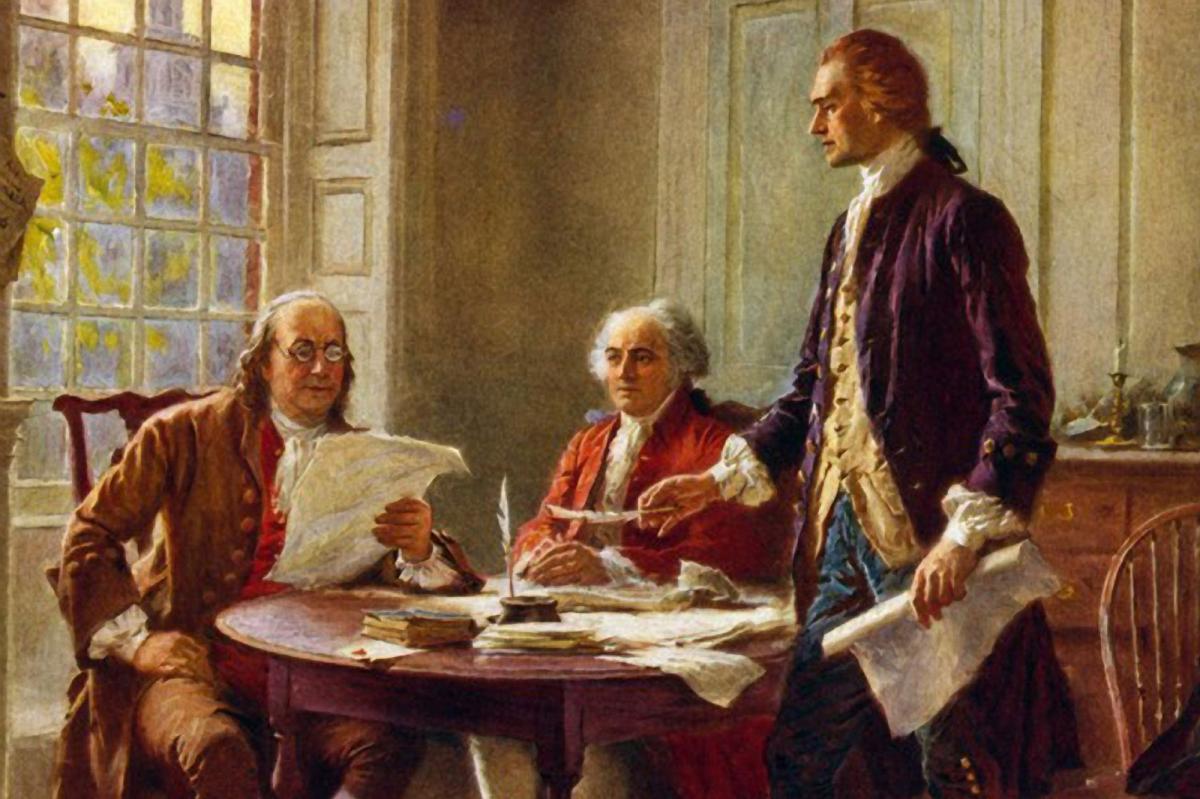

When the signers gathered on July 4, 1776, in Philadelphia to adopt Thomas Jefferson’s text, they viewed the task as largely administrative. The Continental Congress had already voted for independence two days prior, and the Declaration served to legitimize alliance efforts with France and establish a confederated government among the thirteen newly sovereign states.
Thomas Jefferson and the Committee of Five, including Benjamin Franklin and John Adams, had produced a draft that Congress spent two full days debating and revising. Nearly a quarter of Jefferson’s original words were cut, including his condemnation of the slave trade, while other sections were strengthened.
The timing was dire for the American cause. British forces had evacuated Boston in March 1776, but the war effort was faltering badly. Within six months, Congress would abandon Philadelphia for Baltimore as British troops pursued George Washington and the Continental Army across New Jersey.
Strategic Edits to Forge National Unity
The Declaration’s framers made critical editorial choices aimed specifically at creating unity among deeply divided populations. As Adams later recalled, only one-third of Americans supported separation from England at the time of independence.
The thirteen colonies represented extraordinary diversity for the era, with differing governing systems, religious traditions, ethnic compositions, languages, and economic structures. Survival in a hostile world demanded unity despite these differences.
Someone, possibly Franklin, changed Jefferson’s opening phrase from “a people” to “one people” in the line about dissolving political bands. This seemingly small revision carried enormous significance for the document’s unifying purpose.
Another famous edit transformed Jefferson’s original “We hold these truths to be sacred & undeniable” into the immortal phrase “We hold these truths to be self-evident, that all men are created equal.” This became the foundation of the American creed, a vision that required nearly two centuries to fully realize but came to be shared and defended by all Americans.
Collective Grievances Across Colonies
The twenty-seven charges against King George III that formed the Declaration’s main body were deliberately written to present British actions as offenses against all Americans, even when specific incidents had occurred in only one colony.
The framers intended each colonist to feel part of a wronged community, creating bonds between citizens living hundreds of miles apart. Georgia plantation owners, Philadelphia merchants, and New Hampshire small farmers were presented as one people suffering under royal tyranny.
The document’s closing pledge proved most revealing of its unifying intent. The signers vowed to support the Declaration by mutually pledging to each other their lives, fortunes, and sacred honor—not to the new nation or their sovereign states, but to one another.
A Living Document Embracing All Americans
The Declaration’s eighteenth-century omissions regarding women, blacks, and American Indians were gradually addressed in subsequent centuries to embrace all who sought full acceptance as Americans. Figures from Frederick Douglass to Susan B. Anthony would appeal to its principles.
Tens of millions of immigrants arriving on American shores adopted the Declaration as their new birth certificate, translating it into Swedish, Greek, Italian, Yiddish, Polish, Russian, and other languages. These new Americans committed to defending its principles through World War I, World War II, and the Cold War.
The unity forged by the Declaration’s framers succeeded beyond their expectations, creating a covenant that has bound Americans together for nearly two and a half centuries.
With information from New York Post





