
Clarence Thomas Blasts Ruling Devaluing Citizenship in Dissent
Justice Clarence Thomas issued a 91-page dissent accusing the Supreme Court majority of promoting "alternative history" in striking down Trump's executive order ending birthright citizenship.
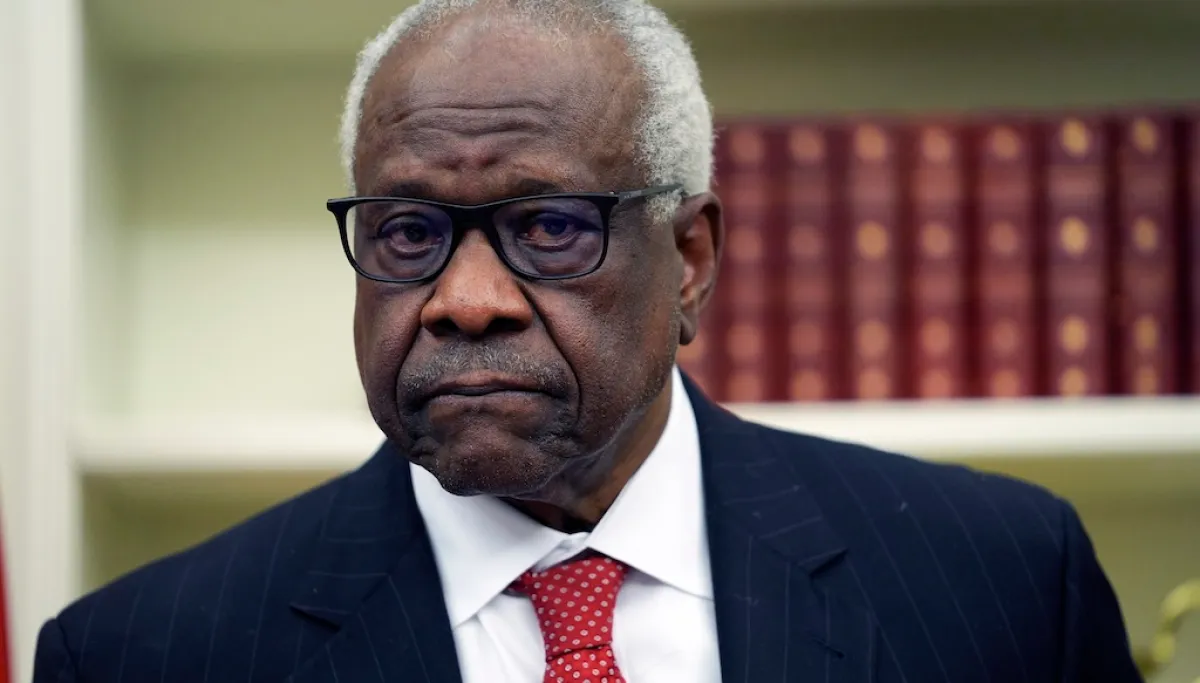

The nation’s highest court ruled 5-4 against Trump’s order, which had declared that children born in the United States to parents residing in the country illegally or on temporary visas would not automatically receive citizenship at birth. Chief Justice John Roberts authored the majority opinion, determining the executive action violated the 14th Amendment, according to Washington Examiner.
Thomas opened his dissent with sharp criticism of the court’s decision, stating that the ruling continues the sad history of the Fourteenth Amendment being repurposed for political aims never intended by the Reconstruction Congress that drafted it. The amendment was originally designed to secure equal rights for freed slaves, he emphasized.
Justice Clarence Thomas built his argument around the legal concept of “domicile,” which he described as the determining factor for citizenship under the original meaning of the constitutional text. He explained that citizenship was historically reserved for permanent members of the body politic—those with roots in American soil who called it home and would defend it if necessary.
The dissent provided extensive historical analysis, tracing the evolution of birthright citizenship from the infamous Dred Scott decision through the Civil Rights Act of 1866 and the ratification of the 14th Amendment. Thomas argued that the citizenship clause was crafted specifically for individuals like Dred Scott and Frederick Douglass—people who were domiciled in America and considered it their true home.
Thomas rejected the majority’s characterization of supporting evidence as “scant,” pointing to substantial historical backing for his interpretation. He cited Representative John Bingham, architect of the 14th Amendment, Senator Lyman Trumbull, and Senator Jacob Howard, who introduced the citizenship clause, as all agreeing that it would not apply to children of temporary visitors.
The justice compiled an impressive roster of historical figures and institutions supporting his view: multiple Congresses, two of President Grant’s Attorneys General, the Supreme Court in 1873, state legislatures, executive branch officials across decades, Justice Samuel Miller, legal scholar Thomas Cooley, and Justice John Marshall Harlan on three separate occasions.
The dissent concluded with a pointed accusation that the majority based its ruling on preferred political outcomes rather than the constitutional text itself. Thomas expressed particular concern that the decision devalues American citizenship by extending it automatically to children whose parents have no permanent connection to the United States.
The ruling represents a significant setback for Trump’s immigration enforcement agenda and ensures that birthright citizenship remains intact regardless of parental immigration status.
With information from Washington Examiner





