
Church Arsons Surge 112.5% in France Amid Anti-Christian Wave
Criminal arson attacks on churches in France surged 112.5 percent between 2023 and 2024, part of a broader European trend of rising anti-Christian violence that has received little mainstream attention.
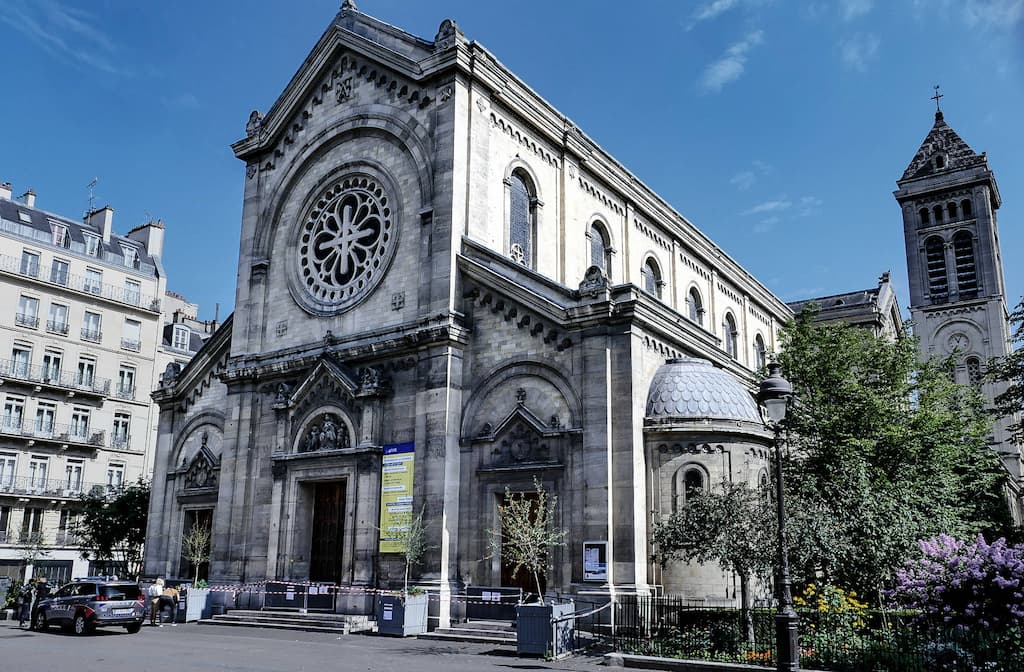

According to Valeurs Actuelles, France recorded 322 anti-Christian acts in the first half of 2025 alone, representing a 13 percent increase compared to the same period in 2024. The publication reports that the typical pattern following these attacks has become grimly familiar: flames consume parts of a church, firefighters respond, a terse official statement is issued, and then silence.
Recent victims of criminal arson include Notre-Dame des Champs in Paris, Immaculée Conception in Saint-Omer, the Basilica of Notre-Dame-de-Bon-Secours in Guingamp, Saint-Hilaire-le-Grand in Poitiers, and the altar of the church in Panilleuse in the Eure department. All were attacked within the past two years, largely met with public indifference.
Henri d’Anselme, who has undertaken a tour of France’s cathedrals, told Valeurs Actuelles that these buildings represent far more than houses of worship. They embody the architectural and artistic genius of Western civilization and preserve the memory of the builders and craft guilds that shaped medieval Europe.
Europe-Wide Escalation
Data from OIDAC Europe shows that church fires and attempted arsons nearly doubled across the continent, rising from approximately 50 cases in 2023 to nearly 90 in 2024. The organization recorded ten arson attacks on churches in January 2026 alone across Europe.
Germany holds the unfortunate record with 33 church fires or attempted arsons in 2024. The trend has sparked concern among heritage preservation groups, many of which include non-religious volunteers who view these structures as common inheritance linking present to past.
Diverse Perpetrator Profiles
D’Anselme explained to Valeurs Actuelles that perpetrator profiles vary considerably. Some incidents stem from opportunistic criminals seeking valuable objects, while others reflect more ideological hostility toward Christianity itself.
The man known as the “backpack hero” who intervened during a 2023 knife attack in Annecy has also reported observing increased violence targeting Christian converts, which he attributes particularly to radical Islamists. He additionally noted hostility from certain far-left circles, linked to what he described as a culture of blasphemy and rejection of the Church.
Media Blind Spot
D’Anselme assessed that attacks on Christians receive more limited media coverage than those affecting other religious communities. This disparity may partly stem from a cultural factor: Christians, as the historic majority in Europe, are sometimes perceived as less vulnerable, leading to a certain normalization of these acts of violence in public discourse.
He observed that churches are increasingly viewed as mere historical monuments rather than sacred spaces, which remains central to their meaning for believers. The treatment of attacks on Christians is often reduced to minor crime reporting, while broader questions about transmitting heritage and understanding the sacred in schools remain largely unaddressed.
The attachment to religious edifices extends well beyond practicing believers. In many villages, churches remain identity markers on par with castles or abbeys, serving as anchors of continuity and community memory.
With information from Valeurs Actuelles





