China Skips Major Asian Defense Summit Amid Regional Tensions
China sent only academics to Singapore's Shangri-La Dialogue, with no senior military officials present, in what analysts view as a move to avoid questions about its military expansion.
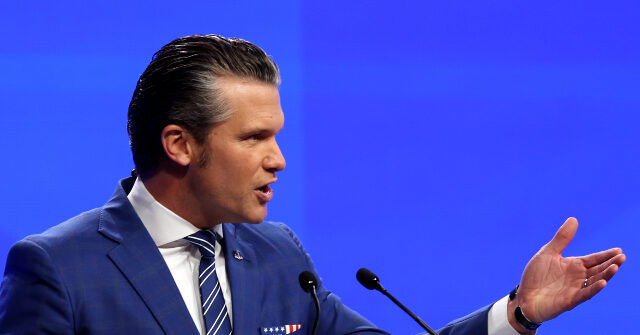

Australian Defense Minister Richard Marles suggested that Beijing deliberately kept a low profile at the critical security forum to avoid confronting concerns about its military ambitions, according to Breitbart News.
Speaking to Reuters on Friday, Marles noted that the world has witnessed China engage in the largest conventional military buildup since the end of the Second World War, and that this expansion has occurred without any strategic reassurance being offered to neighboring countries.
The Australian defense chief emphasized that the global rules-based order faces serious pressure throughout the Indo-Pacific, describing the current moment as one requiring nations to identify common ground and forge collaborative partnerships wherever possible.
Beijing’s Absence Raises Eyebrows
Marles acknowledged that China’s participation has been welcomed at previous events, as Breitbart News reports, since opportunities to engage with Beijing directly have proven important for reducing regional tensions. The forum is designed as a dialogue, and China represents the primary security concern for most participating nations.
The International Institute for Strategic Studies hosts the Shangri-La Dialogue, which launched in 2002 amid global anxiety following the September 11 terrorist attacks. Initially branded as the Asia Security Conference with just 14 defense ministers attending, the gathering has expanded to include nearly 50 nations. The absence of top defense officials from any delegation is therefore highly notable. The United States sent Secretary of Defense Pete Hegseth to lead its 2025 delegation.
The forum takes its current name from the Singapore hotel that has hosted it since inception.
Manila and Tokyo Draw Closer
China may have avoided uncomfortable exchanges by sending academics rather than officials this year. The Philippines attended the dialogue while simultaneously managing increasingly confrontational Chinese behavior in the South China Sea. Beijing has reacted furiously to Manila’s arrest of 24 Chinese nationals during an immigration operation on Monday.
China has also expressed anger over strengthening ties between the Philippines and Japan. The two nations recently announced the beginning of discussions to establish mutually acceptable maritime boundaries for waters near Taiwan, a region Beijing claims in its entirety.
Philippine President Ferdinand Marcos Jr. conducted a highly cordial visit to Tokyo on Thursday, agreeing to enhanced defense cooperation and intelligence sharing with Japan. Neither Marcos nor Japanese Prime Minister Takaichi Sanae concealed the fact that China represents the threat they are most urgently preparing to counter together.
The Philippines is in negotiations to acquire advanced destroyers from Japan, which would strengthen Manila’s ability to resist intimidation from China’s Coast Guard and heavily armed fishing fleet.
Regional Tensions Multiply
Vietnam’s complex relationship with China has grown more strained recently due to territorial disputes and American efforts to draw Hanoi away from its traditional economic partners in China and Russia.
Vietnamese President To Lam delivered the keynote address at the Shangri-La Dialogue on Friday, while Hegseth was scheduled to speak at Saturday’s opening session. Lam planned to meet with Hegseth privately during the summit, apparently unconcerned about Chinese speculation regarding their discussions.
Marles expressed satisfaction to Reuters that America remains deeply committed to the Indo-Pacific despite the obvious demands of the Iran crisis. Australia continues to view its alliance with the United States as absolutely fundamental to its national security.
AUKUS Announcement Expected
Marles was scheduled to join Hegseth and British Defense Minister John Healey on Saturday for an announcement concerning AUKUS, the trilateral defense pact among the three nations designed to provide Australia with nuclear-powered submarines.
The Shangri-La announcement reportedly concerns underwater drones, an element of the AUKUS agreement that has progressed more slowly than initially planned. Australia maintains world-leading capabilities in stealthy uncrewed underwater vehicle technology.
The Asia Times offered a less optimistic assessment than Marles, arguing that the forum’s real value has shifted to hotel corridors and closed-door spaces where members negotiate defense arrangements while questioning America’s capacity to manage simultaneous security crises across Europe, the Middle East, and Asia.
The inconclusive outcome of the recent Iran conflict has intensified those doubts, leaving traditional allies and non-aligned states alike questioning American reliability and commitment across multiple theaters.
With information from Breitbart News