
Chautauqua Institution pushes toward ideological balance
The Chautauqua Institution in western New York continues its 1874 mission of bringing serious intellectual and cultural education to ordinary Americans outside major cities and elite institutions.
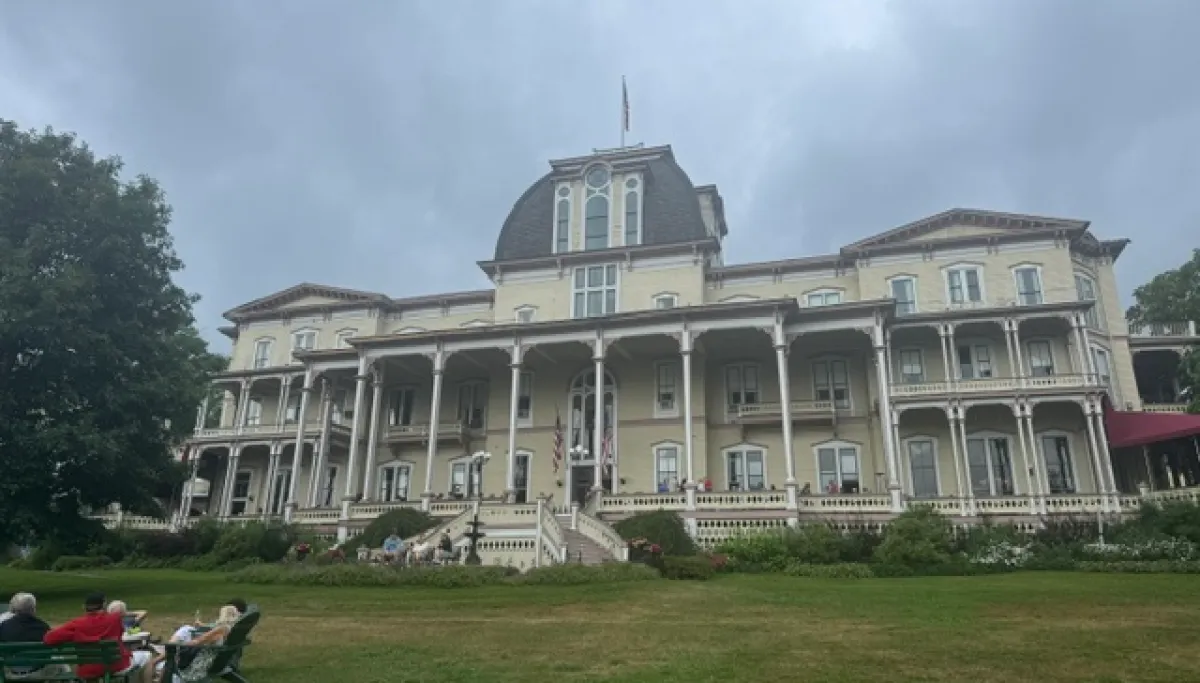

In the rolling hills of western New York, a lakeside institution that sparked a nationwide movement in self-improvement and civic learning continues to embody an enduring American ideal: that knowledge should never be the exclusive province of coastal elites.
According to Salena Zito writing in Washington Examiner, the Chautauqua Institution remains a testament to the belief that ordinary Americans deserve access to serious intellectual and cultural life, regardless of their distance from major cities or universities.
The movement began in 1874 when John H. Vincent, a Methodist minister, and Lewis Miller, an inventor and businessman, convened Sunday school teachers at Chautauqua Lake for a summer assembly. Their goal was straightforward: educate those who were teaching others. But their underlying philosophy proved transformative—learning need not be confined to elite institutions or urban centers, and could flourish outdoors among working people through a blend of lectures, music, faith, recreation, and dialogue.


What started as a practical gathering quickly evolved into something far larger. Chautauqua answered a deep hunger across a rapidly changing nation. As factories multiplied, railroads connected distant communities, and immigration reshaped American life, citizens sought stable ground amid the upheaval. Chautauqua provided a space to listen, debate, worship, and believe in both personal and civic improvement.
The movement’s significance lies in understanding the America it served. Millions lived in rural communities and small towns, isolated from the nation’s cultural institutions. Rather than demanding people abandon their homes to access education, Chautauqua came to them. This approach proved particularly powerful in Appalachia, where geography had long determined who received opportunity.
In Appalachian New York, especially along the lake and through the southern tier hills, the movement found natural resonance. The region understood both self-reliance and the sting of being overlooked by distant power centers. Chautauqua’s core premise—that people in backroads, lake towns, and farming communities deserved the same exposure to literature, debate, and culture as city dwellers—carried profound implications. Where geography often dictates destiny, this was a radical promise.
The summer assemblies became a template. Traveling Chautauquas soon emerged: tents, programs, and speakers moving from town to town, delivering the same combination of uplift and instruction to hamlets and county seats nationwide.
Farmers could hear historical lectures. Mothers could attend concerts or public affairs discussions. Young people could encounter ideas beyond their local schoolhouse. The movement’s brilliance lay in refusing to reduce learning to a single dimension, recognizing that people are whole lives requiring spiritual nourishment alongside factual information.
The impact proved real and enduring. For many Americans, Chautauqua provided their first encounter with a broader intellectual world. It normalized the concept of lifelong adult education. It integrated public lectures and performances into everyday life. More fundamentally, it offered a civic experience—a chance to gather, be seen, and feel part of something transcending a single town, denomination, or occupation. In an era before electronic media, this connection carried enormous weight.
Because it remained rooted in specific places, the movement also carried what Zito describes as a moral geography. Chautauqua in New York was never merely scenic; it represented a deliberate choice to honor communities the broader culture often dismissed or ignored.
With information from Washington Examiner





