Necessary Cookies

Required for the site to function. Cannot be disabled.

Analytics Cookies

Help us understand how visitors interact with our site (Google Analytics via GTM).

Marketing Cookies

Used to track visitors and deliver personalised advertisements.

We use cookies to enhance your browsing experience and analyse site traffic. By clicking Accept All, you consent to our use of cookies. Privacy Policy
NewsFire Global
Home News Europe World Christianity Culture Wars Opinion Video
Information
About Us Authors Advertising Terms & Conditions Privacy Policy Contact
R2B Media
R2B NEWSFIRE.GR PAPAFOTIS.GR THRACTION HELLENIC CONSERVATIVES RIGHT2THEBONE YT
News World

California Homeless Shelter Handed Out Meth Pipes

California's taxpayer-funded homeless facility in Los Angeles distributes free drug paraphernalia with minimal oversight despite Governor Newsom's claims that harm reduction policies lead addicts to treatment.

JULY 30, 2026 AT 8:22 AM

According to Christopher F. Rufo and Austen Hufford writing in New York Post, an investigation of the Skid Row Care Campus in Los Angeles County revealed a system that enables continued drug use rather than encouraging rehabilitation.

Gavin Newsom has championed harm reduction policies throughout his tenure as governor, creating the state’s Harm Reduction Initiative to fund syringe services programs for individuals using fentanyl and methamphetamines. His Department of Public Health has endorsed distributing syringes, glass pipes, and containers for mixing injectable drugs to users. Earlier this year, Newsom claimed these tactics increase the chances of addicts entering treatment programs.

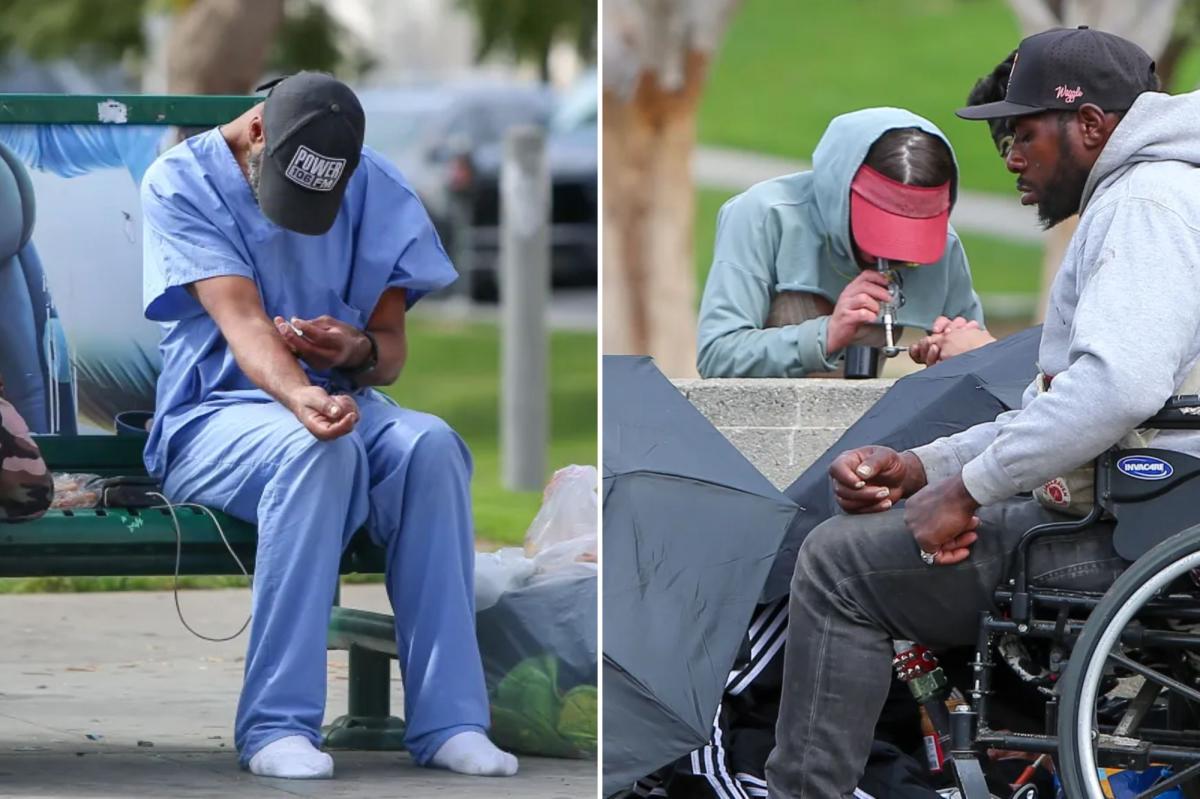
The reality at the Skid Row facility paints a different picture. Reporters visiting the campus found it resembled an apocalyptic wasteland, with homeless individuals and addicts sprawled across common areas, some openly smoking what appeared to be hard drugs. The facility operates behind pastel-colored buildings secured by a metal gate, yet security measures are virtually nonexistent.

No staff member requested identification or searched visitors for weapons or drugs upon entry. At a walk-up counter inside the campus, an attendant sat before shelves stocked with drug paraphernalia, offering needles and crack pipes to anyone who approached.

Over multiple visits, reporters obtained drug-testing strips, syringes, and crack pipes with no questions asked. Workers at the facility acknowledged that while drug use is technically prohibited on-site, users would face no interference if they used drugs just outside the campus grounds, unless they suffered an overdose.

The entire campus operates under a so-called low-touch approach. Beyond basic homeless shelter services such as food, laundry, and limited medical care, the facility offers amenities including doggie daycare, meditation sessions on the lawn, and valet cart parking. During midday hours, homeless individuals lined up for Doritos and instant ramen before settling into reclining chairs to watch films.

The Skid Row site opened in 2025 and is managed by multiple nonprofit organizations committed to harm reduction ideology, including one that openly opposes the criminalization of substance use. These left-wing organizations have transformed the campus into a lucrative operation, with the facility listed as a federally funded health center pulling in approximately $26 million annually from local, state, and federal sources.

One service provider, Homeless Health Care Los Angeles, has seen its revenue more than double since 2020, reaching $27 million last year. Another provider, Wesley Health Centers, has experienced revenue growth exceeding $200 million over five years, more than doubling its intake.

Estela Lopez, executive director of the LA Downtown Industrial District, has condemned the campus as a catastrophic failure. She characterized the harm reduction approach as providing addicts with everything they need to get high and stay high, with no accountability or path toward recovery.

Lopez reported that the site has generated chaos in surrounding streets. An LAPD source revealed that the area has recorded 1,200 radio calls for service and four murders so far this year, representing a substantial increase. An employee from one of the site’s nonprofit organizations admitted that drug dealers are fighting over access to the facility’s guests.

These revelations raise significant questions about federal funding practices. Last year, President Donald Trump signed an executive order requiring reviews of federally funded drug paraphernalia distribution sites. The order expressed skepticism toward harm reduction or safe consumption efforts that merely facilitate illegal drug use.

The nonprofit organizations named in the investigation, along with the mayor’s office, did not respond to requests for comment. The governor’s office failed to provide a responsive statement. LA County claimed it adheres to all local, state, and federal laws, stating the campus receives funding from LA Care Health Plan, a public health plan, and Health Net, a limited liability company.

The investigation underscores the fundamental disconnect between Newsom’s rhetoric about harm reduction leading to treatment and the ground-level reality of facilities that appear designed to perpetuate addiction rather than end it.

With information from New York Post

Share:
Eleni Papadaki-Van Der Merwe

She was born in 1986 in Johannesburg, South Africa. She is the granddaughter of an immigrant from Crete who settled in the Greek community of Johannesburg (one of the largest in Africa). She holds a bachelor’s degree in International Relations and Political Science from the University of the Witwatersrand (Wits) in Johannesburg and a master’s degree in Journalism from Rhodes University in Grahamstown. She began her career at English-language media outlets in Johannesburg, covering politics and economics, with a focus on issues related to migration and the diaspora. She moved to Athens in 2015 to “return to her roots,” initially to pursue graduate studies, and has remained there permanently. She is married to an Afrikaner; they have two children and live in the southern suburbs of Athens.

According to Christopher F. Rufo and Austen Hufford writing in New York Post, an investigation of the Skid Row Care Campus in Los Angeles County revealed a system that enables continued drug use rather than encouraging rehabilitation.

Gavin Newsom has championed harm reduction policies throughout his tenure as governor, creating the state’s Harm Reduction Initiative to fund syringe services programs for individuals using fentanyl and methamphetamines. His Department of Public Health has endorsed distributing syringes, glass pipes, and containers for mixing injectable drugs to users. Earlier this year, Newsom claimed these tactics increase the chances of addicts entering treatment programs.

The reality at the Skid Row facility paints a different picture. Reporters visiting the campus found it resembled an apocalyptic wasteland, with homeless individuals and addicts sprawled across common areas, some openly smoking what appeared to be hard drugs. The facility operates behind pastel-colored buildings secured by a metal gate, yet security measures are virtually nonexistent.

No staff member requested identification or searched visitors for weapons or drugs upon entry. At a walk-up counter inside the campus, an attendant sat before shelves stocked with drug paraphernalia, offering needles and crack pipes to anyone who approached.

Over multiple visits, reporters obtained drug-testing strips, syringes, and crack pipes with no questions asked. Workers at the facility acknowledged that while drug use is technically prohibited on-site, users would face no interference if they used drugs just outside the campus grounds, unless they suffered an overdose.

The entire campus operates under a so-called low-touch approach. Beyond basic homeless shelter services such as food, laundry, and limited medical care, the facility offers amenities including doggie daycare, meditation sessions on the lawn, and valet cart parking. During midday hours, homeless individuals lined up for Doritos and instant ramen before settling into reclining chairs to watch films.

The Skid Row site opened in 2025 and is managed by multiple nonprofit organizations committed to harm reduction ideology, including one that openly opposes the criminalization of substance use. These left-wing organizations have transformed the campus into a lucrative operation, with the facility listed as a federally funded health center pulling in approximately $26 million annually from local, state, and federal sources.

One service provider, Homeless Health Care Los Angeles, has seen its revenue more than double since 2020, reaching $27 million last year. Another provider, Wesley Health Centers, has experienced revenue growth exceeding $200 million over five years, more than doubling its intake.

Estela Lopez, executive director of the LA Downtown Industrial District, has condemned the campus as a catastrophic failure. She characterized the harm reduction approach as providing addicts with everything they need to get high and stay high, with no accountability or path toward recovery.

Lopez reported that the site has generated chaos in surrounding streets. An LAPD source revealed that the area has recorded 1,200 radio calls for service and four murders so far this year, representing a substantial increase. An employee from one of the site’s nonprofit organizations admitted that drug dealers are fighting over access to the facility’s guests.

These revelations raise significant questions about federal funding practices. Last year, President Donald Trump signed an executive order requiring reviews of federally funded drug paraphernalia distribution sites. The order expressed skepticism toward harm reduction or safe consumption efforts that merely facilitate illegal drug use.

The nonprofit organizations named in the investigation, along with the mayor’s office, did not respond to requests for comment. The governor’s office failed to provide a responsive statement. LA County claimed it adheres to all local, state, and federal laws, stating the campus receives funding from LA Care Health Plan, a public health plan, and Health Net, a limited liability company.

The investigation underscores the fundamental disconnect between Newsom’s rhetoric about harm reduction leading to treatment and the ground-level reality of facilities that appear designed to perpetuate addiction rather than end it.

With information from New York Post

