Necessary Cookies

Required for the site to function. Cannot be disabled.

Analytics Cookies

Help us understand how visitors interact with our site (Google Analytics via GTM).

Marketing Cookies

Used to track visitors and deliver personalised advertisements.

We use cookies to enhance your browsing experience and analyse site traffic. By clicking Accept All, you consent to our use of cookies. Privacy Policy
NewsFire Global
Home News Europe World Christianity Culture Wars Opinion Video
Information
About Us Authors Advertising Terms & Conditions Privacy Policy Contact
R2B Media
R2B NEWSFIRE.GR PAPAFOTIS.GR THRACTION HELLENIC CONSERVATIVES RIGHT2THEBONE YT
News World

California exodus to neighboring states drops sharply amid slow migration

California-to-Nevada migration dropped 14.6% in 2025 with 33,296 residents relocating compared to 38,970 the previous year, signaling the end of the pandemic-era moving boom.
Stefanos Banos
Stefanos Banos Staff Writer
JULY 29, 2026 AT 9:49 PM

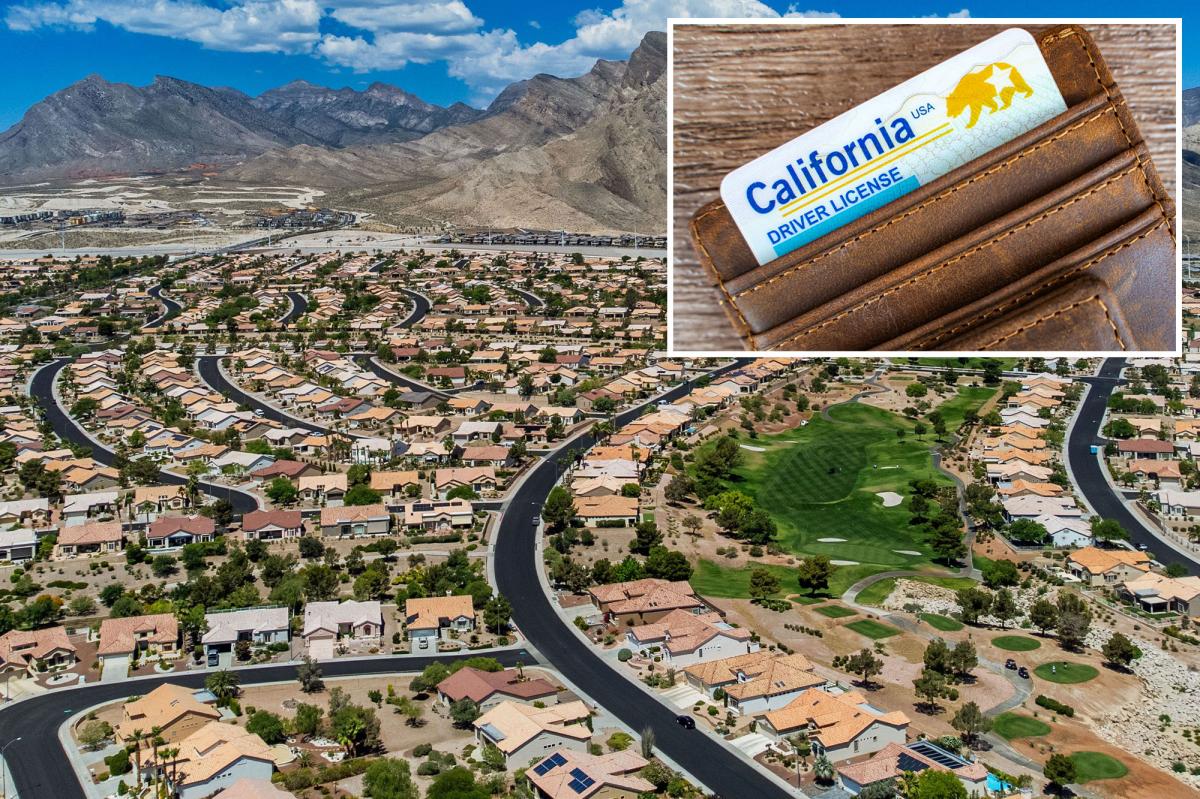
According to Kevin Barr writing in New York Post, just 33,296 Californians surrendered their driver’s licenses or ID cards in Nevada last year, down from 38,970 in 2024—a decline of 5,674 fewer residents making the move across state lines.

Nevada DMV data reported by the Las Vegas Review-Journal reveals that despite the steep decline, California residents still represented more than 40% of all out-of-state licenses and identification cards surrendered in Nevada.

The slowdown in California migration nearly matched Nevada’s overall 14% decline in newcomers from all states, suggesting a broader shift in American relocation patterns as the pandemic-era moving frenzy finally subsides.

Nevada’s California Boom Comes to an End

The decline marks a significant turning point for Nevada, which had emerged as the single largest per-capita beneficiary of California’s ongoing population exodus. Between 2016 and 2025, Nevada gained a net 81 Californians per 10,000 residents annually—more than any other state in the nation.

Those who did relocate from California to Nevada typically found substantially lower costs of living, with monthly rents averaging $672 less and home prices nearly $400,000 cheaper than comparable properties in the Golden State.

Yet the latest DMV figures signal that the once-roaring migration pipeline has lost considerable momentum, even as California’s overall population continues to decline.

California Exodus Continues, but at Slower Pace

California’s total population fell by approximately 54,000 people in 2025, marking the state’s first annual decline since the pandemic. Los Angeles alone experienced a 0.9% population drop during the same period.

However, the data suggests that fewer Americans are making major interstate moves at all, rather than indicating any reversal of California’s demographic challenges.

Brian Bonnenfant, project manager for the Center for Regional Studies at the University of Nevada, Reno, told the Review-Journal that remote work initially unleashed a wave of pandemic-era migration, but current economic and political instability has caused Americans to become more cautious about relocating.

Bonnenfant characterized the slowdown as part of a larger demographic shift driven by declining birth rates, reduced immigration levels, and an aging population across the United States.

The data indicates that while the California exodus has not stopped entirely, the once bumper-to-bumper road to Nevada has become considerably less congested as Americans adopt a more wait-and-see approach to major life changes.

With information from New York Post

Share:
Stefanos Banos
Stefanos Banos

Stefanos Banos was born in Piraeus and is an editor at NewsFire.GR, specializing in political analysis and international relations. He graduated from the Department of Communication and Media at the University of Bremen in Germany, where he also completed his Master of Arts in Communication and Media Studies. Married to Zoi, he is a proud father of three boys.

According to Kevin Barr writing in New York Post, just 33,296 Californians surrendered their driver’s licenses or ID cards in Nevada last year, down from 38,970 in 2024—a decline of 5,674 fewer residents making the move across state lines.

Nevada DMV data reported by the Las Vegas Review-Journal reveals that despite the steep decline, California residents still represented more than 40% of all out-of-state licenses and identification cards surrendered in Nevada.

The slowdown in California migration nearly matched Nevada’s overall 14% decline in newcomers from all states, suggesting a broader shift in American relocation patterns as the pandemic-era moving frenzy finally subsides.

Nevada’s California Boom Comes to an End

The decline marks a significant turning point for Nevada, which had emerged as the single largest per-capita beneficiary of California’s ongoing population exodus. Between 2016 and 2025, Nevada gained a net 81 Californians per 10,000 residents annually—more than any other state in the nation.

Those who did relocate from California to Nevada typically found substantially lower costs of living, with monthly rents averaging $672 less and home prices nearly $400,000 cheaper than comparable properties in the Golden State.

Yet the latest DMV figures signal that the once-roaring migration pipeline has lost considerable momentum, even as California’s overall population continues to decline.

California Exodus Continues, but at Slower Pace

California’s total population fell by approximately 54,000 people in 2025, marking the state’s first annual decline since the pandemic. Los Angeles alone experienced a 0.9% population drop during the same period.

However, the data suggests that fewer Americans are making major interstate moves at all, rather than indicating any reversal of California’s demographic challenges.

Brian Bonnenfant, project manager for the Center for Regional Studies at the University of Nevada, Reno, told the Review-Journal that remote work initially unleashed a wave of pandemic-era migration, but current economic and political instability has caused Americans to become more cautious about relocating.

Bonnenfant characterized the slowdown as part of a larger demographic shift driven by declining birth rates, reduced immigration levels, and an aging population across the United States.

The data indicates that while the California exodus has not stopped entirely, the once bumper-to-bumper road to Nevada has become considerably less congested as Americans adopt a more wait-and-see approach to major life changes.

With information from New York Post

