Necessary Cookies

Required for the site to function. Cannot be disabled.

Analytics Cookies

Help us understand how visitors interact with our site (Google Analytics via GTM).

Marketing Cookies

Used to track visitors and deliver personalised advertisements.

We use cookies to enhance your browsing experience and analyse site traffic. By clicking Accept All, you consent to our use of cookies. Privacy Policy
NewsFire Global
Home News Europe World Christianity Culture Wars Opinion Video
Information
About Us Authors Advertising Terms & Conditions Privacy Policy Contact
R2B Media
R2B NEWSFIRE.GR PAPAFOTIS.GR THRACTION HELLENIC CONSERVATIVES RIGHT2THEBONE YT
News World

California Democrats Achieve Trifecta of Political Infamy

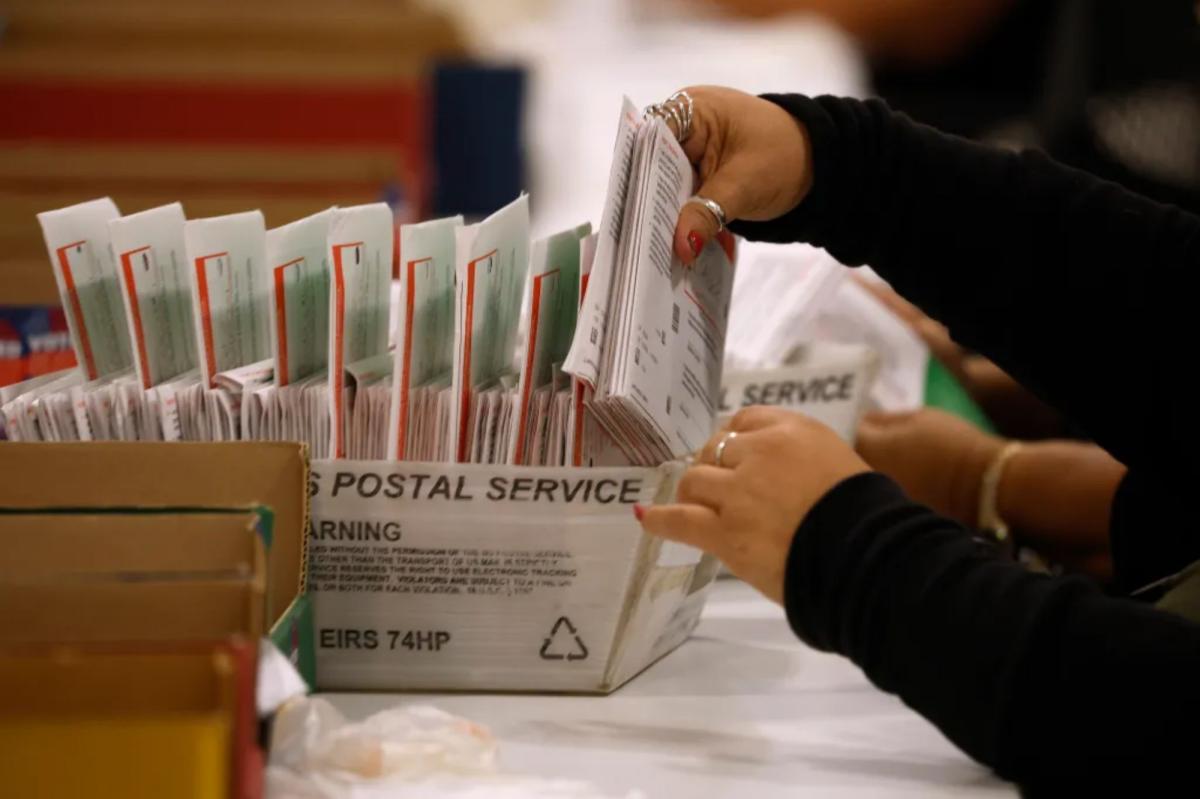
California's week-long vote-counting process after its primary election has drawn criticism for undermining public confidence in democracy despite housing technology giants capable of instant processing.
Stefanos Banos
Stefanos Banos Staff Writer
JUNE 14, 2026 AT 5:02 AM

Last month, Governor Gavin Newsom called on election officials statewide to implement new procedures intended to accelerate ballot counting and restore faith in the electoral system, according to New York Post. The reality proved starkly different.

A full week after polls closed, the state that houses technology giants capable of processing complex operations in nanoseconds was still tallying votes. While Florida completes nearly all vote counting by midnight on election night, California’s process barely begins by that hour.

Republican gubernatorial candidate Steve Hilton accurately observed that the global community views California’s sluggish ballot processing as a laughingstock. For residents of the Golden State, however, the implications extend far beyond embarrassment.

Election Rules Designed to Fail

The state’s byzantine election procedures appear almost intentionally crafted to undermine public trust. California permits mailed ballots to arrive up to seven days after election day, employs elaborate signature verification processes, accepts identification documents with minimal security standards such as gym memberships, and allows ballot harvesting by partisan operatives.

The Los Angeles mayoral race exemplified these concerns. Spencer Pratt held a solid lead on election night, only to watch Nithya Raman gradually overtake him as late-arriving mail ballots were processed days later. While this shift may reflect legitimate voting patterns among Democrats who favor mail-in voting, the optics recall earlier eras when urban Democratic machines strategically delayed vote counts until determining precisely how many ballots their candidates required for victory.

Jungle Primary Eliminates Real Choice

The primary’s outcome compounds the procedural failures. In Los Angeles, Pratt’s defeat sets up a runoff between two Democrats, eliminating any meaningful ideological alternative for voters.

California’s jungle primary system was ostensibly designed to elevate moderate candidates by incentivizing cross-party appeal. Instead, it frequently denies voters genuine choice by preventing separate party primaries that would produce competing platforms during the general election when turnout peaks.

Karen Bass and Raman now face no restraining opposition from across the political spectrum. For a city devastated by homelessness, surging crime, botched emergency responses, and failing schools, residents must choose between the incumbent responsible for current failures and a challenger promising to implement even more destructive policies from the same ideological playbook.

Statewide Race Offers Alternative

At the gubernatorial level, Republican consolidation behind Hilton produces a genuine contest against establishment Democrat Xavier Becerra. Hilton gains the opportunity to present an alternative vision to the relentless tax-and-spend agenda that has damaged California’s economy, driven productive citizens to other states, and failed to improve public services despite record spending.

The primary results underscore a fundamental problem: one-party dominance produces stagnation and accountability vacuums. California Democrats have constructed an electoral ecosystem that protects their power while the state they govern continues its managed decline.

With information from New York Post

Share:
Stefanos Banos
Stefanos Banos

Stefanos Banos was born in Piraeus and is an editor at NewsFire.GR, specializing in political analysis and international relations. He graduated from the Department of Communication and Media at the University of Bremen in Germany, where he also completed his Master of Arts in Communication and Media Studies. Married to Zoi, he is a proud father of three boys.

Last month, Governor Gavin Newsom called on election officials statewide to implement new procedures intended to accelerate ballot counting and restore faith in the electoral system, according to New York Post. The reality proved starkly different.

A full week after polls closed, the state that houses technology giants capable of processing complex operations in nanoseconds was still tallying votes. While Florida completes nearly all vote counting by midnight on election night, California’s process barely begins by that hour.

Republican gubernatorial candidate Steve Hilton accurately observed that the global community views California’s sluggish ballot processing as a laughingstock. For residents of the Golden State, however, the implications extend far beyond embarrassment.

Election Rules Designed to Fail

The state’s byzantine election procedures appear almost intentionally crafted to undermine public trust. California permits mailed ballots to arrive up to seven days after election day, employs elaborate signature verification processes, accepts identification documents with minimal security standards such as gym memberships, and allows ballot harvesting by partisan operatives.

The Los Angeles mayoral race exemplified these concerns. Spencer Pratt held a solid lead on election night, only to watch Nithya Raman gradually overtake him as late-arriving mail ballots were processed days later. While this shift may reflect legitimate voting patterns among Democrats who favor mail-in voting, the optics recall earlier eras when urban Democratic machines strategically delayed vote counts until determining precisely how many ballots their candidates required for victory.

Jungle Primary Eliminates Real Choice

The primary’s outcome compounds the procedural failures. In Los Angeles, Pratt’s defeat sets up a runoff between two Democrats, eliminating any meaningful ideological alternative for voters.

California’s jungle primary system was ostensibly designed to elevate moderate candidates by incentivizing cross-party appeal. Instead, it frequently denies voters genuine choice by preventing separate party primaries that would produce competing platforms during the general election when turnout peaks.

Karen Bass and Raman now face no restraining opposition from across the political spectrum. For a city devastated by homelessness, surging crime, botched emergency responses, and failing schools, residents must choose between the incumbent responsible for current failures and a challenger promising to implement even more destructive policies from the same ideological playbook.

Statewide Race Offers Alternative

At the gubernatorial level, Republican consolidation behind Hilton produces a genuine contest against establishment Democrat Xavier Becerra. Hilton gains the opportunity to present an alternative vision to the relentless tax-and-spend agenda that has damaged California’s economy, driven productive citizens to other states, and failed to improve public services despite record spending.

The primary results underscore a fundamental problem: one-party dominance produces stagnation and accountability vacuums. California Democrats have constructed an electoral ecosystem that protects their power while the state they govern continues its managed decline.

With information from New York Post