Necessary Cookies

Required for the site to function. Cannot be disabled.

Analytics Cookies

Help us understand how visitors interact with our site (Google Analytics via GTM).

Marketing Cookies

Used to track visitors and deliver personalised advertisements.

We use cookies to enhance your browsing experience and analyse site traffic. By clicking Accept All, you consent to our use of cookies. Privacy Policy
NewsFire Global
Home News Europe World Christianity Culture Wars Opinion Video
Information
About Us Authors Advertising Terms & Conditions Privacy Policy Contact
R2B Media
R2B NEWSFIRE.GR PAPAFOTIS.GR THRACTION HELLENIC CONSERVATIVES RIGHT2THEBONE YT
News World

California congressman pushes plan to split rural areas into new state

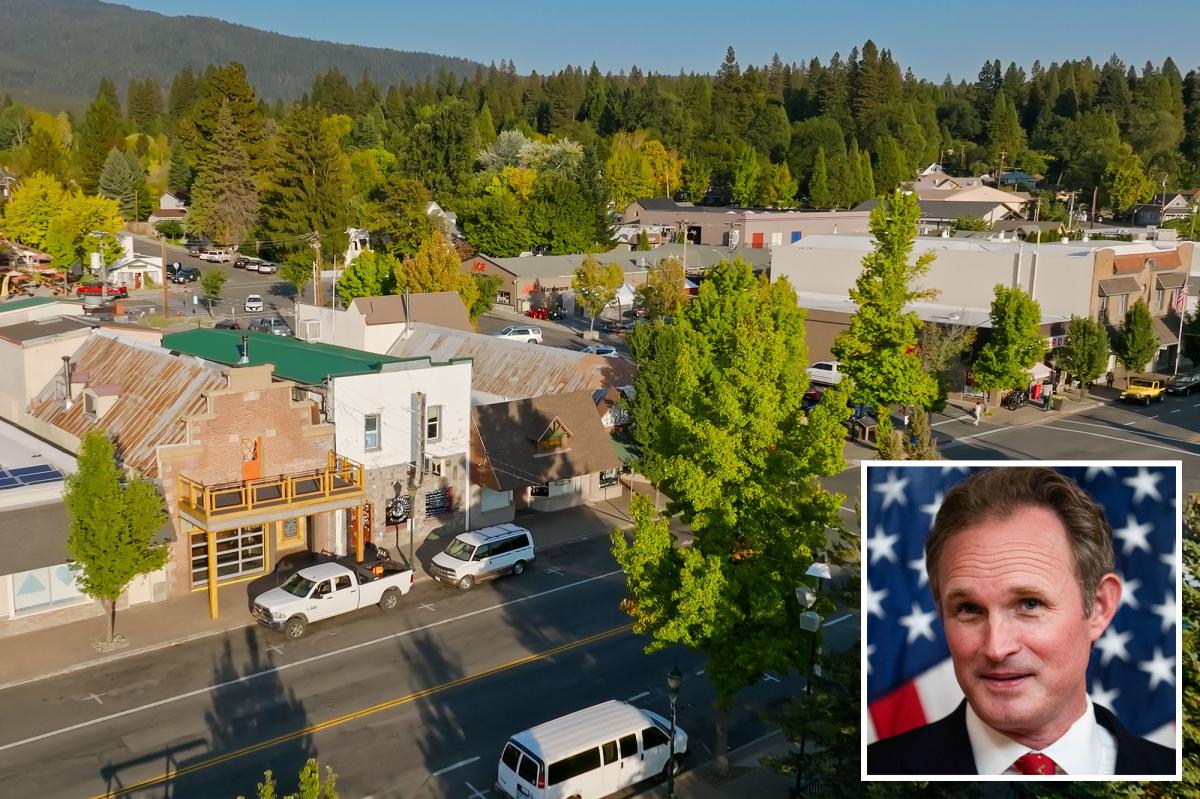
Rep. James Gallagher is renewing calls to split rural California into a separate state, citing rural communities feeling sidelined by Sacramento's progressive leadership.
Stefanos Banos
Stefanos Banos Staff Writer
JUNE 16, 2026 AT 1:48 AM

Rep. James Gallagher, who took the oath of office earlier this month after winning a special election in California’s expansive 1st Congressional District, says rural regions should give serious thought to whether they wish to remain under California’s governance in the wake of the controversial redistricting measure Proposition 50, according to New York Post.

The Republican representative told KCRA that rural Californians ought to weigh their options carefully. Maybe we want our own self determination, Gallagher stated during the interview with the station’s Ashley Zavala.

Gallagher contends the U.S. Constitution offers a clear mechanism for creating new states. He envisions a process beginning with formal endorsements from counties and local governments, followed by approval from both the California Legislature and Congress.

While acknowledging such a dramatic change would not occur immediately, Gallagher emphasized the need for genuine debate on the matter. He suggested that if momentum builds, he may introduce federal legislation to secure congressional consent for the split.

The congressman has not identified precisely which counties might pursue separation, though he noted that six counties have already backed a resolution he previously introduced supporting the concept.

Echoes of the State of Jefferson Movement

Gallagher’s proposal resurrects the longstanding “State of Jefferson” movement, which has advocated for decades that far Northern California and southern Oregon communities deserve independence from state capitals that ignore their concerns.

Historical supporters of that effort have come from counties including Modoc County, Lassen County and Siskiyou County. Whether these same jurisdictions feature in Gallagher’s current vision remains unclear.

Conservatives in these regions have consistently argued that Sacramento neglects their priorities on water rights, timber revenues, wildlife management and agriculture in favor of policies designed for coastal metropolitan elites.

Proposition 50 Intensifies Rural Frustration

Tensions escalated following passage of Proposition 50, as New York Post reports. Critics say the voter-approved redistricting measure weakened rural Republican voting strength by merging conservative areas with heavily Democratic regions around the Bay Area, including affluent and progressive Marin County.

Gallagher characterized the dispute as fundamentally about representation. He argued that when political leaders strip rural citizens of their voice and their ability to elect representatives of their choosing by prioritizing party over people, those citizens must reconsider their place in California.

The congressman said residents across Northern California, the Central Valley and the Inland Empire increasingly feel dismissed and inadequately represented by state government.

Sacramento Out of Touch With Inland Communities

Gallagher cited numerous Democratic-sponsored environmental and economic policies as proof that state leadership has lost connection with rural realities. He pointed to restrictions on gas-powered vehicles, extension of California’s cap-and-trade program, and refusal to suspend the gas tax as examples of Sacramento’s disconnect.

That obstinate and arrogant posture toward inland regions persists and poses a serious problem, Gallagher said.

Previous Secession Efforts in State Legislature

The congressman’s support for dividing California began before his move to Washington. Last year, while serving as Assembly Republican leader, Gallagher introduced a resolution proposing to split California into two separate states.

Unlike earlier State of Jefferson proposals concentrated almost entirely in the rural north, Gallagher’s plan drew an east-west boundary that would have placed much of inland California, including portions of the conservative Inland Empire, into a new state.

The measure carried largely symbolic weight and stood virtually no chance of advancement in the Democrat-controlled Legislature. Nevertheless, it underscored deepening friction between California’s urban centers and inland communities.

At a Sacramento press conference in August 2025, Gallagher declared that forgotten residents of inland counties had been silenced under the state’s Democratic supermajority. He attacked then-Gov. Gavin Newsom’s redistricting strategy, labeling it a “Gavin-mander.”

With information from New York Post

Share:
Stefanos Banos
Stefanos Banos

Stefanos Banos was born in Piraeus and is an editor at NewsFire.GR, specializing in political analysis and international relations. He graduated from the Department of Communication and Media at the University of Bremen in Germany, where he also completed his Master of Arts in Communication and Media Studies. Married to Zoi, he is a proud father of three boys.

Rep. James Gallagher, who took the oath of office earlier this month after winning a special election in California’s expansive 1st Congressional District, says rural regions should give serious thought to whether they wish to remain under California’s governance in the wake of the controversial redistricting measure Proposition 50, according to New York Post.

The Republican representative told KCRA that rural Californians ought to weigh their options carefully. Maybe we want our own self determination, Gallagher stated during the interview with the station’s Ashley Zavala.

Gallagher contends the U.S. Constitution offers a clear mechanism for creating new states. He envisions a process beginning with formal endorsements from counties and local governments, followed by approval from both the California Legislature and Congress.

While acknowledging such a dramatic change would not occur immediately, Gallagher emphasized the need for genuine debate on the matter. He suggested that if momentum builds, he may introduce federal legislation to secure congressional consent for the split.

The congressman has not identified precisely which counties might pursue separation, though he noted that six counties have already backed a resolution he previously introduced supporting the concept.

Echoes of the State of Jefferson Movement

Gallagher’s proposal resurrects the longstanding “State of Jefferson” movement, which has advocated for decades that far Northern California and southern Oregon communities deserve independence from state capitals that ignore their concerns.

Historical supporters of that effort have come from counties including Modoc County, Lassen County and Siskiyou County. Whether these same jurisdictions feature in Gallagher’s current vision remains unclear.

Conservatives in these regions have consistently argued that Sacramento neglects their priorities on water rights, timber revenues, wildlife management and agriculture in favor of policies designed for coastal metropolitan elites.

Proposition 50 Intensifies Rural Frustration

Tensions escalated following passage of Proposition 50, as New York Post reports. Critics say the voter-approved redistricting measure weakened rural Republican voting strength by merging conservative areas with heavily Democratic regions around the Bay Area, including affluent and progressive Marin County.

Gallagher characterized the dispute as fundamentally about representation. He argued that when political leaders strip rural citizens of their voice and their ability to elect representatives of their choosing by prioritizing party over people, those citizens must reconsider their place in California.

The congressman said residents across Northern California, the Central Valley and the Inland Empire increasingly feel dismissed and inadequately represented by state government.

Sacramento Out of Touch With Inland Communities

Gallagher cited numerous Democratic-sponsored environmental and economic policies as proof that state leadership has lost connection with rural realities. He pointed to restrictions on gas-powered vehicles, extension of California’s cap-and-trade program, and refusal to suspend the gas tax as examples of Sacramento’s disconnect.

That obstinate and arrogant posture toward inland regions persists and poses a serious problem, Gallagher said.

Previous Secession Efforts in State Legislature

The congressman’s support for dividing California began before his move to Washington. Last year, while serving as Assembly Republican leader, Gallagher introduced a resolution proposing to split California into two separate states.

Unlike earlier State of Jefferson proposals concentrated almost entirely in the rural north, Gallagher’s plan drew an east-west boundary that would have placed much of inland California, including portions of the conservative Inland Empire, into a new state.

The measure carried largely symbolic weight and stood virtually no chance of advancement in the Democrat-controlled Legislature. Nevertheless, it underscored deepening friction between California’s urban centers and inland communities.

At a Sacramento press conference in August 2025, Gallagher declared that forgotten residents of inland counties had been silenced under the state’s Democratic supermajority. He attacked then-Gov. Gavin Newsom’s redistricting strategy, labeling it a “Gavin-mander.”

With information from New York Post

