Necessary Cookies

Required for the site to function. Cannot be disabled.

Analytics Cookies

Help us understand how visitors interact with our site (Google Analytics via GTM).

Marketing Cookies

Used to track visitors and deliver personalised advertisements.

We use cookies to enhance your browsing experience and analyse site traffic. By clicking Accept All, you consent to our use of cookies. Privacy Policy
NewsFire Global
Home News Europe World Christianity Culture Wars Opinion Video
Information
About Us Authors Advertising Terms & Conditions Privacy Policy Contact
R2B Media
R2B NEWSFIRE.GR PAPAFOTIS.GR THRACTION HELLENIC CONSERVATIVES RIGHT2THEBONE YT
Opinion Christianity

Bucharest Pride: Romanian Patriarchate opposes LGBTQI+

The Romanian Orthodox Church called Bucharest Pride provocative while urging believers to avoid violence and pray for Christian families during the spiritually significant period.

Giannis Biniaris
Giannis Biniaris Staff Writer
JUNE 22, 2026 AT 12:00 AM Updated: Jun 22, 2026 9:04 AM

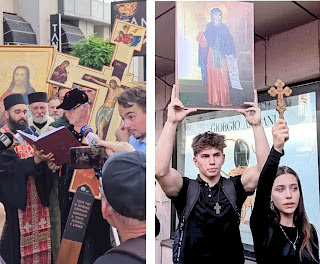
The Patriarchate of Romania characterized the event as “provocative and inappropriate,” noting that it takes place during a period of particular spiritual significance for Orthodox believers.

At the same time, it expressed its sorrow over the public promotion of views that contradict Christian teaching on marriage and family, while calling on the faithful to intensify their prayer for the support of the Christian family.

Of particular value was also the Church’s exhortation to the faithful to avoid any form of aggression, insult, or violence toward participants in the events, choosing instead to witness their faith in a peaceful and spiritual manner.

The Announcement

The full announcement from the Press Office of the Patriarchate of Romania:

“The Patriarchate of Romania expresses its pastoral concern regarding the organization, in Bucharest, of a parade dedicated to promoting the diversity of sexual orientations, in a social and spiritual context that needs balance, discernment, and responsibility.

In the context of its mission to preserve and transmit Christian teaching, the Romanian Orthodox Church confesses that the family, which is founded on marriage between a man and a woman for the purpose of procreation, constitutes a gift and blessing from God, as well as the foundation of social life and the formation of new generations. In this sense, any public event that promotes models different from this teaching can be met with concern and not accepted.

With the certainty that social peace and mutual respect are essential for the common good of society, the Patriarchate of Romania recalls that public events such as Bucharest Pride can lead to further confusion of spiritual values in a society already afflicted by demographic decline and social instability.

At the same time, out of genuine pastoral concern, the Patriarchate of Romania emphasizes that the response of Orthodox Christians must be illuminated by peace, prayer, and respect for the dignity of every human being. We do not support or encourage any form of offensive speech, defamation, or violence, as these contradict the Gospel of Christ’s love.

Faced with contemporary challenges, we call on the clergy and people to intensify prayer and cultivate the values of Christian faith within the family, the parish, and society.”

Reactions

This announcement provoked various reactions. For some it constituted an expected defense of Orthodox teaching, while for others it was an intervention that does not align with the contemporary social climate.

However, regardless of the different approaches, the Romanian Church’s stance highlighted an important element: that the Church must express its teaching clearly, without fear but also without intolerance.

The Orthodox Church is not a social organization that adapts its positions according to prevailing cultural trends. It is the bearer of a timeless truth, which it is called to preserve and transmit.

When the Church speaks about marriage, family, and human life, it is not simply expressing a personal opinion, but its theological tradition and the experience of centuries.

At the same time, it is necessary to make a critical distinction. The Church absolutely respects the person of every human being. Every person is an image of God, bearer of inestimable worth and object of divine love.

The Church does not reject, despise, or target any person because of their personal choices or the difficulties they face in their life. On the contrary, its mission is to embrace all people and call them to a journey of salvation and freedom.

However, respect for the human person does not mean acceptance of every behavior or every view as consistent with the Gospel. The Church cannot compromise with sin, whatever form it takes, because it believes that sin does not liberate man but oppresses him and distances him from his true destiny.

The distinction between the person and sin constitutes a fundamental principle of Christian anthropology. The Christian is called to love the person, but at the same time to struggle against sin, first of all within himself.

From this perspective, the Romanian Church’s intervention should not be interpreted as an expression of hostility toward any social group, but as a reminder of the responsibility the Church has to publicly articulate its teaching.

The fact that the announcement combined a clear confession of faith with the condemnation of any form of violence or fanaticism shows the path that ecclesiastical discourse must follow in the modern world.

This development reasonably raises the question of whether the Church of Greece could undertake a similar initiative. In an era where the public sphere is flooded with messages that often contradict Orthodox teaching, many believers expect a clearer voice from the Church.

Not a denunciatory or divisive voice, but a pastoral, well-grounded, and courageous voice that reminds us of the values of our faith and offers spiritual orientation.

And the Church of Greece?

The Romanian Church has shown that it is possible to publicly express the Orthodox position without extremes and without compromises. Perhaps this constitutes a useful example for the Church of Greece as well.

The times demand clear speech, pastoral sensitivity, and faith in the truth of the Gospel. Because true love is not identical with silence or with acceptance of everything, but with the witness of truth that leads man to freedom and life.


Share:
Giannis Biniaris
Giannis Biniaris

Giannis Biniaris was born in Cholargos, Attica, but lived and was raised in the Greek provinces. He served his military service in the Special Forces of the Hellenic Army and currently works as a private employee while creating videos on his YouTube channel Galanolefko Steki.

The Patriarchate of Romania characterized the event as “provocative and inappropriate,” noting that it takes place during a period of particular spiritual significance for Orthodox believers.

At the same time, it expressed its sorrow over the public promotion of views that contradict Christian teaching on marriage and family, while calling on the faithful to intensify their prayer for the support of the Christian family.

Of particular value was also the Church’s exhortation to the faithful to avoid any form of aggression, insult, or violence toward participants in the events, choosing instead to witness their faith in a peaceful and spiritual manner.

The Announcement

The full announcement from the Press Office of the Patriarchate of Romania:

“The Patriarchate of Romania expresses its pastoral concern regarding the organization, in Bucharest, of a parade dedicated to promoting the diversity of sexual orientations, in a social and spiritual context that needs balance, discernment, and responsibility.

In the context of its mission to preserve and transmit Christian teaching, the Romanian Orthodox Church confesses that the family, which is founded on marriage between a man and a woman for the purpose of procreation, constitutes a gift and blessing from God, as well as the foundation of social life and the formation of new generations. In this sense, any public event that promotes models different from this teaching can be met with concern and not accepted.

With the certainty that social peace and mutual respect are essential for the common good of society, the Patriarchate of Romania recalls that public events such as Bucharest Pride can lead to further confusion of spiritual values in a society already afflicted by demographic decline and social instability.

At the same time, out of genuine pastoral concern, the Patriarchate of Romania emphasizes that the response of Orthodox Christians must be illuminated by peace, prayer, and respect for the dignity of every human being. We do not support or encourage any form of offensive speech, defamation, or violence, as these contradict the Gospel of Christ’s love.

Faced with contemporary challenges, we call on the clergy and people to intensify prayer and cultivate the values of Christian faith within the family, the parish, and society.”

Reactions

This announcement provoked various reactions. For some it constituted an expected defense of Orthodox teaching, while for others it was an intervention that does not align with the contemporary social climate.

However, regardless of the different approaches, the Romanian Church’s stance highlighted an important element: that the Church must express its teaching clearly, without fear but also without intolerance.

The Orthodox Church is not a social organization that adapts its positions according to prevailing cultural trends. It is the bearer of a timeless truth, which it is called to preserve and transmit.

When the Church speaks about marriage, family, and human life, it is not simply expressing a personal opinion, but its theological tradition and the experience of centuries.

At the same time, it is necessary to make a critical distinction. The Church absolutely respects the person of every human being. Every person is an image of God, bearer of inestimable worth and object of divine love.

The Church does not reject, despise, or target any person because of their personal choices or the difficulties they face in their life. On the contrary, its mission is to embrace all people and call them to a journey of salvation and freedom.

However, respect for the human person does not mean acceptance of every behavior or every view as consistent with the Gospel. The Church cannot compromise with sin, whatever form it takes, because it believes that sin does not liberate man but oppresses him and distances him from his true destiny.

The distinction between the person and sin constitutes a fundamental principle of Christian anthropology. The Christian is called to love the person, but at the same time to struggle against sin, first of all within himself.

From this perspective, the Romanian Church’s intervention should not be interpreted as an expression of hostility toward any social group, but as a reminder of the responsibility the Church has to publicly articulate its teaching.

The fact that the announcement combined a clear confession of faith with the condemnation of any form of violence or fanaticism shows the path that ecclesiastical discourse must follow in the modern world.

This development reasonably raises the question of whether the Church of Greece could undertake a similar initiative. In an era where the public sphere is flooded with messages that often contradict Orthodox teaching, many believers expect a clearer voice from the Church.

Not a denunciatory or divisive voice, but a pastoral, well-grounded, and courageous voice that reminds us of the values of our faith and offers spiritual orientation.

And the Church of Greece?

The Romanian Church has shown that it is possible to publicly express the Orthodox position without extremes and without compromises. Perhaps this constitutes a useful example for the Church of Greece as well.

The times demand clear speech, pastoral sensitivity, and faith in the truth of the Gospel. Because true love is not identical with silence or with acceptance of everything, but with the witness of truth that leads man to freedom and life.
