Necessary Cookies

Required for the site to function. Cannot be disabled.

Analytics Cookies

Help us understand how visitors interact with our site (Google Analytics via GTM).

Marketing Cookies

Used to track visitors and deliver personalised advertisements.

We use cookies to enhance your browsing experience and analyse site traffic. By clicking Accept All, you consent to our use of cookies. Privacy Policy
NewsFire Global
Home News Europe World Christianity Culture Wars Opinion Video
Information
About Us Authors Advertising Terms & Conditions Privacy Policy Contact
R2B Media
R2B NEWSFIRE.GR PAPAFOTIS.GR THRACTION HELLENIC CONSERVATIVES RIGHT2THEBONE YT
News World

Brother of Iranian kickboxer sentenced to death begs Trump for help

The brother of Iranian kickboxer Benyamin Naghdi, sentenced to death for protesting, has appealed to President Trump to intervene and prevent his execution.
AUGUST 8, 2026 AT 5:07 PM

Arash Naghdi, 37, is pleading with the president to raise his brother’s case during negotiations with Iran and pressure the Ayatollah to halt the execution, according to New York Post.

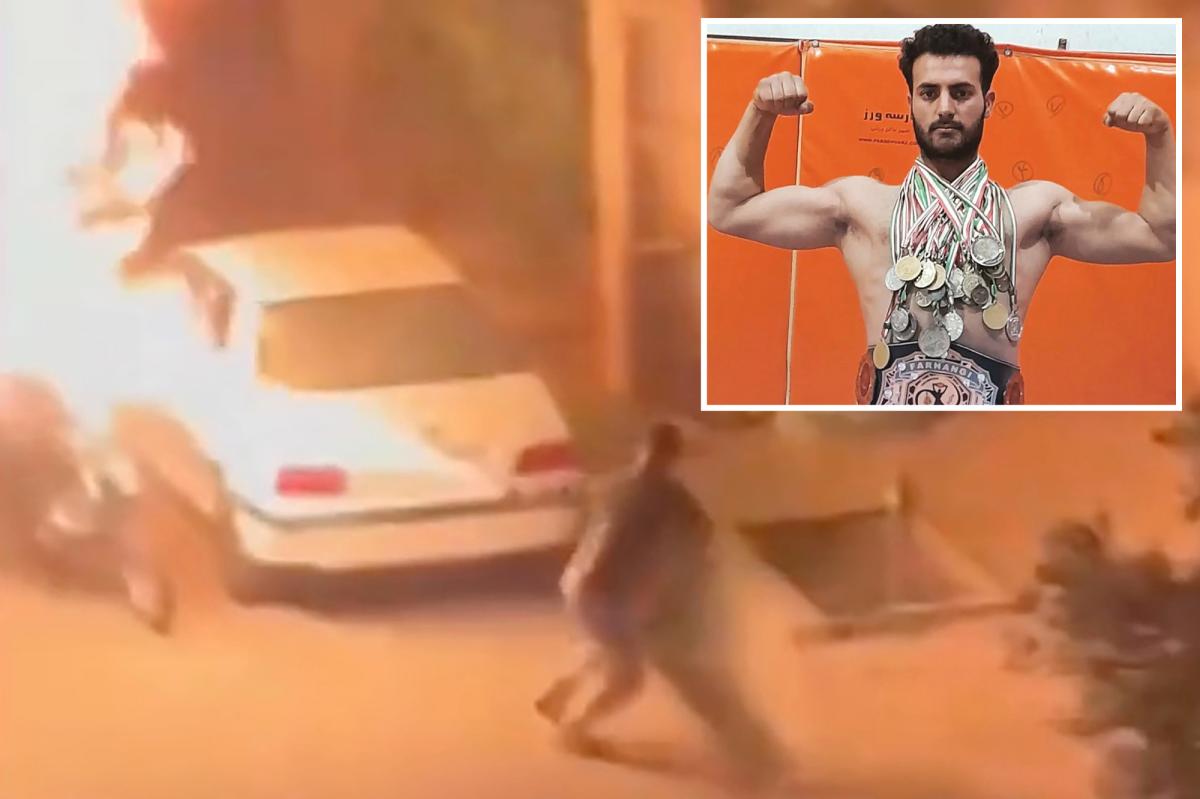
Benyamin Naghdi, a 26-year-old former member of Iran’s national kickboxing team, received a death sentence in May for allegedly defending himself against security forces at an anti-regime demonstration in January. Authorities claim he used a makeshift flamethrower to ward off security personnel during the protest.

The kickboxer was charged with “enmity against God” and Iran’s Supreme Court confirmed the death penalty on July 30. The family has not been informed of an exact execution date, but fears the hanging could occur at any moment.

Speaking from Shiraz, Iran, Arash Naghdi said his brother has his whole life ahead of him and deserves a chance to live and build a future. Despite receiving threatening calls from unlisted numbers and fearing arrest himself, he felt compelled to speak out publicly.

Arash has been barred from visiting his brother in prison, though his parents were granted a “final goodbye” two months ago—a form of psychological torture the regime employs against families of condemned prisoners. His father described Benyamin as severely emaciated and a shadow of his former self.

The family believes Benyamin was tortured in custody. He has reportedly threatened self-harm in an attempt to delay his execution and recently called a cousin expressing he had lost all hope.

The Islamic regime has executed at least 56 individuals on what critics call fabricated charges since March, with 27 of those arrested during January’s protests. President Trump stated in January that the United States would take strong action against the Islamic Republic if it executed protesters, and claimed the regime had previously called off executions at his request.

However, Iran executed political prisoners Omid Behzad and Pouria Safvat on August 3 after convicting them of spying for Israel.

Iranian security forces turned the January protests into a massacre, killing at least 52,000 demonstrators according to figures cited by Trump.

Video footage shows security forces on motorcycles pursuing Benyamin during the protest. Arash insists his brother acted in self-defense while trying to protect himself and fellow demonstrators from violent security personnel.

The regime publicly hanged two protesters in Isfahan in late July and broadcast execution footage from inside the prison, causing Benyamin’s mental state to deteriorate sharply. He spent months in solitary confinement before being transferred to general population less than a month ago, following a 10-day hunger strike.

Benyamin had set aside his athletic ambitions to support his family after his father’s health declined due to chemical weapons exposure during the Iran-Iraq War. He worked multiple jobs including mechanic, carpenter, fruit vendor and tour guide to provide for his parents and teenage sister.

Rampant inflation driven by decades of mismanagement by the mullahs and Western sanctions made saving money virtually impossible for the young athlete.

According to his brother, Benyamin was never politically active, but his family’s economic hardships and the feeling of having no future drove him to join the protest movement. He participated because of the struggles he endured daily and his inability to make ends meet or adequately provide for his family.

Arash has assumed the role of breadwinner, driving a truck day and night, while his ailing father spends his days traveling between courthouses and police stations with no resources, borrowing money wherever possible in a desperate attempt to save his son.

Their mother weeps every night and constantly speaks of her condemned son. Arash invoked an Iranian saying to describe her anguish: one eye is full of tears, the other full of blood.

With information from New York Post
Share:
Eleni Papadaki-Van Der Merwe

She was born in 1986 in Johannesburg, South Africa. She is the granddaughter of an immigrant from Crete who settled in the Greek community of Johannesburg (one of the largest in Africa). She holds a bachelor’s degree in International Relations and Political Science from the University of the Witwatersrand (Wits) in Johannesburg and a master’s degree in Journalism from Rhodes University in Grahamstown. She began her career at English-language media outlets in Johannesburg, covering politics and economics, with a focus on issues related to migration and the diaspora. She moved to Athens in 2015 to “return to her roots,” initially to pursue graduate studies, and has remained there permanently. She is married to an Afrikaner; they have two children and live in the southern suburbs of Athens.

Arash Naghdi, 37, is pleading with the president to raise his brother’s case during negotiations with Iran and pressure the Ayatollah to halt the execution, according to New York Post.

Benyamin Naghdi, a 26-year-old former member of Iran’s national kickboxing team, received a death sentence in May for allegedly defending himself against security forces at an anti-regime demonstration in January. Authorities claim he used a makeshift flamethrower to ward off security personnel during the protest.

The kickboxer was charged with “enmity against God” and Iran’s Supreme Court confirmed the death penalty on July 30. The family has not been informed of an exact execution date, but fears the hanging could occur at any moment.

Speaking from Shiraz, Iran, Arash Naghdi said his brother has his whole life ahead of him and deserves a chance to live and build a future. Despite receiving threatening calls from unlisted numbers and fearing arrest himself, he felt compelled to speak out publicly.

Arash has been barred from visiting his brother in prison, though his parents were granted a “final goodbye” two months ago—a form of psychological torture the regime employs against families of condemned prisoners. His father described Benyamin as severely emaciated and a shadow of his former self.

The family believes Benyamin was tortured in custody. He has reportedly threatened self-harm in an attempt to delay his execution and recently called a cousin expressing he had lost all hope.

The Islamic regime has executed at least 56 individuals on what critics call fabricated charges since March, with 27 of those arrested during January’s protests. President Trump stated in January that the United States would take strong action against the Islamic Republic if it executed protesters, and claimed the regime had previously called off executions at his request.

However, Iran executed political prisoners Omid Behzad and Pouria Safvat on August 3 after convicting them of spying for Israel.

Iranian security forces turned the January protests into a massacre, killing at least 52,000 demonstrators according to figures cited by Trump.

Video footage shows security forces on motorcycles pursuing Benyamin during the protest. Arash insists his brother acted in self-defense while trying to protect himself and fellow demonstrators from violent security personnel.

The regime publicly hanged two protesters in Isfahan in late July and broadcast execution footage from inside the prison, causing Benyamin’s mental state to deteriorate sharply. He spent months in solitary confinement before being transferred to general population less than a month ago, following a 10-day hunger strike.

Benyamin had set aside his athletic ambitions to support his family after his father’s health declined due to chemical weapons exposure during the Iran-Iraq War. He worked multiple jobs including mechanic, carpenter, fruit vendor and tour guide to provide for his parents and teenage sister.

Rampant inflation driven by decades of mismanagement by the mullahs and Western sanctions made saving money virtually impossible for the young athlete.

According to his brother, Benyamin was never politically active, but his family’s economic hardships and the feeling of having no future drove him to join the protest movement. He participated because of the struggles he endured daily and his inability to make ends meet or adequately provide for his family.

Arash has assumed the role of breadwinner, driving a truck day and night, while his ailing father spends his days traveling between courthouses and police stations with no resources, borrowing money wherever possible in a desperate attempt to save his son.

Their mother weeps every night and constantly speaks of her condemned son. Arash invoked an Iranian saying to describe her anguish: one eye is full of tears, the other full of blood.

With information from New York Post