
Britain Marks Decade Since Historic Brexit Vote Victory
The article argues that Brexit triggered a decade of political instability across Western democracies, with Britain cycling through six prime ministers and similar turmoil affecting France, Austria, and Bulgaria.
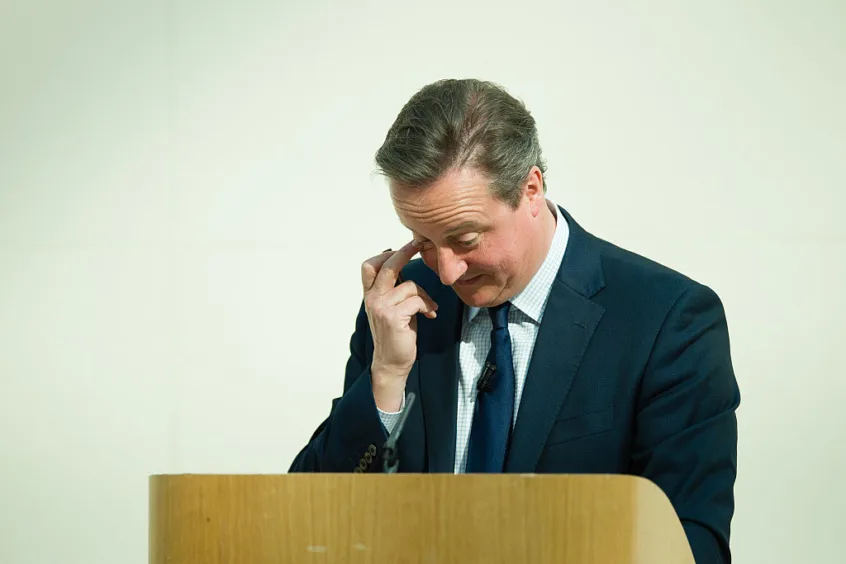

A decade has passed since British voters delivered their historic decision to leave the European Union, a震撼 that reverberated across the Western world and unleashed a populist wave that continues to reshape politics today.
According to Brussels Signal, the real story is not the referendum itself but what came after—the institutional chaos, the collapse of trust, and the refusal of Western establishments to accept the profound political shifts their voters were demanding.
On the day following the Brexit vote, British Prime Minister David Cameron resigned. Having campaigned against leaving the EU, Cameron felt unable to implement the result. What followed was a leadership contest that sidelined Boris Johnson, the de facto leader of the Brexit campaign, in favor of Theresa May—another Brexit opponent.
Johnson’s path to power was blocked by establishment figures who quietly opposed Brexit and by fractures within the conservative movement itself, including betrayal by figures like Michael Gove. Britain would not see a pro-Brexit prime minister for more than three years, as Brussels Signal reports, until Johnson finally took office after May’s failed negotiations.
The political instability has been staggering. Ten years on, the United Kingdom has cycled through six prime ministers, including Keir Starmer, whose recent resignation announcement marks yet another chapter in Britain’s governmental carousel. By comparison, Italy—notorious for political volatility—has had only five leaders in the same period.
Continental Europe Faces Similar Turmoil
Britain is far from alone in this crisis of governance. Austria has burned through seven leaders and Bulgaria six since the Brexit vote. Even presidential systems have struggled with stability.
France has seen seven prime ministers under Emmanuel Macron alone—more than his two predecessors Nicholas Sarkozy and François Hollande combined, who together appointed only four. Macron himself remains deeply unpopular, having secured reelection largely because his opponent was Marine Le Pen.
The United States has experienced its own upheaval. No Speaker of the House has served more than four consecutive years since the early 2010s. The White House has changed party control in three successive elections—a pattern not seen since the 1880s—swinging from Democrats to Republicans to Democrats to Republicans from 2012 to the present day.
Establishment Unpreparedness and Rejection
The root cause of Western instability lies in an establishment completely unprepared for the loss of public faith, as Brussels Signal notes. Had they anticipated the Brexit referendum could actually pass, they likely would have structured it differently—perhaps requiring a supermajority rather than a simple 50-percent-plus-one threshold for such a momentous decision.
More damaging still was the refusal to accept the results. For years, prominent figures argued the vote was illegitimate due to its narrow margin. Anti-Brexit forces pushed for a “People’s Vote”—essentially a do-over referendum. As late as 2019, the Labour Party campaigned on a manifesto promising yet another referendum if elected, asking voters to choose between whatever deal Labour negotiated or remaining in the EU entirely—effectively nullifying the original Brexit decision.
Across the Atlantic, President Donald Trump‘s entire first term was consumed by accusations of collusion between his campaign and the Russian government—claims later exposed as a coordinated hoax pushed by those unwilling to accept his election victory.
The Pattern of Denial
The Brexit anniversary reveals a fundamental pattern: Western establishments faced with populist revolt have consistently chosen denial and obstruction over adaptation. Rather than grappling with the profound shifts in their political systems, they have doubled down on resistance, fueling further instability and destroying what remained of institutional trust.
The chaos of the past decade was not inevitable. It stemmed directly from the failure of political elites to recognize that the old international order was crumbling and that voters were demanding fundamental change. Ten years after Brexit, the West is still paying the price for that willful blindness.
With information from Brussels Signal





