Necessary Cookies

Required for the site to function. Cannot be disabled.

Analytics Cookies

Help us understand how visitors interact with our site (Google Analytics via GTM).

Marketing Cookies

Used to track visitors and deliver personalised advertisements.

We use cookies to enhance your browsing experience and analyse site traffic. By clicking Accept All, you consent to our use of cookies. Privacy Policy
NewsFire Global
Home News Europe World Christianity Culture Wars Opinion Video
Information
About Us Authors Advertising Terms & Conditions Privacy Policy Contact
R2B Media
R2B NEWSFIRE.GR PAPAFOTIS.GR THRACTION HELLENIC CONSERVATIVES RIGHT2THEBONE YT
News World

Blue Solutions and AVL Test Solid-State Battery Safety

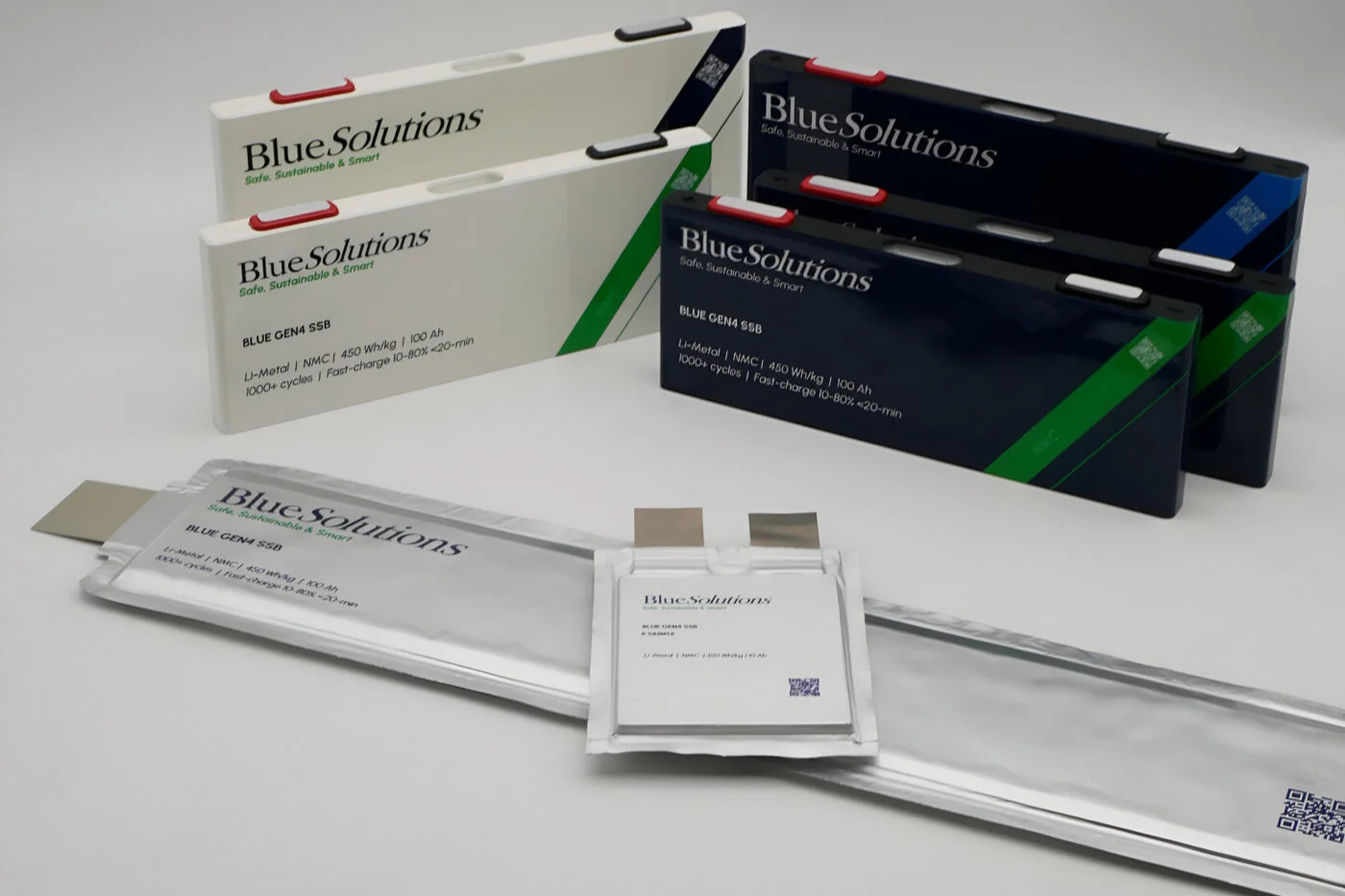
French battery developer Blue Solutions and AVL completed safety testing of solid-state battery cells, demonstrating compliance with international standards and readiness for mass production.
Stefanos Banos
Stefanos Banos Staff Writer
AUGUST 3, 2026 AT 11:42 PM

The collaboration brought together Blue Solutions’ advanced cell technology with AVL’s simulation, testing and validation capabilities to evaluate potential risks before the batteries enter industrial-scale manufacturing, according to Electrive (EU ηλεκτροκίνηση).

Engineers examined cell behaviour under escalating internal pressure, mechanical stability and various stress and failure scenarios. The assessment programme centred on Blue Solutions’ next-generation solid-state battery technology, which incorporates a lithium-metal anode among other innovations.

While this cell design offers higher energy density than current lithium-ion cells, it also presents distinct engineering challenges, particularly in managing internal cell pressure and designing the mechanical structure of complete battery systems.

Thermal Propagation Testing

A critical component of the programme examined thermal propagation—the phenomenon where a thermal event in one defective or overheated cell spreads to adjacent cells. In worst-case scenarios, this can trigger a chain reaction throughout an entire battery pack.

The partners confirmed that this risk can be substantially reduced through simulation-based development, pressure-optimised cell design and safety-focused battery system architecture.

Blue Solutions and AVL reported positive and consistent results across simulation and validation testing. The technology meets key requirements of China’s mandatory GB 38031-2020 battery safety standard, which establishes safety requirements for traction batteries in electric vehicles and includes testing at cell, battery pack and system levels.

Paul Schiffbänker, Director of Battery Development at AVL, described the collaboration as a significant advancement for the company. The work not only deepened AVL’s understanding of the specific safety characteristics of next-generation battery chemistry but also drove further development of the firm’s safety methodologies and battery design solutions, as he stated in Electrive (EU ηλεκτροκίνηση).
Energy Density Targets

Despite the focus on safety, the partners aim to maintain high energy density in the cells. Blue Solutions and AVL are targeting volumetric energy density up to 25 percent higher than comparable battery packs based on NMC lithium-ion cells, enabling greater energy storage within identical installation space.

Gravimetric energy density, which measures energy storage relative to battery weight, is expected to improve by 13 percent.

Schiffbänker emphasised that the collaboration enables systematic integration of safety into the development of future high-energy battery systems from the outset, encompassing advanced simulation-based prediction models and new validation and assessment approaches.

Olivier Caumont, Battery Systems Director at Blue Solutions, characterised the programme as confirmation of the concept’s market readiness. AVL’s expertise across multiple sectors, combined with Blue Solutions’ extensive manufacturing experience in solid-state battery production and pack integration—including safety, thermal and mechanical aspects—has confirmed that the solution aligns with market needs and can meet the most stringent safety requirements.

Commercial Timeline

Blue Solutions is currently developing the fourth generation of its solid-state battery technology. The company is working with several partners to evaluate potential applications and plans to commercialise the technology for passenger cars by the end of the decade.

The findings from the joint safety programme will be presented at international conferences and battery industry events.

With information from Electrive (EU ηλεκτροκίνηση)

Share:
Stefanos Banos
Stefanos Banos

Stefanos Banos was born in Piraeus and is an editor at NewsFire.GR, specializing in political analysis and international relations. He graduated from the Department of Communication and Media at the University of Bremen in Germany, where he also completed his Master of Arts in Communication and Media Studies. Married to Zoi, he is a proud father of three boys.

The collaboration brought together Blue Solutions’ advanced cell technology with AVL’s simulation, testing and validation capabilities to evaluate potential risks before the batteries enter industrial-scale manufacturing, according to Electrive (EU ηλεκτροκίνηση).

Engineers examined cell behaviour under escalating internal pressure, mechanical stability and various stress and failure scenarios. The assessment programme centred on Blue Solutions’ next-generation solid-state battery technology, which incorporates a lithium-metal anode among other innovations.

While this cell design offers higher energy density than current lithium-ion cells, it also presents distinct engineering challenges, particularly in managing internal cell pressure and designing the mechanical structure of complete battery systems.

Thermal Propagation Testing

A critical component of the programme examined thermal propagation—the phenomenon where a thermal event in one defective or overheated cell spreads to adjacent cells. In worst-case scenarios, this can trigger a chain reaction throughout an entire battery pack.

The partners confirmed that this risk can be substantially reduced through simulation-based development, pressure-optimised cell design and safety-focused battery system architecture.

Blue Solutions and AVL reported positive and consistent results across simulation and validation testing. The technology meets key requirements of China’s mandatory GB 38031-2020 battery safety standard, which establishes safety requirements for traction batteries in electric vehicles and includes testing at cell, battery pack and system levels.

Paul Schiffbänker, Director of Battery Development at AVL, described the collaboration as a significant advancement for the company. The work not only deepened AVL’s understanding of the specific safety characteristics of next-generation battery chemistry but also drove further development of the firm’s safety methodologies and battery design solutions, as he stated in Electrive (EU ηλεκτροκίνηση).
Energy Density Targets

Despite the focus on safety, the partners aim to maintain high energy density in the cells. Blue Solutions and AVL are targeting volumetric energy density up to 25 percent higher than comparable battery packs based on NMC lithium-ion cells, enabling greater energy storage within identical installation space.

Gravimetric energy density, which measures energy storage relative to battery weight, is expected to improve by 13 percent.

Schiffbänker emphasised that the collaboration enables systematic integration of safety into the development of future high-energy battery systems from the outset, encompassing advanced simulation-based prediction models and new validation and assessment approaches.

Olivier Caumont, Battery Systems Director at Blue Solutions, characterised the programme as confirmation of the concept’s market readiness. AVL’s expertise across multiple sectors, combined with Blue Solutions’ extensive manufacturing experience in solid-state battery production and pack integration—including safety, thermal and mechanical aspects—has confirmed that the solution aligns with market needs and can meet the most stringent safety requirements.

Commercial Timeline

Blue Solutions is currently developing the fourth generation of its solid-state battery technology. The company is working with several partners to evaluate potential applications and plans to commercialise the technology for passenger cars by the end of the decade.

The findings from the joint safety programme will be presented at international conferences and battery industry events.

With information from Electrive (EU ηλεκτροκίνηση)


