
Black Americans Face Identity Crisis in Modern Politics
Taru Taylor argues in Washington Examiner that Black Americans must choose between embracing full citizenship responsibilities or perpetuating a victim mentality based on institutional racism grievances.

The choice, Taylor argues, is stark: emulate the statesmen, entrepreneurs, artists, scientists, and risk-takers who drive civil society forward, or embrace victim status while rallying behind slogans such as “We are the 99%” or “Black Lives Matter” or “eat the rich.”
Both paths represent self-fulfilling prophecies with dramatically different outcomes.


The Power of Self-Fulfilling Prophecies
American sociologist Robert Merton popularized the concept of the self-fulfilling prophecy, defining it as a belief about a situation that becomes part of that situation and thus shapes its trajectory. His classic illustration involved a financially sound bank destroyed by false rumors of insolvency that triggered a panic-driven depositor run.
Yet self-fulfilling prophecies work positively as well. The “fake it till you make it” principle demonstrates how believing in success can create the conditions for achieving it.
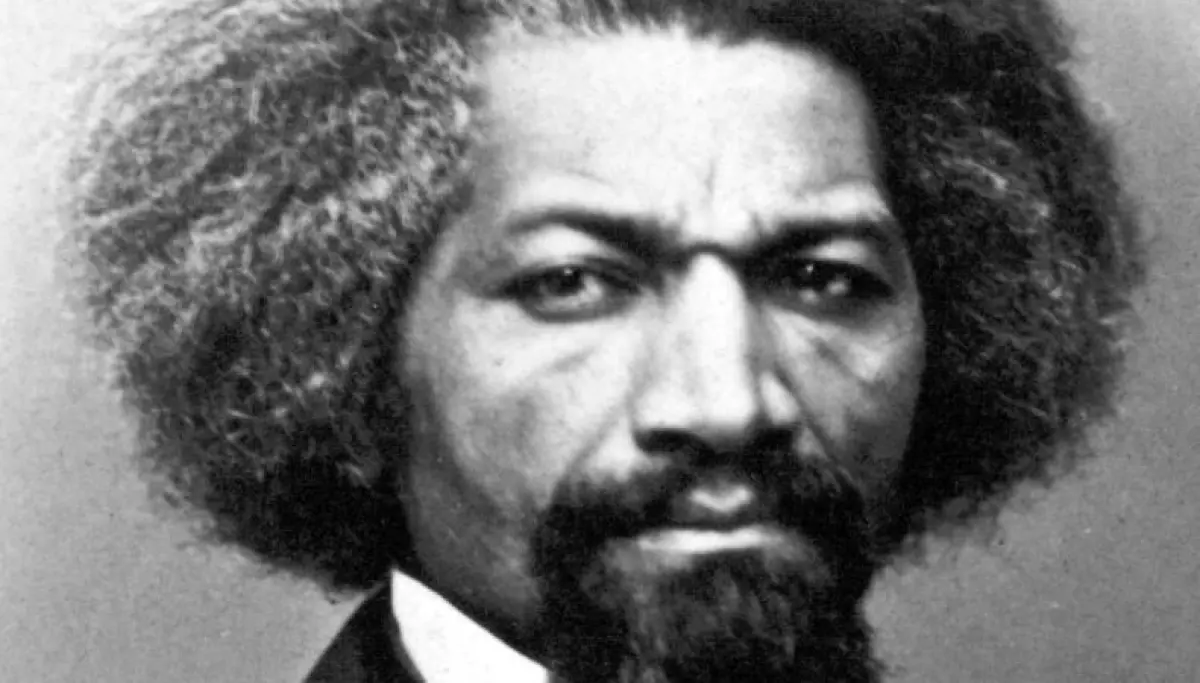
Abolitionist Frederick Douglass embodied this positive archetype, Taylor notes. Born into bondage, Douglass envisioned Black freedom decades before Congress enacted the Civil Rights Amendments: the Thirteenth Amendment abolishing slavery, the Fourteenth Amendment establishing birthright citizenship, and the Fifteenth Amendment securing Black voting rights.
Douglass’s Constitutional Vision
Despite nine in ten Blacks being enslaved before the Thirteenth Amendment, and notwithstanding the Fugitive Slave Act of 1850 and the Dred Scott decision, Douglass characterized the Constitution as a glorious liberty document. His strict constructionist reading unlocked the Constitution’s true meaning.
Speaking in Glasgow, Scotland in 1860, Douglass employed an analogy to explain his interpretive approach. The slaveholders’ government related to the Constitution as a lost ship relates to an accurate compass. A vessel may drift off course despite proper navigation tools, just as a government tolerating slavery operates unconstitutionally despite having a sound founding document.
Douglass rejected his abolitionist contemporary William Lloyd Garrison, who denounced the Constitution as a slaveholding instrument and advocated separation between free and slave states.
Instead, Douglass urged Americans to vote the slave power out of office and commit themselves to their colorblind Constitution. Any unstated original intentions regarding slavery mattered nothing if not explicit in the text itself. The Constitution, he maintained, was a written instrument complete in itself.
The presumption of liberty demanded construction favoring freedom. As Douglass framed it, he presumed the Negro free unless proven otherwise.
His strict constructionism followed clear logic: The Constitution’s language reads “we the people” rather than “we the white people.” If Negroes qualify as people, they fall within the benefits the Constitution was ordained and established to provide.
This great American prophet effectively used the Constitution to fake freedom until he made freedom real for four million formerly enslaved individuals.
Black America’s Modern Paradox
Contemporary Black America, however, follows Merton’s failed-bank model rather than Douglass’s visionary example, Taylor contends.
The 47 million Black Americans collectively wield approximately $2 trillion in annual spending power. If they constituted an independent nation, they would rank among G20 member economies. Yet too many remain trapped in urban poverty or rural deprivation as functional illiterates. Black America conceptualizes itself as poor, producing consequences that condemn one in five to actual poverty.
Black Americans endured 300 years of denied economic opportunity, from slavery’s codification in 1660s Virginia through the civil rights legislation of the 1960s that dismantled legal segregation. But that Jim Crow zero-sum society has vanished.
For three generations, Black Americans have inhabited a positive-sum society overflowing with trillions of dollars in wealth. Black America itself contains multitrillion-dollar prosperity. Yet a poverty mindset persists.
A Choice Between Two Futures
Taylor poses a direct question to fellow Black Americans: Which self-fulfilling prophecy will you embrace?
The Frederick Douglass archetype, or the failed-bank paradigm?
The path forward requires choosing strict construction and making parity the guiding action-idea, Taylor concludes.
With information from Washington Examiner





