Bessent Targets European Firms in Sweeping Iran Sanctions
Treasury Secretary Scott Bessent sanctioned European firms including a French refinery and Swiss trader as part of Operation Economic Outcast targeting Iran's financial networks across 60 entities.
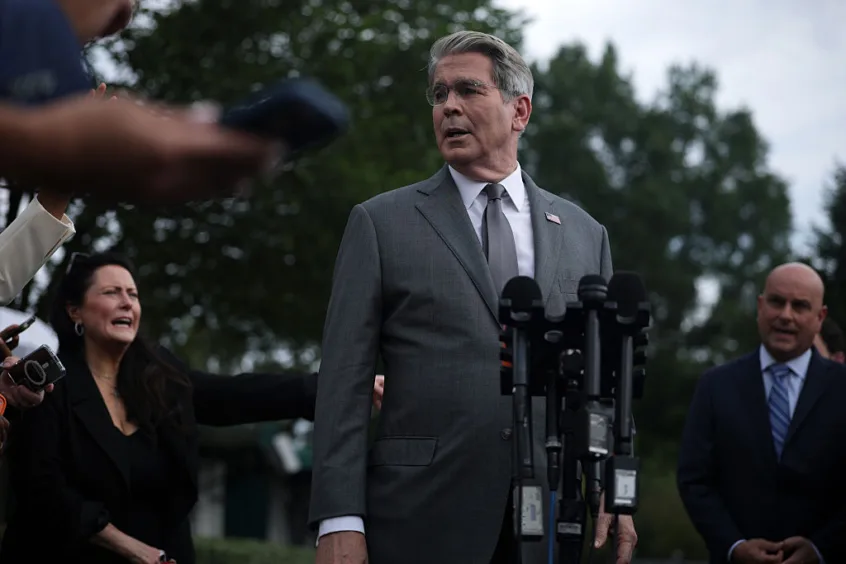

According to Brussels Signal, Bessent announced the designations on August 24 as the launch of what the Treasury Department is calling Operation Economic Outcast—a sustained campaign aimed at choking off Iran’s remaining access to global markets.
Nearly 60 entities, individuals and vessels were hit with sanctions, spanning five key sectors of the Iranian economy: digital assets, technology, gold, aviation and shipping. The Treasury’s Office of Foreign Assets Control now has authority to penalise any foreign individual or company operating in those areas, regardless of location.
European Firms Named in Sanctions Dragnet
Among those designated is Wellbred Trading SA, a Switzerland-based subsidiary of a Singapore commodities group allegedly tied to Iranian shipping tycoon Mohammad Hossein Shamkhani. The company acquired French cooking oil refinery La Nivernaise de Raffinage SAS in 2024, which OFAC identified as part of a scheme to create a veneer of legitimacy through European alternative energy investments.
Also on the list: Estanica Trading Ltd, a Britain-based firm identified as the owner of the Gambia-flagged tanker TELA, which the Treasury says transported hundreds of thousands of barrels of Iranian crude. Greek nationals Almpertos Tsoris and Georgios Tsoris were sanctioned for providing refuelling services to blacklisted vessels via front companies in Dubai and Hong Kong.
The broader network under scrutiny operates across the United Arab Emirates, Hong Kong, China, Singapore, Switzerland and other European jurisdictions, the Treasury stated.
No Country Exempt—China on Notice
Scott Bessent did not publicly name countries facing secondary sanctions or set a formal deadline, but said each jurisdiction would be given a specific timeframe to wind down Iran-related operations. He confirmed that a major financial institution would face penalties before the end of the week and warned that China would not be shielded from enforcement.
The European Union, meanwhile, has pursued its own sanctions track. Brussels adopted measures in May targeting Tehran’s disruption of the Strait of Hormuz and designated the Islamic Revolutionary Guard Corps a terrorist organisation in February.
Oil Markets React—Brussels Silent on Countermeasures
Oil prices dropped roughly 2.5 per cent on August 24 as markets assessed that the sanctions would not immediately reduce physical supply. Brent crude remained near a one-month high, sustained by continuing disruptions in the Strait of Hormuz and elevated European energy costs since February.
Brussels has not indicated whether it will activate protective measures for European companies, as it attempted following Washington’s withdrawal from the 2015 nuclear deal using its so-called blocking statute. In practice, European firms engaged in Iranian business not prohibited under EU law now risk being cut off from the US financial system.
With information from Brussels Signal