Necessary Cookies

Required for the site to function. Cannot be disabled.

Analytics Cookies

Help us understand how visitors interact with our site (Google Analytics via GTM).

Marketing Cookies

Used to track visitors and deliver personalised advertisements.

We use cookies to enhance your browsing experience and analyse site traffic. By clicking Accept All, you consent to our use of cookies. Privacy Policy
NewsFire Global
Home News Europe World Christianity Culture Wars Opinion Video
Information
About Us Authors Advertising Terms & Conditions Privacy Policy Contact
R2B Media
R2B NEWSFIRE.GR PAPAFOTIS.GR THRACTION HELLENIC CONSERVATIVES RIGHT2THEBONE YT
News Culture Wars

Berkeley Students Can’t Read: K-12 Schools Need Remediation

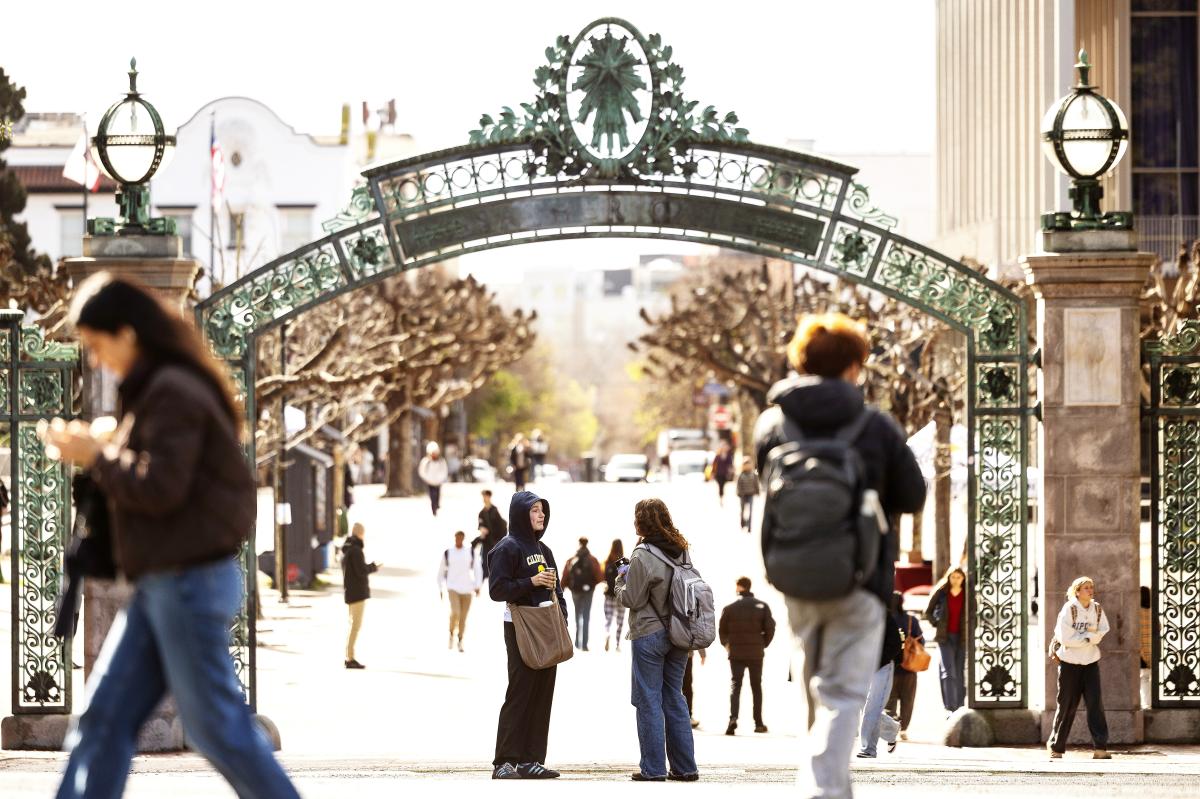
UC Berkeley professors have been forced to reduce reading assignments to just five pages per day after discovering students at the elite university cannot handle traditional course loads.
Stefanos Banos
Stefanos Banos Staff Writer
JUNE 13, 2026 AT 10:11 AM

An alarming crisis in academic standards has emerged at UC Berkeley, where students at one of America’s most elite public universities are struggling to complete even minimal reading assignments, a development that raises serious questions about the failure of California’s education system.

According to New York Post, faculty members at the prestigious university report they have been forced to drastically reduce reading requirements after discovering students cannot handle more than five pages per day for each course.

Multiple professors have acknowledged scaling back their expectations, with one instructor now assigning just 35 pages weekly, down from the previous 100-page standard. The situation has reached such severity that educators fear core academic disciplines may become impossible to teach properly.

Carlos Noreña, a history professor, told student media that the situation has reached a breaking point. He warned that further reductions could make it impossible to teach history effectively if students cannot engage with essential historical texts.

The revelation is particularly striking given UC Berkeley’s status as a world-class institution that rejected nearly 90 percent of undergraduate applicants last fall. The admitted students typically arrive with perfect or near-perfect high school grade point averages, yet struggle with reading loads that would have been considered basic in previous decades.

Grade Inflation and Ideological Distractions

Several factors appear to be driving this academic decline. Grade inflation has masked real learning deficits, while student attention spans have deteriorated in an era dominated by social media and fragmented digital content.

More troubling are the politically motivated changes to K-12 education standards. Schools have lowered academic expectations in the name of equity, fairness and social justice, while classroom time increasingly goes toward political advocacy rather than foundational skills in reading, writing and mathematics.

The consequences extend far beyond college reading lists. Students pursuing careers in medicine need to master dense scientific textbooks. Future attorneys must process hundreds of pages of legal documents. Researchers must engage with complex academic literature. None of these professional paths remain viable if students cannot handle basic reading requirements.

A Path Forward

Restoring academic rigor will require California to implement higher standards, recalibrate testing and grading systems to measure actual learning, and eliminate ideological curricula in favor of programs focused on critical thinking and fundamental literacy.

In recent weeks, hundreds of UC faculty members have called for reinstatement of the Scholastic Aptitude Test for college admissions across the system. The University of California eliminated the SAT requirement in 2020, citing equity concerns, but the exam has proven to be an effective predictor of college success.

Reducing workloads to accommodate struggling students addresses symptoms rather than causes. California’s K-12 education system requires a fundamental overhaul if it hopes to prepare students for the intellectual demands of higher education and professional life.

With information from New York Post

Share:
Stefanos Banos
Stefanos Banos

Stefanos Banos was born in Piraeus and is an editor at NewsFire.GR, specializing in political analysis and international relations. He graduated from the Department of Communication and Media at the University of Bremen in Germany, where he also completed his Master of Arts in Communication and Media Studies. Married to Zoi, he is a proud father of three boys.

An alarming crisis in academic standards has emerged at UC Berkeley, where students at one of America’s most elite public universities are struggling to complete even minimal reading assignments, a development that raises serious questions about the failure of California’s education system.

According to New York Post, faculty members at the prestigious university report they have been forced to drastically reduce reading requirements after discovering students cannot handle more than five pages per day for each course.

Multiple professors have acknowledged scaling back their expectations, with one instructor now assigning just 35 pages weekly, down from the previous 100-page standard. The situation has reached such severity that educators fear core academic disciplines may become impossible to teach properly.

Carlos Noreña, a history professor, told student media that the situation has reached a breaking point. He warned that further reductions could make it impossible to teach history effectively if students cannot engage with essential historical texts.

The revelation is particularly striking given UC Berkeley’s status as a world-class institution that rejected nearly 90 percent of undergraduate applicants last fall. The admitted students typically arrive with perfect or near-perfect high school grade point averages, yet struggle with reading loads that would have been considered basic in previous decades.

Grade Inflation and Ideological Distractions

Several factors appear to be driving this academic decline. Grade inflation has masked real learning deficits, while student attention spans have deteriorated in an era dominated by social media and fragmented digital content.

More troubling are the politically motivated changes to K-12 education standards. Schools have lowered academic expectations in the name of equity, fairness and social justice, while classroom time increasingly goes toward political advocacy rather than foundational skills in reading, writing and mathematics.

The consequences extend far beyond college reading lists. Students pursuing careers in medicine need to master dense scientific textbooks. Future attorneys must process hundreds of pages of legal documents. Researchers must engage with complex academic literature. None of these professional paths remain viable if students cannot handle basic reading requirements.

A Path Forward

Restoring academic rigor will require California to implement higher standards, recalibrate testing and grading systems to measure actual learning, and eliminate ideological curricula in favor of programs focused on critical thinking and fundamental literacy.

In recent weeks, hundreds of UC faculty members have called for reinstatement of the Scholastic Aptitude Test for college admissions across the system. The University of California eliminated the SAT requirement in 2020, citing equity concerns, but the exam has proven to be an effective predictor of college success.

Reducing workloads to accommodate struggling students addresses symptoms rather than causes. California’s K-12 education system requires a fundamental overhaul if it hopes to prepare students for the intellectual demands of higher education and professional life.

With information from New York Post

