Necessary Cookies

Required for the site to function. Cannot be disabled.

Analytics Cookies

Help us understand how visitors interact with our site (Google Analytics via GTM).

Marketing Cookies

Used to track visitors and deliver personalised advertisements.

We use cookies to enhance your browsing experience and analyse site traffic. By clicking Accept All, you consent to our use of cookies. Privacy Policy
NewsFire Global
Home News Europe World Christianity Culture Wars Opinion Video
Information
About Us Authors Advertising Terms & Conditions Privacy Policy Contact
R2B Media
R2B NEWSFIRE.GR PAPAFOTIS.GR THRACTION HELLENIC CONSERVATIVES RIGHT2THEBONE YT
News Europe

Athens Monitors Turkish Foreign Minister’s Regional Diplomacy

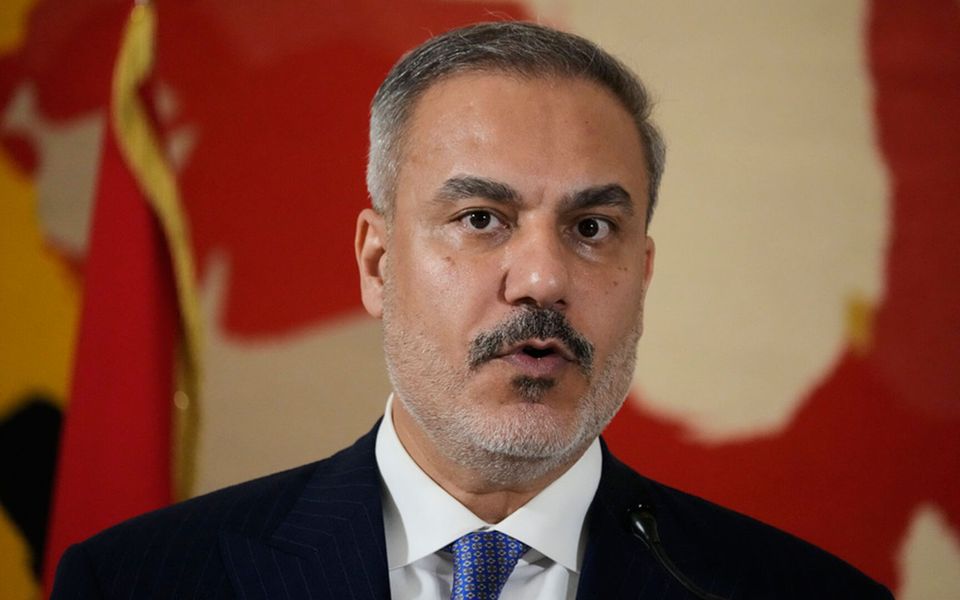
Turkey's diplomatic tour of Libya and Egypt by Foreign Minister Hakan Fidan is alarming Greece as Ankara seeks to strengthen its Eastern Mediterranean position and potentially gain support for its contested maritime claims.

Dimitris Papafotis
Dimitris Papafotis Editor in Chief
AUGUST 14, 2026 AT 2:14 PM

According to Vassilis Nedos writing in Kathimerini (EN), Greek officials are closely monitoring the visit as part of Turkey’s broader strategy to rebuild relationships with key regional powers and advance its controversial maritime claims.

Hakan Fidan traveled to both Tripoli and Benghazi during his Libyan visit, holding meetings with Presidential Council head Mohamed al-Menfi, Prime Minister Abdul Hamid Dbeibah, and Turkish military forces stationed in the capital. The most significant portion of his trip took place in eastern Libya, where he sat down with Field Marshal Khalifa Haftar, his sons Saddam and Belkacem, and House of Representatives speaker Aguila Saleh Issa.

Fidan promoted the tour under a “One Libya” banner, repeatedly emphasizing support for Libyan unity. Yet for Greece, the critical question remains whether Turkey is lobbying eastern Libyan authorities to ratify the contentious Turkey-Libya maritime memorandum. The agreement was signed between Ankara and Tripoli but has never received approval from the parliament now operating out of Benghazi. During his visit, Fidan also paid respects at the mausoleum of Omar al-Mukhtar, a figure associated with Libya’s resistance to colonial rule.

Turkey’s strategy appears to have evolved since Donald Trump’s return to the White House, with Turkish officials increasingly coordinating their messaging with American representatives, particularly envoy Massad Boulos, on Libyan matters. In April, US Africa Command’s Flintlock ’26 military exercise brought together forces from both Benghazi and Tripoli alongside Turkish and Egyptian units.

In Egypt, Turkey has pursued a more systematic diplomatic engagement. The two nations held the second meeting of their Joint Planning Group in El Alamein, jointly chaired by Fidan and Egyptian Foreign Minister Badr Abdelatty, to lay groundwork for a Cooperation Council meeting scheduled for 2027 in Turkey.

Athens is tracking these developments with significant attention. Prime Minister Kyriakos Mitsotakis and Foreign Minister George Gerapetritis have maintained recent contact with their regional counterparts, underscoring the strategic importance Greece and Cyprus assign to cooperation with Egypt and existing maritime delimitation arrangements.

With information from Kathimerini (EN)

Share:
Dimitris Papafotis
Dimitris Papafotis

Dimitris Papafotis is the editor-in-chief of NewsFire.GR. He was born and raised in Athens. He studied at the Journalism Workshop (1991-1993). He currently lives in Pyrgos, Ilia, where he has been active in radio and various newspapers, while also maintaining his personal blog, Papafotis.gr.

According to Vassilis Nedos writing in Kathimerini (EN), Greek officials are closely monitoring the visit as part of Turkey’s broader strategy to rebuild relationships with key regional powers and advance its controversial maritime claims.

Hakan Fidan traveled to both Tripoli and Benghazi during his Libyan visit, holding meetings with Presidential Council head Mohamed al-Menfi, Prime Minister Abdul Hamid Dbeibah, and Turkish military forces stationed in the capital. The most significant portion of his trip took place in eastern Libya, where he sat down with Field Marshal Khalifa Haftar, his sons Saddam and Belkacem, and House of Representatives speaker Aguila Saleh Issa.

Fidan promoted the tour under a “One Libya” banner, repeatedly emphasizing support for Libyan unity. Yet for Greece, the critical question remains whether Turkey is lobbying eastern Libyan authorities to ratify the contentious Turkey-Libya maritime memorandum. The agreement was signed between Ankara and Tripoli but has never received approval from the parliament now operating out of Benghazi. During his visit, Fidan also paid respects at the mausoleum of Omar al-Mukhtar, a figure associated with Libya’s resistance to colonial rule.

Turkey’s strategy appears to have evolved since Donald Trump’s return to the White House, with Turkish officials increasingly coordinating their messaging with American representatives, particularly envoy Massad Boulos, on Libyan matters. In April, US Africa Command’s Flintlock ’26 military exercise brought together forces from both Benghazi and Tripoli alongside Turkish and Egyptian units.

In Egypt, Turkey has pursued a more systematic diplomatic engagement. The two nations held the second meeting of their Joint Planning Group in El Alamein, jointly chaired by Fidan and Egyptian Foreign Minister Badr Abdelatty, to lay groundwork for a Cooperation Council meeting scheduled for 2027 in Turkey.

Athens is tracking these developments with significant attention. Prime Minister Kyriakos Mitsotakis and Foreign Minister George Gerapetritis have maintained recent contact with their regional counterparts, underscoring the strategic importance Greece and Cyprus assign to cooperation with Egypt and existing maritime delimitation arrangements.

With information from Kathimerini (EN)