
America’s Nuclear Comeback Is Taking Shape
Senator Dave McCormick toured Pennsylvania's shuttered Crane Clean Energy Center, which ceased operations in 2019 but is now preparing to restart by 2027 to generate 835 megawatts of electricity.
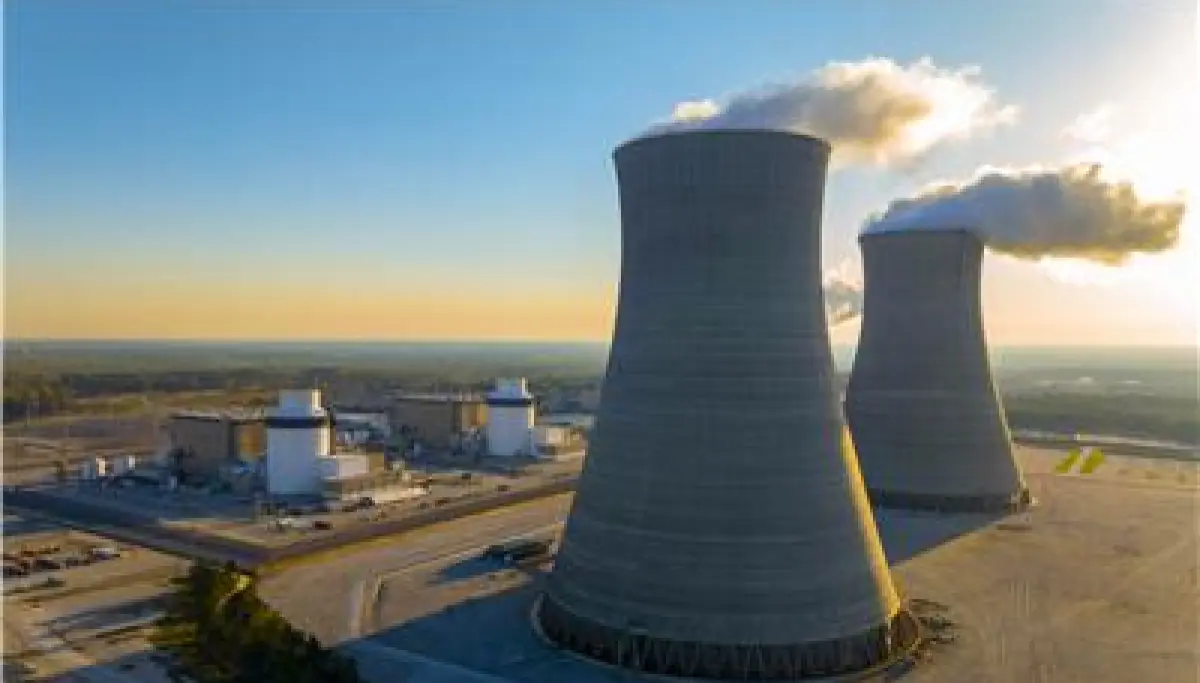

The path to meeting America’s surging energy demands became clearer during a recent visit to a shuttered nuclear facility in Pennsylvania now preparing for an ambitious return to service, offering a tangible example of how the nation can rebuild critical infrastructure while creating thousands of jobs and billions in economic value.
Senator Dave McCormick, a Republican representing Pennsylvania, recently hosted a tour of the Crane Clean Energy Center, a nuclear power plant that ceased operations in 2019 but is now at the center of one of the country’s most significant energy revival projects, according to Washington Examiner.
The facility tour brought together plant leadership, workers, and local community stakeholders to discuss efforts to restart operations and the crucial role nuclear power will play in generating the electricity America increasingly requires.
The Crane project represents a convergence of multiple forces reshaping the nation’s future, including soaring electricity demand, domestic manufacturing revival, artificial intelligence expansion, and renewed recognition of nuclear energy’s value. It demonstrates that America retains the capacity to execute ambitious infrastructure projects when policymakers, private enterprise, and communities align toward shared objectives.


While Washington’s energy debates often devolve into partisan gridlock, the conversation at Crane focused squarely on practical concerns. Participants discussed employment opportunities, maintaining reliable and affordable power, and the concrete steps needed to advance major projects, not through abstract policy discussions but through the lens of real lives and economic security.
Massive Power Output Targeted for 2027
As the facility targets a 2027 restart date, it has emerged as one of the nation’s most closely watched energy initiatives. Crane is projected to generate 835 megawatts of electricity once operational, delivering substantial capacity to the grid precisely when demand continues climbing across nearly every sector.
The project underscores the direct link between energy infrastructure development and economic expansion. Constellation Energy estimates the Crane restart will generate approximately 3,400 direct and indirect jobs for Pennsylvania workers while injecting roughly 16 billion dollars into the state economy over the coming two decades, as Washington Examiner reports.
Tax revenue projections are equally impressive, with the facility expected to produce around 3.6 billion dollars in combined state and federal tax income during the same timeframe.
Microsoft Deal Highlights AI-Driven Energy Crunch
Constellation’s decision to revive the facility stems partly from a long-term power purchase agreement with Microsoft, a corporation requiring dependable round-the-clock electricity to support expanding data center operations as artificial intelligence applications proliferate. That arrangement provides a window into the broader infrastructure challenge facing the nation.
Just a few years ago, energy discussions centered primarily on replacing aging infrastructure. Today the challenge has intensified substantially. The country needs existing resources maintained, new generation capacity built, and infrastructure expanded merely to maintain pace with demand growth.
This reality surfaced repeatedly during roundtable discussions at the facility. Participants expressed no doubt about whether demand is rising. The question centered on whether America is moving with sufficient speed to match that growth, and the answer crystallized clearly: Nuclear energy must serve as a cornerstone of meeting American power requirements.
Baseload Power for Grid Stability
Nuclear energy delivers large-scale, reliable baseload power operating around the clock, supporting grid stability while complementing other energy sources as consumption continues its upward trajectory. Whether advocates support nuclear power for reliability, energy security, economic growth, or zero emissions, the technology’s essential role becomes increasingly difficult to dismiss.
The Crane project also demonstrates America’s capacity to reinvest in and modernize existing infrastructure. For years, energy conversations focused on future possibilities, but projects like Crane show that discussion is transforming into action.
At Crane today, equipment undergrades are proceeding, workers are being brought on board, long-term plans are materializing into tangible progress, and a clear understanding prevails that meeting America’s expanding energy appetite will require an all-of-the-above strategy investing in both proven energy assets and emerging technologies.
Energy Security as National Security
McCormick has consistently maintained that energy security constitutes national security and that Pennsylvania holds a central position in satisfying future demand. Time spent at Crane makes those arguments plainly evident.
The visit left a strong sense of optimism, not because every obstacle has been overcome, but because conversations are becoming increasingly grounded in practical reality. The workers, engineers, and local leaders at Crane understand what’s at stake. They aren’t debating whether America needs additional energy capacity. They’re focused on delivering it.
Crane represents more than a single facility story in Pennsylvania. It offers a preview of what America’s energy future could achieve when the nation commits to rebuilding the infrastructure foundation required for continued prosperity and security.
With information from Washington Examiner





