Necessary Cookies

Required for the site to function. Cannot be disabled.

Analytics Cookies

Help us understand how visitors interact with our site (Google Analytics via GTM).

Marketing Cookies

Used to track visitors and deliver personalised advertisements.

We use cookies to enhance your browsing experience and analyse site traffic. By clicking Accept All, you consent to our use of cookies. Privacy Policy
NewsFire Global
Home News Europe World Christianity Culture Wars Opinion Video
Information
About Us Authors Advertising Terms & Conditions Privacy Policy Contact
R2B Media
R2B NEWSFIRE.GR PAPAFOTIS.GR THRACTION HELLENIC CONSERVATIVES RIGHT2THEBONE YT
News World

Afghan Terrorist Gets Prison for Ramming Verdi Protest, Killing Mother and Daughter

A Munich court sentenced an Afghan national to life imprisonment for a deadly vehicle ramming attack on a trade union demonstration that killed a mother and her daughter.
AUGUST 6, 2026 AT 7:38 PM

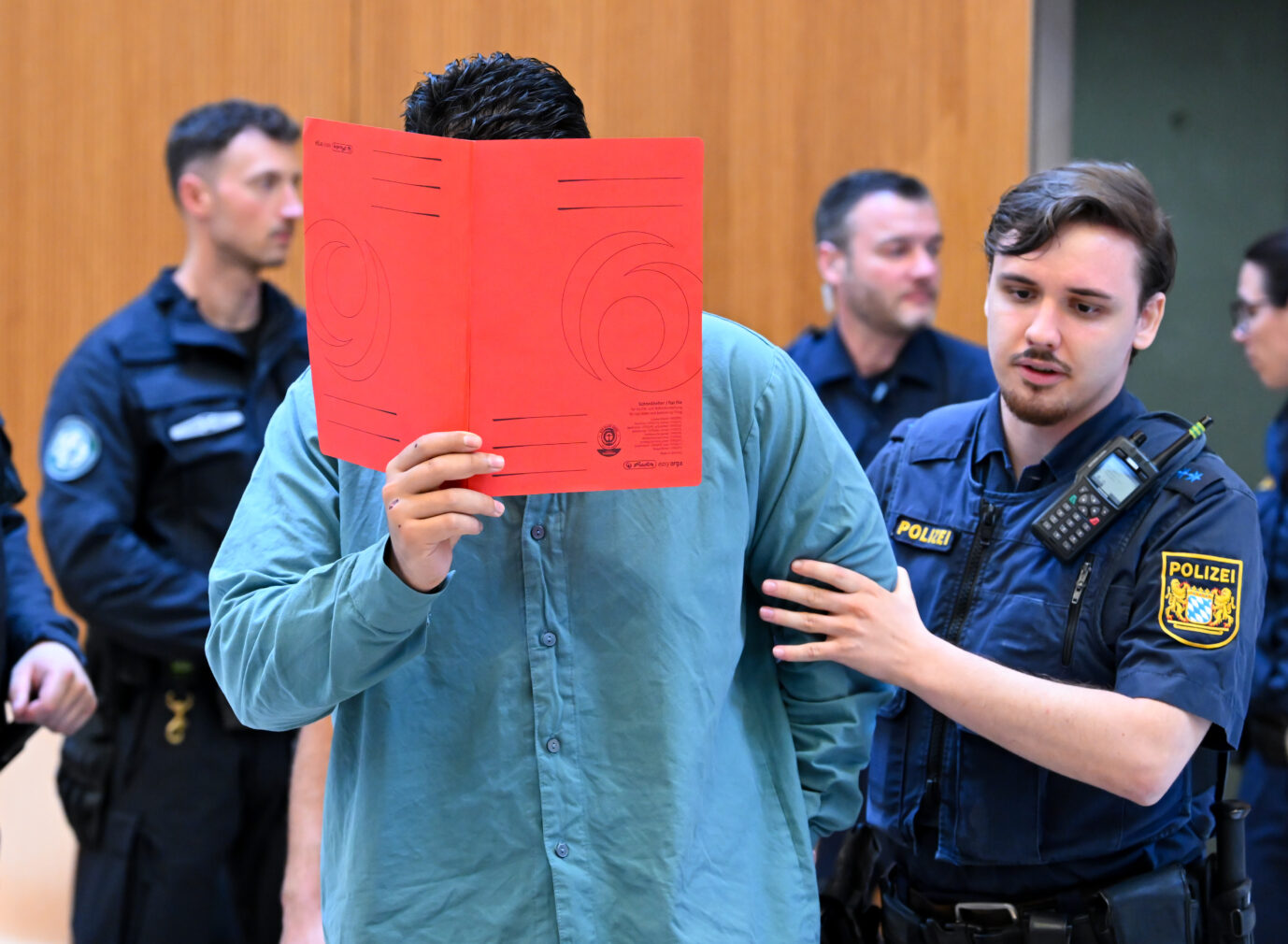
The Munich Higher Regional Court found Farhad N., 24 at the time of the attack, guilty of murder and attempted murder in connection with the February 13, 2025 incident, according to Junge Freiheit. The court also determined that the crime was of particular severity, a designation under German law that makes early parole consideration highly unlikely.

Farhad N. deliberately drove his vehicle into a demonstration organized by the Verdi trade union in Munich, killing two people and injuring 44 others. According to court documents, the Afghan national had posted Islamist content on social media prior to the attack. Immediately after the ramming, witnesses reported he shouted “Allahu Akbar” and subsequently confessed to carrying out the attack intentionally with an Islamist motive.

The perpetrator’s behavior during pretrial detention further underscored his extremist views. He repeatedly caused disturbances in the detention facility and made death threats against prison staff, whom he referred to as unbelievers, Junge Freiheit reports.

Long Path Through Germany’s Immigration System

Farhad N. arrived in Germany in 2016 as an unaccompanied minor refugee, having traveled from Afghanistan through Italy. Born in Kabul in 2001, he applied for asylum upon arrival, but his application was rejected by German authorities in September 2017.

The Afghan national challenged the rejection in court, but the Munich Administrative Court ruled in 2020 that his claimed persecution story was fabricated. Despite this finding, German authorities determined that deportation was not possible, and he was granted toleration status allowing him to remain in the country.

National Political Response

The attack triggered intense political debate across Germany about immigration and security policy. Then-Chancellor Olaf Scholz of the Social Democratic Party called the act terrible and stated that if it proved to be a deliberate attack, authorities must pursue possible perpetrators with all available judicial means. Scholz declared the perpetrator must feel the full force of the rule of law.

Alice Weidel, leader of the Alternative for Germany party, expressed condolences to victims and their families while demanding immediate action. She questioned whether such incidents would continue indefinitely and called for an immediate reversal of immigration policy.

Then-CDU chancellor candidate and current Chancellor Friedrich Merz promised his government would enforce law and order consistently, stating that everyone in Germany must feel safe again and that fundamental change was necessary.

Under German law, a life sentence means indefinite imprisonment, though prisoners may be considered for conditional release after serving 15 years. The court’s determination of particular severity of guilt significantly complicates any future parole prospects for the convicted terrorist.

With information from Junge Freiheit
Share:
Eleni Papadaki-Van Der Merwe

She was born in 1986 in Johannesburg, South Africa. She is the granddaughter of an immigrant from Crete who settled in the Greek community of Johannesburg (one of the largest in Africa). She holds a bachelor’s degree in International Relations and Political Science from the University of the Witwatersrand (Wits) in Johannesburg and a master’s degree in Journalism from Rhodes University in Grahamstown. She began her career at English-language media outlets in Johannesburg, covering politics and economics, with a focus on issues related to migration and the diaspora. She moved to Athens in 2015 to “return to her roots,” initially to pursue graduate studies, and has remained there permanently. She is married to an Afrikaner; they have two children and live in the southern suburbs of Athens.

The Munich Higher Regional Court found Farhad N., 24 at the time of the attack, guilty of murder and attempted murder in connection with the February 13, 2025 incident, according to Junge Freiheit. The court also determined that the crime was of particular severity, a designation under German law that makes early parole consideration highly unlikely.

Farhad N. deliberately drove his vehicle into a demonstration organized by the Verdi trade union in Munich, killing two people and injuring 44 others. According to court documents, the Afghan national had posted Islamist content on social media prior to the attack. Immediately after the ramming, witnesses reported he shouted “Allahu Akbar” and subsequently confessed to carrying out the attack intentionally with an Islamist motive.

The perpetrator’s behavior during pretrial detention further underscored his extremist views. He repeatedly caused disturbances in the detention facility and made death threats against prison staff, whom he referred to as unbelievers, Junge Freiheit reports.

Long Path Through Germany’s Immigration System

Farhad N. arrived in Germany in 2016 as an unaccompanied minor refugee, having traveled from Afghanistan through Italy. Born in Kabul in 2001, he applied for asylum upon arrival, but his application was rejected by German authorities in September 2017.

The Afghan national challenged the rejection in court, but the Munich Administrative Court ruled in 2020 that his claimed persecution story was fabricated. Despite this finding, German authorities determined that deportation was not possible, and he was granted toleration status allowing him to remain in the country.

National Political Response

The attack triggered intense political debate across Germany about immigration and security policy. Then-Chancellor Olaf Scholz of the Social Democratic Party called the act terrible and stated that if it proved to be a deliberate attack, authorities must pursue possible perpetrators with all available judicial means. Scholz declared the perpetrator must feel the full force of the rule of law.

Alice Weidel, leader of the Alternative for Germany party, expressed condolences to victims and their families while demanding immediate action. She questioned whether such incidents would continue indefinitely and called for an immediate reversal of immigration policy.

Then-CDU chancellor candidate and current Chancellor Friedrich Merz promised his government would enforce law and order consistently, stating that everyone in Germany must feel safe again and that fundamental change was necessary.

Under German law, a life sentence means indefinite imprisonment, though prisoners may be considered for conditional release after serving 15 years. The court’s determination of particular severity of guilt significantly complicates any future parole prospects for the convicted terrorist.

With information from Junge Freiheit