Necessary Cookies

Required for the site to function. Cannot be disabled.

Analytics Cookies

Help us understand how visitors interact with our site (Google Analytics via GTM).

Marketing Cookies

Used to track visitors and deliver personalised advertisements.

We use cookies to enhance your browsing experience and analyse site traffic. By clicking Accept All, you consent to our use of cookies. Privacy Policy
NewsFire Global
Home News Europe World Christianity Culture Wars Opinion Video
Information
About Us Authors Advertising Terms & Conditions Privacy Policy Contact
R2B Media
R2B NEWSFIRE.GR PAPAFOTIS.GR THRACTION HELLENIC CONSERVATIVES RIGHT2THEBONE YT
News Europe

AfD’s von Storch on German Flag’s Comeback: People Won’t Give It Up

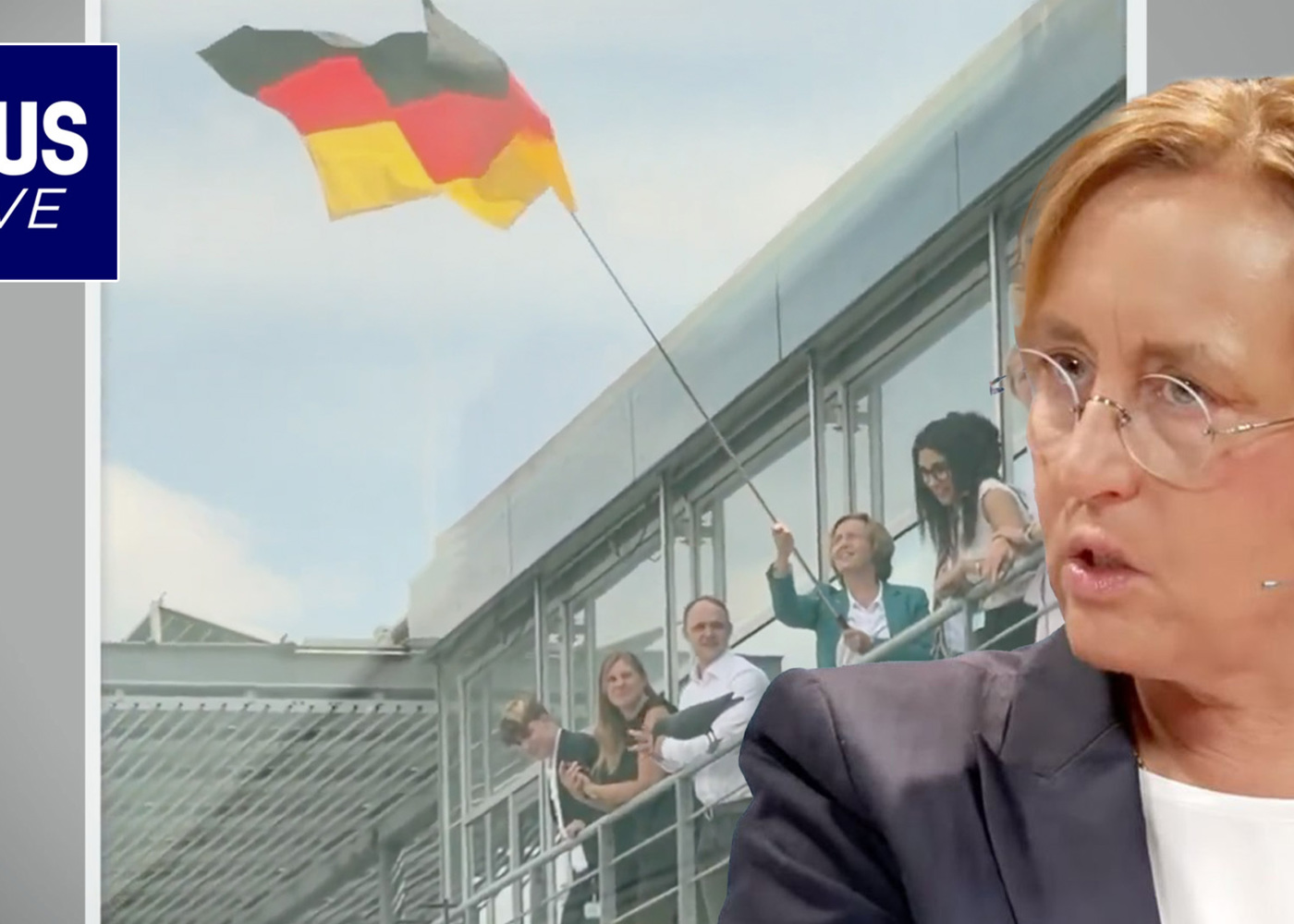
Berlin parliamentary police told AfD lawmakers that waving the German flag outside the Bundestag might violate building rules, prompting the party to criticize restrictions on patriotic displays.

Dimitris Papafotis
Dimitris Papafotis Editor in Chief
JUNE 10, 2026 AT 2:20 PM

Beatrix von Storch, deputy parliamentary leader of the Alternative for Germany party, described the Tuesday incident during an appearance on Nius Live, calling the police response absurd and emblematic of a broader backlash against expressions of national pride in Germany.

Von Storch noted that the officers who confronted the lawmakers appeared uncomfortable with their own intervention, suggesting they had been summoned rather than acting on their own initiative. The police informed the AfD members that waving the German flag might constitute a breach of parliamentary house rules.

Ralf Schuler, political editor at Nius, characterized the incident as an absurd and ridiculous affair that seemingly embarrassed even the security personnel tasked with enforcing it.

The AfD deputy leader argued that opponents of patriotism are losing control across Europe. She asserted that right-leaning movements throughout the continent are reclaiming national pride that had been systematically discouraged in previous decades.

Rising Populist Sentiment

Von Storch said citizens have been conditioned away from patriotic sentiment but are now rebelling against that conditioning. She characterized the current political moment as one in which ordinary Germans refuse to accept policies made against their interests.

The lawmaker invoked the inscription above the Reichstag building, stating that elected officials owe their duty to the German people, not to the welfare of the entire world. She suggested that German retirees should receive support before resources are directed elsewhere.

The incident reflects ongoing tensions in German politics over national symbolism and identity. While the German flag appears throughout public life during sporting events and official occasions, its display in certain political contexts continues to generate controversy, particularly when associated with parties critical of mainstream migration and European integration policies.

The AfD has consistently positioned itself as the defender of traditional German national identity and has made opposition to what it terms excessive globalism a cornerstone of its political platform. The party currently polls strongly ahead of upcoming federal elections.

Parliamentary authorities have not issued a public statement clarifying which specific house rules the flag-waving might have violated, leaving questions about the legal basis for the police intervention.

With information from Nius

Share:
Dimitris Papafotis
Dimitris Papafotis

Dimitris Papafotis is the editor-in-chief of NewsFire.GR. He was born and raised in Athens. He studied at the Journalism Workshop (1991-1993). He currently lives in Pyrgos, Ilia, where he has been active in radio and various newspapers, while also maintaining his personal blog, Papafotis.gr.

Beatrix von Storch, deputy parliamentary leader of the Alternative for Germany party, described the Tuesday incident during an appearance on Nius Live, calling the police response absurd and emblematic of a broader backlash against expressions of national pride in Germany.

Von Storch noted that the officers who confronted the lawmakers appeared uncomfortable with their own intervention, suggesting they had been summoned rather than acting on their own initiative. The police informed the AfD members that waving the German flag might constitute a breach of parliamentary house rules.

Ralf Schuler, political editor at Nius, characterized the incident as an absurd and ridiculous affair that seemingly embarrassed even the security personnel tasked with enforcing it.

The AfD deputy leader argued that opponents of patriotism are losing control across Europe. She asserted that right-leaning movements throughout the continent are reclaiming national pride that had been systematically discouraged in previous decades.

Rising Populist Sentiment

Von Storch said citizens have been conditioned away from patriotic sentiment but are now rebelling against that conditioning. She characterized the current political moment as one in which ordinary Germans refuse to accept policies made against their interests.

The lawmaker invoked the inscription above the Reichstag building, stating that elected officials owe their duty to the German people, not to the welfare of the entire world. She suggested that German retirees should receive support before resources are directed elsewhere.

The incident reflects ongoing tensions in German politics over national symbolism and identity. While the German flag appears throughout public life during sporting events and official occasions, its display in certain political contexts continues to generate controversy, particularly when associated with parties critical of mainstream migration and European integration policies.

The AfD has consistently positioned itself as the defender of traditional German national identity and has made opposition to what it terms excessive globalism a cornerstone of its political platform. The party currently polls strongly ahead of upcoming federal elections.

Parliamentary authorities have not issued a public statement clarifying which specific house rules the flag-waving might have violated, leaving questions about the legal basis for the police intervention.

With information from Nius

