Necessary Cookies

Required for the site to function. Cannot be disabled.

Analytics Cookies

Help us understand how visitors interact with our site (Google Analytics via GTM).

Marketing Cookies

Used to track visitors and deliver personalised advertisements.

We use cookies to enhance your browsing experience and analyse site traffic. By clicking Accept All, you consent to our use of cookies. Privacy Policy
NewsFire Global
Home News Europe World Christianity Culture Wars Opinion Video
Information
About Us Authors Advertising Terms & Conditions Privacy Policy Contact
R2B Media
R2B NEWSFIRE.GR PAPAFOTIS.GR THRACTION HELLENIC CONSERVATIVES RIGHT2THEBONE YT
News World

A century on, San Rocco tradition endures

A century-old Italian Catholic tradition honoring San Rocco continues in western Pennsylvania, where descendants of steel-town immigrants preserve their heritage through annual feast day celebrations.

AUGUST 18, 2026 AT 7:00 AM

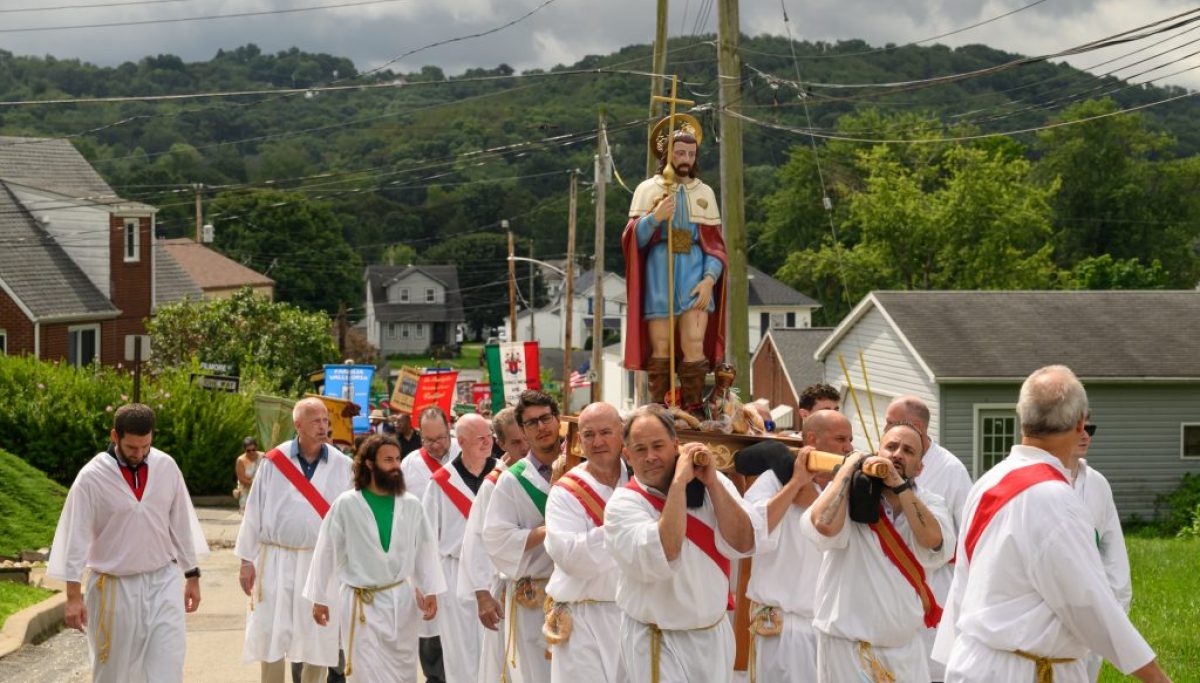
As Salena Zito reports in Washington Examiner, the 101st annual San Rocco observance in Aliquippa this past weekend showed how the feast day has endured by adapting—now carried forward by descendants as much as by immigrants themselves.

Beginning around 1890 and reaching its height near World War I, massive Italian immigration transformed industrial towns across western Pennsylvania, from Johnstown to Beaver County. Drawn by jobs in steel mills, coal mines, railroads, and construction, these immigrants sought wages, stability, and better lives for their families.

They brought with them Old World customs rooted in food and faith. Among the most cherished was the feast of San Rocco, celebrated with processions through neighborhood streets, marching bands, banners, fireworks, and a statue of Saint Rocco carried before the faithful.


Early 20th century newspaper accounts document a time when Italian Catholic life in Pittsburgh was concentrated in particular streets and parishes. Along Webster Avenue, residents decorated businesses and streets with flags, festoons, and electric lights for celebrations of the Assumption and San Rocco. The observances featured parades, speeches by prominent Italians, band music, fireworks, and high Mass at St. Peter’s Italian Catholic Church on Forbes Street.

San Rocco held both spiritual and practical significance in the immigrant calendar. Contemporary records indicate Italian people revered him for his power to banish pests—language reflecting the saint’s longstanding association with protection against plague and contagious disease. His feast gave immigrants a way to transplant a familiar sacred rhythm from Italy into the world of mill towns, boardinghouses, row neighborhoods, and industrial work.

The public procession held special importance. Pittsburgh’s St. Rocco Italian Society, organized in 1902 with approximately 225 members according to the now-defunct Pittsburgh Gazette, placed the statue of Saint Rocco and its society banners in places of honor during parades, followed by worship at St. Peter’s. The event merged parish devotion with the organizational life of the immigrant community—officers, marshals, mutual-aid society members, families, and neighbors all helped make the feast visible.

Following World War II, the landscape began to shift. Many children of first-generation immigrants returned from military service to a country increasingly shaped by suburbanization. Over time, families moved from dense city wards and company-town neighborhoods to suburbs, other states, or newer communities. As the region’s industrial economy contracted—most severely in the 1970s and 1980s—mills closed, employment fell, families dispersed, and many Italian ethnic parishes later merged or closed.

The columnist recalls her grandmother crying whenever she discussed watching her beloved St. Peter’s on Fernando Street being demolished during urban renewal. With the closing and consolidation of churches, the village-based networks that had once supported separate San Rocco festas became harder to sustain.

But the tradition did not vanish. Instead, the feast increasingly became an act of preservation—a gathering that draws people back across municipal lines rather than a ritual limited to a walkable immigrant enclave. The modern festa remains religious at its center, but it also serves as a reunion, a heritage event, and a declaration that an Italian Catholic inheritance remains alive.

This past weekend’s observance in Aliquippa and nearby Hopewell Township proved particularly meaningful. Two organizations held separate events during the 101st year of the local San Rocco tradition: the San Rocco Cultural Committee’s Festa at Hopewell Community Park and the San Rocco Foundation’s three-day celebration at the St. Frances Cabrini campus. The two groups shared a San Rocco Mass at St. Titus Roman Catholic Church, after which each conducted its own procession from the Polk Street area of Aliquippa.

The structure remains recognizable: Mass, procession, music, food, family gathering, and fireworks. The Cultural Committee’s published program included Italian and popular music, traditional foods and pastries, vendors, a sauce competition, wine tasting, fireworks, and the Baby Doll Dance—a regional Italian-American folk performance that has become part of the festa’s inherited ritual.

According to the San Rocco Festa organization’s official history, the Aliquippa observance began in 1925, when immigrants from Patrica, Italy, brought their hometown devotion to the Beaver Valley.

With information from Washington Examiner

Share:
Eleni Papadaki-Van Der Merwe

She was born in 1986 in Johannesburg, South Africa. She is the granddaughter of an immigrant from Crete who settled in the Greek community of Johannesburg (one of the largest in Africa). She holds a bachelor’s degree in International Relations and Political Science from the University of the Witwatersrand (Wits) in Johannesburg and a master’s degree in Journalism from Rhodes University in Grahamstown. She began her career at English-language media outlets in Johannesburg, covering politics and economics, with a focus on issues related to migration and the diaspora. She moved to Athens in 2015 to “return to her roots,” initially to pursue graduate studies, and has remained there permanently. She is married to an Afrikaner; they have two children and live in the southern suburbs of Athens.

As Salena Zito reports in Washington Examiner, the 101st annual San Rocco observance in Aliquippa this past weekend showed how the feast day has endured by adapting—now carried forward by descendants as much as by immigrants themselves.

Beginning around 1890 and reaching its height near World War I, massive Italian immigration transformed industrial towns across western Pennsylvania, from Johnstown to Beaver County. Drawn by jobs in steel mills, coal mines, railroads, and construction, these immigrants sought wages, stability, and better lives for their families.

They brought with them Old World customs rooted in food and faith. Among the most cherished was the feast of San Rocco, celebrated with processions through neighborhood streets, marching bands, banners, fireworks, and a statue of Saint Rocco carried before the faithful.

Early 20th century newspaper accounts document a time when Italian Catholic life in Pittsburgh was concentrated in particular streets and parishes. Along Webster Avenue, residents decorated businesses and streets with flags, festoons, and electric lights for celebrations of the Assumption and San Rocco. The observances featured parades, speeches by prominent Italians, band music, fireworks, and high Mass at St. Peter’s Italian Catholic Church on Forbes Street.

San Rocco held both spiritual and practical significance in the immigrant calendar. Contemporary records indicate Italian people revered him for his power to banish pests—language reflecting the saint’s longstanding association with protection against plague and contagious disease. His feast gave immigrants a way to transplant a familiar sacred rhythm from Italy into the world of mill towns, boardinghouses, row neighborhoods, and industrial work.

The public procession held special importance. Pittsburgh’s St. Rocco Italian Society, organized in 1902 with approximately 225 members according to the now-defunct Pittsburgh Gazette, placed the statue of Saint Rocco and its society banners in places of honor during parades, followed by worship at St. Peter’s. The event merged parish devotion with the organizational life of the immigrant community—officers, marshals, mutual-aid society members, families, and neighbors all helped make the feast visible.

Following World War II, the landscape began to shift. Many children of first-generation immigrants returned from military service to a country increasingly shaped by suburbanization. Over time, families moved from dense city wards and company-town neighborhoods to suburbs, other states, or newer communities. As the region’s industrial economy contracted—most severely in the 1970s and 1980s—mills closed, employment fell, families dispersed, and many Italian ethnic parishes later merged or closed.

The columnist recalls her grandmother crying whenever she discussed watching her beloved St. Peter’s on Fernando Street being demolished during urban renewal. With the closing and consolidation of churches, the village-based networks that had once supported separate San Rocco festas became harder to sustain.

But the tradition did not vanish. Instead, the feast increasingly became an act of preservation—a gathering that draws people back across municipal lines rather than a ritual limited to a walkable immigrant enclave. The modern festa remains religious at its center, but it also serves as a reunion, a heritage event, and a declaration that an Italian Catholic inheritance remains alive.

This past weekend’s observance in Aliquippa and nearby Hopewell Township proved particularly meaningful. Two organizations held separate events during the 101st year of the local San Rocco tradition: the San Rocco Cultural Committee’s Festa at Hopewell Community Park and the San Rocco Foundation’s three-day celebration at the St. Frances Cabrini campus. The two groups shared a San Rocco Mass at St. Titus Roman Catholic Church, after which each conducted its own procession from the Polk Street area of Aliquippa.

The structure remains recognizable: Mass, procession, music, food, family gathering, and fireworks. The Cultural Committee’s published program included Italian and popular music, traditional foods and pastries, vendors, a sauce competition, wine tasting, fireworks, and the Baby Doll Dance—a regional Italian-American folk performance that has become part of the festa’s inherited ritual.

According to the San Rocco Festa organization’s official history, the Aliquippa observance began in 1925, when immigrants from Patrica, Italy, brought their hometown devotion to the Beaver Valley.

With information from Washington Examiner