Necessary Cookies

Required for the site to function. Cannot be disabled.

Analytics Cookies

Help us understand how visitors interact with our site (Google Analytics via GTM).

Marketing Cookies

Used to track visitors and deliver personalised advertisements.

We use cookies to enhance your browsing experience and analyse site traffic. By clicking Accept All, you consent to our use of cookies. Privacy Policy
NewsFire Global
Home News Europe World Christianity Culture Wars Opinion Video
Information
About Us Authors Advertising Terms & Conditions Privacy Policy Contact
R2B Media
R2B NEWSFIRE.GR PAPAFOTIS.GR THRACTION HELLENIC CONSERVATIVES RIGHT2THEBONE YT
News Europe

Italy’s Musk Ally Attacks Meloni, Warns of Vannacci Threat

A key figure in Elon Musk's Italian network publicly criticized Prime Minister Giorgia Meloni's government over defense and border failures, warning conservative voters may shift to nationalist Roberto Vannacci.

Dimitris Papafotis
Dimitris Papafotis Editor in Chief
JUNE 23, 2026 AT 7:49 PM

Andrea Stroppa, a 32-year-old cybersecurity expert widely regarded as Musk’s main liaison in Italy, issued the sharp rebuke in a series of posts published June 22, 2026, according to Brussels Signal. His intervention marks a significant crack in what was once a solid transatlantic conservative alliance backing Meloni as Europe’s standard-bearer for the Right.

brusselssignal.eu
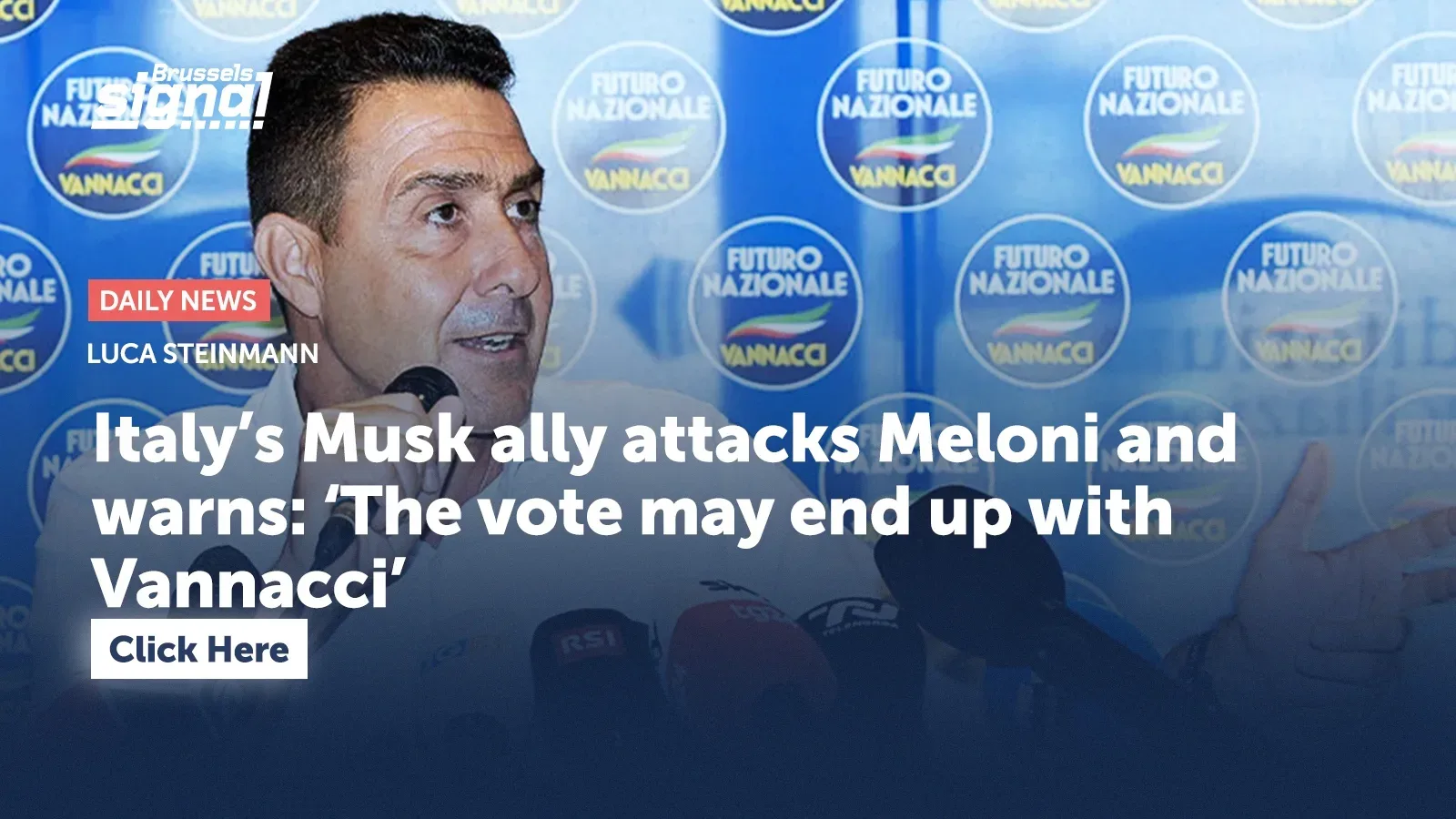
Photo: brusselssignal.eu

Stroppa accused the Italian government of failing to match its nationalist rhetoric with substantive policy, warning that frustrated right-wing voters may abandon Meloni’s coalition in favor of Vannacci’s Futuro Nazionale party. The vote will end up with Vannacci, he cautioned, unless the administration shifts course on key sovereignty issues.

The remarks represent more than just tactical criticism. Stroppa’s role as a bridge between Musk’s business interests—including X, SpaceX, and Starlink—and Italian political institutions has given him unusual influence in shaping perceptions among both Rome’s elite and the American conservative establishment.

His broadside targeted specific cabinet members by name. Defense Minister Guido Crosetto was portrayed as undermined by his own government, sent into international forums without adequate policy support. Industry Minister Adolfo Urso was dismissed outright as a disaster, reflecting broader doubts about the administration’s strategic direction.

Though Stroppa later posted a clarification insisting he was not endorsing Vannacci, the damage was done. Political analysts in Rome interpreted the episode as a warning shot from elements of the American Right that once championed Meloni’s rise to power.

Atlantic Pressure and Domestic Fracture

The timing of Stroppa’s attack is significant. It follows recent public criticism of Meloni by U.S. President Donald Trump and mounting frustration within MAGA circles over her perceived moderation in office. Washington has pressed European allies to increase defense spending and tighten border controls—areas where Stroppa claims Meloni has underdelivered.

As Brussels Signal reports, the gap between Meloni’s sovereignty messaging and actual governance has become a vulnerability, particularly as the Atlantic alliance demands greater burden-sharing from European partners.

Stroppa’s critique reflects a broader recalibration of expectations. Meloni’s government, once hailed as proof that conservative populism could govern effectively in Europe, now faces scrutiny from the very ideological ecosystem that elevated her profile internationally.

Vannacci’s Rising Challenge

Roberto Vannacci, a retired general who launched Futuro Nazionale earlier this year, has steadily carved out space to Meloni’s right. His movement appeals to voters disillusioned with what they see as compromises on immigration, national identity, and relations with Brussels.

Vannacci’s platform emphasizes hard borders, military readiness, and cultural conservatism—themes that resonate with segments of the electorate skeptical that Meloni has delivered on her 2022 campaign promises. His rise poses a direct threat to Meloni’s coalition, potentially fracturing the Italian Right at a critical moment.

While Stroppa insisted his warning was not an endorsement, the political message was clear: unless Meloni’s government demonstrates tangible progress on core nationalist priorities, conservative voters have an alternative.

A Former Hacker Turned Power Broker

Stroppa’s influence stems from his unique position in Musk’s orbit. A former hacker turned cybersecurity specialist, he has become the billionaire’s principal contact in Italy, facilitating dialogue between Musk’s ventures and Rome’s political and business leadership.

Italian media frequently describe him as Musk’s gatekeeper in the country, a role that has granted him access to senior officials and amplified his voice on matters of technology, security, and governance. His proximity to one of the world’s most influential entrepreneurs has made his public statements impossible for Meloni to ignore.

The episode underscores a broader trend: the Italian Right is no longer unified behind Meloni. Criticism now comes not only from traditional opposition parties but from figures embedded in the transatlantic conservative network that once viewed her as their most successful European partner.

Credibility and Coalition at Risk

Stroppa’s warning about voter migration to Vannacci highlights Meloni’s precarious balancing act. She must maintain credibility with Washington and the broader Western alliance while satisfying a domestic base that prioritizes sovereignty, border security, and cultural identity over institutional continuity.

The former hacker’s intervention suggests that balance is slipping. Whether Meloni can recalibrate her government’s approach—or whether Vannacci’s movement will continue to siphon off dissatisfied conservatives—will determine the durability of Italy’s current political alignment.

For now, the message from Musk’s Italian emissary is unambiguous: the Right’s patience is not unlimited, and alternatives are emerging.

With information from Brussels Signal

Share:
Dimitris Papafotis
Dimitris Papafotis

Dimitris Papafotis is the editor-in-chief of NewsFire.GR. He was born and raised in Athens. He studied at the Journalism Workshop (1991-1993). He currently lives in Pyrgos, Ilia, where he has been active in radio and various newspapers, while also maintaining his personal blog, Papafotis.gr.

Andrea Stroppa, a 32-year-old cybersecurity expert widely regarded as Musk’s main liaison in Italy, issued the sharp rebuke in a series of posts published June 22, 2026, according to Brussels Signal. His intervention marks a significant crack in what was once a solid transatlantic conservative alliance backing Meloni as Europe’s standard-bearer for the Right.

brusselssignal.eu
Photo: brusselssignal.eu

Stroppa accused the Italian government of failing to match its nationalist rhetoric with substantive policy, warning that frustrated right-wing voters may abandon Meloni’s coalition in favor of Vannacci’s Futuro Nazionale party. The vote will end up with Vannacci, he cautioned, unless the administration shifts course on key sovereignty issues.

The remarks represent more than just tactical criticism. Stroppa’s role as a bridge between Musk’s business interests—including X, SpaceX, and Starlink—and Italian political institutions has given him unusual influence in shaping perceptions among both Rome’s elite and the American conservative establishment.

His broadside targeted specific cabinet members by name. Defense Minister Guido Crosetto was portrayed as undermined by his own government, sent into international forums without adequate policy support. Industry Minister Adolfo Urso was dismissed outright as a disaster, reflecting broader doubts about the administration’s strategic direction.

Though Stroppa later posted a clarification insisting he was not endorsing Vannacci, the damage was done. Political analysts in Rome interpreted the episode as a warning shot from elements of the American Right that once championed Meloni’s rise to power.

Atlantic Pressure and Domestic Fracture

The timing of Stroppa’s attack is significant. It follows recent public criticism of Meloni by U.S. President Donald Trump and mounting frustration within MAGA circles over her perceived moderation in office. Washington has pressed European allies to increase defense spending and tighten border controls—areas where Stroppa claims Meloni has underdelivered.

As Brussels Signal reports, the gap between Meloni’s sovereignty messaging and actual governance has become a vulnerability, particularly as the Atlantic alliance demands greater burden-sharing from European partners.

Stroppa’s critique reflects a broader recalibration of expectations. Meloni’s government, once hailed as proof that conservative populism could govern effectively in Europe, now faces scrutiny from the very ideological ecosystem that elevated her profile internationally.

Vannacci’s Rising Challenge

Roberto Vannacci, a retired general who launched Futuro Nazionale earlier this year, has steadily carved out space to Meloni’s right. His movement appeals to voters disillusioned with what they see as compromises on immigration, national identity, and relations with Brussels.

Vannacci’s platform emphasizes hard borders, military readiness, and cultural conservatism—themes that resonate with segments of the electorate skeptical that Meloni has delivered on her 2022 campaign promises. His rise poses a direct threat to Meloni’s coalition, potentially fracturing the Italian Right at a critical moment.

While Stroppa insisted his warning was not an endorsement, the political message was clear: unless Meloni’s government demonstrates tangible progress on core nationalist priorities, conservative voters have an alternative.

A Former Hacker Turned Power Broker

Stroppa’s influence stems from his unique position in Musk’s orbit. A former hacker turned cybersecurity specialist, he has become the billionaire’s principal contact in Italy, facilitating dialogue between Musk’s ventures and Rome’s political and business leadership.

Italian media frequently describe him as Musk’s gatekeeper in the country, a role that has granted him access to senior officials and amplified his voice on matters of technology, security, and governance. His proximity to one of the world’s most influential entrepreneurs has made his public statements impossible for Meloni to ignore.

The episode underscores a broader trend: the Italian Right is no longer unified behind Meloni. Criticism now comes not only from traditional opposition parties but from figures embedded in the transatlantic conservative network that once viewed her as their most successful European partner.

Credibility and Coalition at Risk

Stroppa’s warning about voter migration to Vannacci highlights Meloni’s precarious balancing act. She must maintain credibility with Washington and the broader Western alliance while satisfying a domestic base that prioritizes sovereignty, border security, and cultural identity over institutional continuity.

The former hacker’s intervention suggests that balance is slipping. Whether Meloni can recalibrate her government’s approach—or whether Vannacci’s movement will continue to siphon off dissatisfied conservatives—will determine the durability of Italy’s current political alignment.

For now, the message from Musk’s Italian emissary is unambiguous: the Right’s patience is not unlimited, and alternatives are emerging.

With information from Brussels Signal