
Iran’s Leadership Battered and Transformed After War
Iran's regime claims victory despite suffering approximately 6,000 military deaths compared to just 16 U.S. and Israeli casualties, with analysts saying Tehran set a low bar for success.
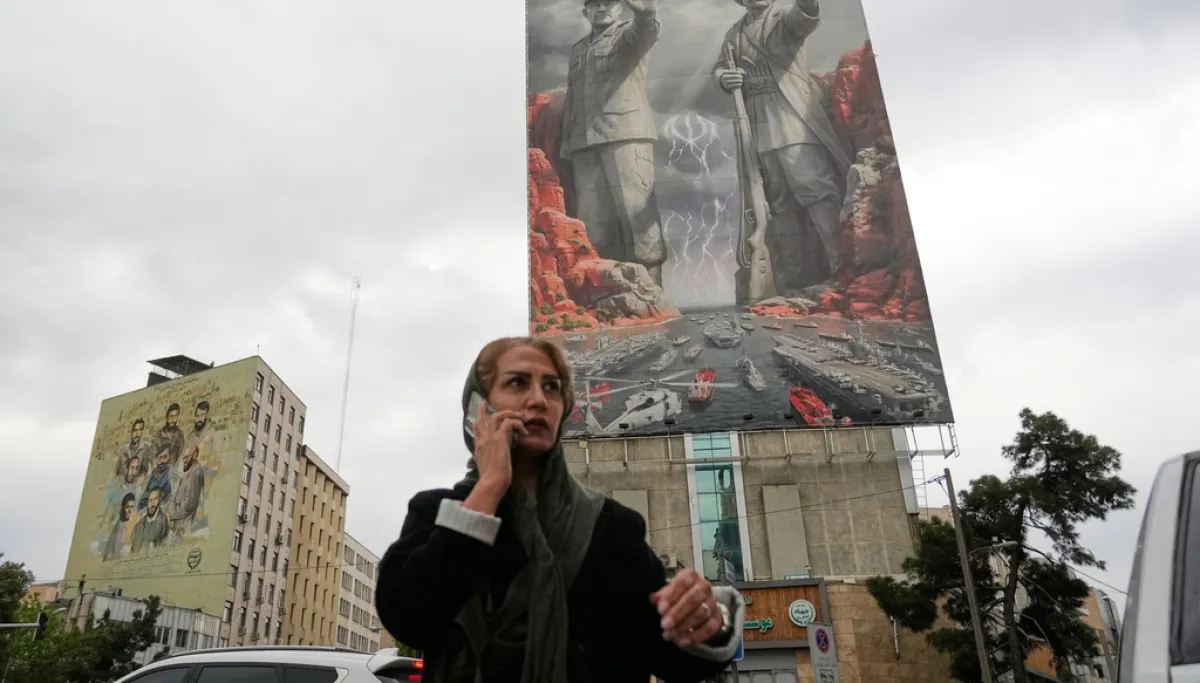

Iran’s regime may have suffered irreversible damage from its recent conflict with the United States and Israel, despite Tehran’s public claims of victory following the signing of a memorandum of understanding this week, according to Washington Examiner.
Both Washington and Tehran moved quickly to frame the outcome as a win after the agreement was finalized on Thursday. Iranian leadership went beyond simply claiming survival as success, insisting it had forced the U.S. and Israel into submission and emerged from the confrontation more powerful than before.
Janatan Sayeh, an Iranian-born dissident and research analyst with the Foundation for Defense of Democracies’s Iran Program, explained to Washington Examiner that Tehran likely believes its own narrative, but only because the regime set an extraordinarily low threshold for what constitutes victory.
The Islamic Republic’s standard for success was merely institutional survival, Sayeh noted. By that measure, remaining in power qualifies as a triumph in the eyes of the regime.
Yet beneath the propaganda, the war has inflicted severe damage across multiple dimensions that may prove impossible to reverse in the near term, depending on the terms of postwar settlements.
Catastrophic Military Losses
While the April ceasefire and subsequent diplomatic talks dominated headlines with economic discussions and negotiating details, the sheer scale of Iranian military casualties has largely escaped public attention nearly four months after Operation Epic Fury commenced.
The 2026 confrontation stands as potentially the most asymmetric armed conflict in modern warfare history when measured by material and personnel losses. Official figures show the United States suffered seven combat deaths from Iranian fire, while Israel lost nine soldiers, as Washington Examiner reports.
Iranian forces, by contrast, sustained approximately 6,000 killed military and security personnel according to Israeli intelligence estimates from mid-March. The actual toll is almost certainly thousands higher, given that three additional weeks of intensive bombardment occurred after that assessment.
The Norway-based Hengaw Organization for Human Rights calculated at least 6,620 military personnel killed, though this figure also likely represents an undercount due to internet blackouts and official restrictions on documenting casualties. The regime’s obsessive secrecy means the true death toll may remain unknown for years.
The casualty disparity is staggering. Using the conservative estimate of 6,000 Iranian dead, roughly 375 Iranian military personnel perished for every single American and Israeli soldier killed. No modern conflict approaches this ratio, not even the Gulf War.
Infrastructure Destroyed
Damage to Iran’s defense and security infrastructure matched or exceeded the personnel losses. Revolutionary Guards bases, Basij militia centers, military airfields, missile launchers and storage facilities, police stations, judicial buildings, intelligence headquarters, Guards barracks, radar installations, air defense batteries, drone production and storage sites, and other critical infrastructure developed over decades were systematically targeted and destroyed, much of it irreplaceable.
Daniel Swift and Elaine Dezenski, senior research analyst and senior director respectively at FDD’s Center on Economic and Financial Power, assessed the reconstruction challenge in a May report. Most military hardware has a service life spanning decades, they noted, and rebuilding Iran’s nuclear program, missile production capabilities, and naval fleet would demand not only massive financial resources but time, technical expertise, and supply chains that U.S. sanctions have already severely disrupted.
Iran’s primary leverage came from its blockade of the Strait of Hormuz, enabled by the country’s geographic position along this critical waterway. Shipping ground to a halt largely because insurance companies refused to cover vessels transiting the strait. Tehran only needed to deploy a relatively limited number of mines and conduct token drone strikes to effectively paralyze maritime traffic.
Shattered Reputation
The Revolutionary Guards had cultivated a reputation for competence and effectiveness through decades of operations in Iraq, Syria, Lebanon, and across the region, establishing itself as one of the Middle East’s most formidable military powers. The one-sided destruction and dismal performance during this war have demolished that carefully constructed image, a perception that will persist for years.
Equally significant is the economic devastation from the war and blockade, with damage totaling hundreds of billions of dollars. In its current condition, Sayeh said, Iran absolutely cannot rebuild its military or economy to anything resembling prewar levels, and could only achieve partial economic reconstitution at best.

With information from Washington Examiner





