Necessary Cookies

Required for the site to function. Cannot be disabled.

Analytics Cookies

Help us understand how visitors interact with our site (Google Analytics via GTM).

Marketing Cookies

Used to track visitors and deliver personalised advertisements.

We use cookies to enhance your browsing experience and analyse site traffic. By clicking Accept All, you consent to our use of cookies. Privacy Policy
NewsFire Global
Home News Europe World Christianity Culture Wars Opinion Video
Information
About Us Authors Advertising Terms & Conditions Privacy Policy Contact
R2B Media
R2B NEWSFIRE.GR PAPAFOTIS.GR THRACTION HELLENIC CONSERVATIVES RIGHT2THEBONE YT
News Europe

Germany Moves to Block AfD Before Election Victory

German establishment politicians are working to strip future state governments of intelligence access if voters elect the Alternative for Germany party to power in eastern states.

Dimitris Papafotis
Dimitris Papafotis Editor in Chief
JUNE 19, 2026 AT 6:10 PM Updated: Jun 19, 2026 6:05 PM

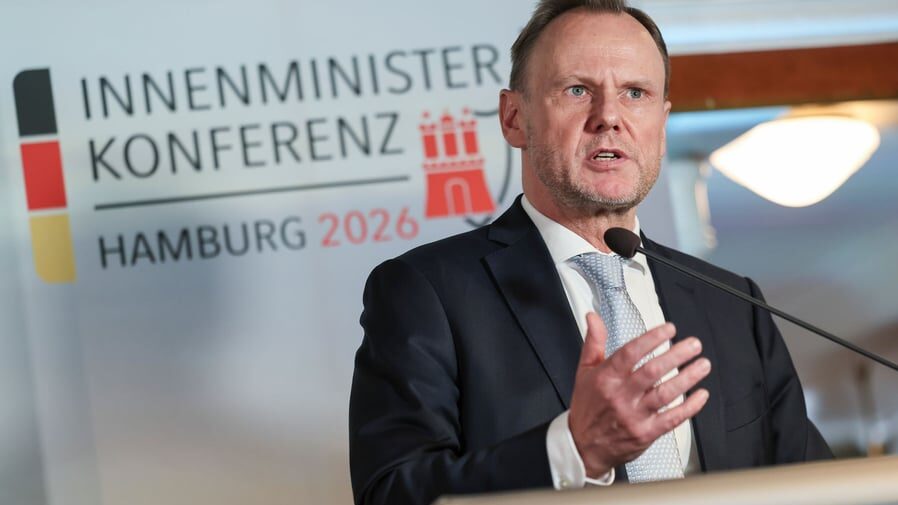
According to The European Conservative, state interior ministers are currently deliberating measures that would prevent AfD-led regional governments from accessing sensitive intelligence and criminal investigation databases. The discussions are unfolding within the Conference of Interior Ministers, which brings together the interior ministers from all 16 German federal states.

The proposed restrictions would also eliminate the veto rights that individual states currently hold within the Conference, effectively silencing regions where right-wing voters have democratic influence over federal matters.

The reason for this unprecedented power grab is straightforward: Alternative for Germany is polling at 42 percent in Saxony-Anhalt, a commanding 18-point lead over the establishment Christian Democrats. That margin would be sufficient for AfD to secure an outright majority and govern independently following the September 6th election.

In Mecklenburg-Vorpommern, the party holds first place with 36 percent support, though a coalition between the CDU and Social Democrats could still block it from forming a government.

Under existing legal frameworks, each of Germany’s 16 state interior ministers maintains access to the federal domestic intelligence agency’s databases, as well as to the national security files maintained by other states.

The establishment’s true concern centers on what would transpire if one or more of those ministerial positions were occupied by AfD members. A political party that has endured years of surveillance by German domestic intelligence services could suddenly gain insight into the extent to which investigations targeting the party have been politically motivated and fundamentally anti-democratic in nature.

The move represents a remarkable admission by Germany’s political class: rather than accept electoral outcomes, they prefer to preemptively strip democratically elected governments of powers that other states routinely exercise. The Conference of Interior Ministers appears willing to rewrite the rules of federal cooperation to ensure that voters in conservative-leaning states cannot influence national security policy through their chosen representatives.

This development underscores the widening gap between Germany’s governing establishment and large portions of its electorate, particularly in eastern regions where dissatisfaction with immigration policy, energy costs, and cultural issues has driven dramatic political realignment.

With information from The European Conservative

Share:
Dimitris Papafotis
Dimitris Papafotis

Dimitris Papafotis is the editor-in-chief of NewsFire.GR. He was born and raised in Athens. He studied at the Journalism Workshop (1991-1993). He currently lives in Pyrgos, Ilia, where he has been active in radio and various newspapers, while also maintaining his personal blog, Papafotis.gr.

According to The European Conservative, state interior ministers are currently deliberating measures that would prevent AfD-led regional governments from accessing sensitive intelligence and criminal investigation databases. The discussions are unfolding within the Conference of Interior Ministers, which brings together the interior ministers from all 16 German federal states.

The proposed restrictions would also eliminate the veto rights that individual states currently hold within the Conference, effectively silencing regions where right-wing voters have democratic influence over federal matters.

The reason for this unprecedented power grab is straightforward: Alternative for Germany is polling at 42 percent in Saxony-Anhalt, a commanding 18-point lead over the establishment Christian Democrats. That margin would be sufficient for AfD to secure an outright majority and govern independently following the September 6th election.

In Mecklenburg-Vorpommern, the party holds first place with 36 percent support, though a coalition between the CDU and Social Democrats could still block it from forming a government.

Under existing legal frameworks, each of Germany’s 16 state interior ministers maintains access to the federal domestic intelligence agency’s databases, as well as to the national security files maintained by other states.

The establishment’s true concern centers on what would transpire if one or more of those ministerial positions were occupied by AfD members. A political party that has endured years of surveillance by German domestic intelligence services could suddenly gain insight into the extent to which investigations targeting the party have been politically motivated and fundamentally anti-democratic in nature.

The move represents a remarkable admission by Germany’s political class: rather than accept electoral outcomes, they prefer to preemptively strip democratically elected governments of powers that other states routinely exercise. The Conference of Interior Ministers appears willing to rewrite the rules of federal cooperation to ensure that voters in conservative-leaning states cannot influence national security policy through their chosen representatives.

This development underscores the widening gap between Germany’s governing establishment and large portions of its electorate, particularly in eastern regions where dissatisfaction with immigration policy, energy costs, and cultural issues has driven dramatic political realignment.

With information from The European Conservative

