Necessary Cookies

Required for the site to function. Cannot be disabled.

Analytics Cookies

Help us understand how visitors interact with our site (Google Analytics via GTM).

Marketing Cookies

Used to track visitors and deliver personalised advertisements.

We use cookies to enhance your browsing experience and analyse site traffic. By clicking Accept All, you consent to our use of cookies. Privacy Policy
NewsFire Global
Home News Europe World Christianity Culture Wars Opinion Video
Information
About Us Authors Advertising Terms & Conditions Privacy Policy Contact
R2B Media
R2B NEWSFIRE.GR PAPAFOTIS.GR THRACTION HELLENIC CONSERVATIVES RIGHT2THEBONE YT
Opinion Europe

The Return of the Noseless One

A former Byzantine emperor who was deposed, mutilated, and exiled managed to escape assassination attempts and gather supporters to potentially reclaim his throne.

JUNE 14, 2026 AT 4:30 PM

Undoubtedly, the return of a former prime minister to politics, with a new political vehicle, creates a sensation. A man who lost the power he held returns actively to reclaim what he lost and—possibly—to prevail over those who undermined him.

And it may not come to your mind, but this story is not so unfamiliar. It may be an exaggeration due to my passion for history, but my mind goes to the Eastern Roman Empire, at the end of the 7th century.

Today, upon hearing the name “Justinian,” the average citizen recalls Justinian I with the “Nika Revolt,” Empress Theodora, Generals Narses and Belisarius. However, 150 years later, another Justinian ascended to the throne.

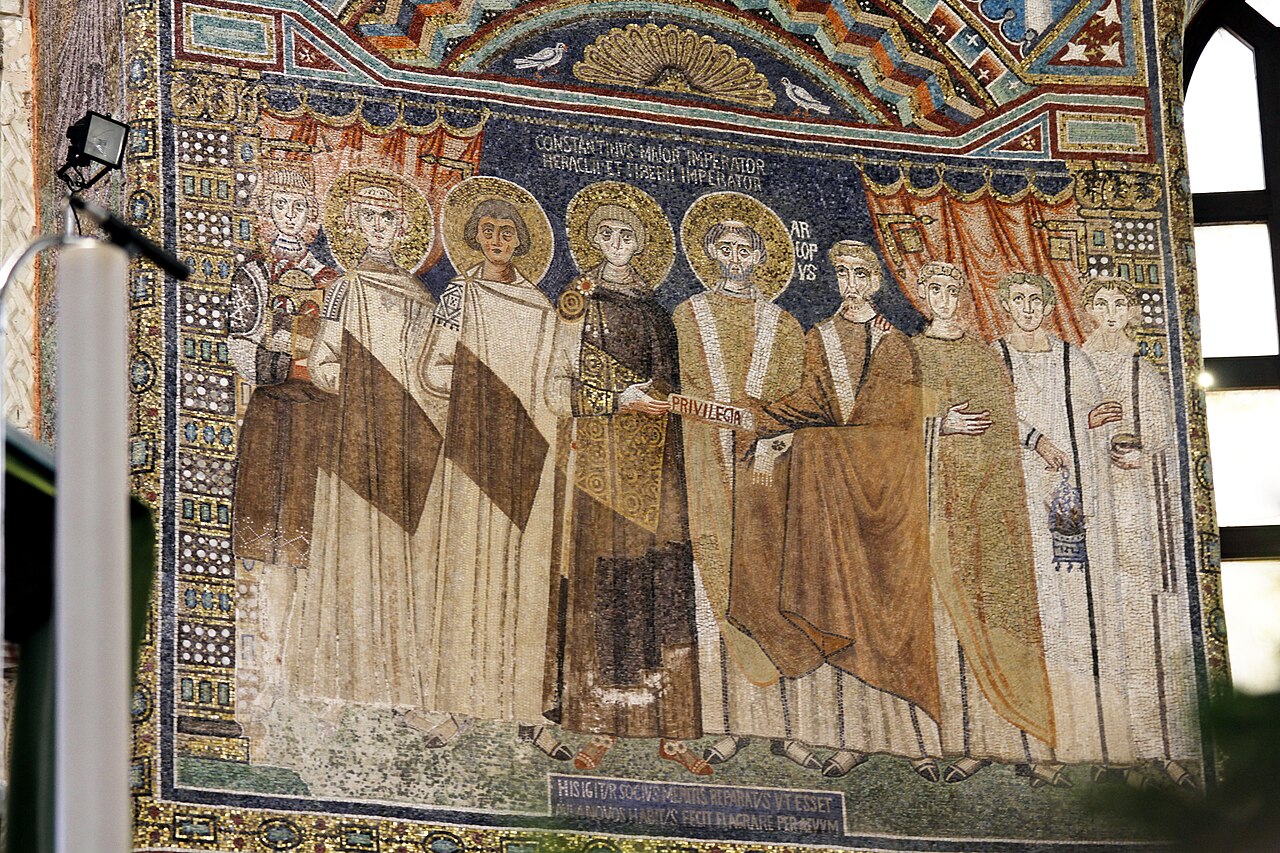
In 685, Justinian II, at the age of 16, ascended to the throne of the Eastern Roman Empire, succeeding his father Constantine IV, a member of the Heraclian dynasty.

He was quite ambitious and dynamic, and when he ascended to the throne he achieved victories against the Umayyad Caliphate, which was the Empire’s great rival in the East. He advanced policies of land distribution but also tax increases, managing to be hated by both wealthy landowners and poor peasants.

When Pope Sergius I rejected the decisions of the Fifth Ecumenical Council, Justinian unsuccessfully ordered his arrest!

In 695, the army under Leontius revolted and overthrew the Emperor. His life was spared but he was condemned to rhinokopia (amputation of the nose) and exile. Rhinokopia was a punishment for political crimes and rendered the punished “unsuitable” for the throne. Without a nose and prestige, the humiliated Justinian was exiled to Crimea.

He managed to escape from custody and take refuge with the Khazar tribe. He married the sister of the Khazar ruler, whom he renamed “Theodora.” At that point, Byzantine Emperor Tiberius III bribed the Khazar ruler to send men to assassinate Justinian.

Theodora warned her husband, who avoided the trap and killed the would-be assassins. Filled with rage, he gathered his supporters and began sailing toward the Empire’s territories via the Black Sea. Then a storm broke out and the ship carrying Justinian was endangered. His supporters begged him to make a vow to God to get out alive and in exchange to show mercy to his enemies when he regained his throne. Justinian replied “if I spare the life of even one of them, may God drown me here.”

Supported by the Bulgarians, in 705 he called upon the people of Constantinople to revolt, overthrew Emperor Tiberius III, took back the throne, and covered his mutilated nose with a golden piece.

As for revenge, he kept his promise. He publicly executed Leontius and Tiberius, who had served as emperors during his absence. His second reign lasted from 705 until 711. During this period, Justinian was much more violent and autocratic.

The end could not be good. In 711 he was overthrown and executed during a military revolt. His minor son, Tiberius, was strangled, and thus the historic Heraclian dynasty came to an end.

From Justinian II there remained in our memory the severed nose, the violent return to power, and the passion for revenge. Things that bode nothing good for either the ruler or his people…


Share:
Vasilis Papagiannidis

Vasilis Papagiannidis is an LLM lawyer and an accredited mediator by the Ministry of Justice. He holds a law degree from the Democritus University of Thrace and postgraduate degrees in Public Law and Political Science from DUTH, as well as in Banking and Financial Law (LLM) from the University of Bristol.

Undoubtedly, the return of a former prime minister to politics, with a new political vehicle, creates a sensation. A man who lost the power he held returns actively to reclaim what he lost and—possibly—to prevail over those who undermined him.

And it may not come to your mind, but this story is not so unfamiliar. It may be an exaggeration due to my passion for history, but my mind goes to the Eastern Roman Empire, at the end of the 7th century.

Today, upon hearing the name “Justinian,” the average citizen recalls Justinian I with the “Nika Revolt,” Empress Theodora, Generals Narses and Belisarius. However, 150 years later, another Justinian ascended to the throne.

In 685, Justinian II, at the age of 16, ascended to the throne of the Eastern Roman Empire, succeeding his father Constantine IV, a member of the Heraclian dynasty.

He was quite ambitious and dynamic, and when he ascended to the throne he achieved victories against the Umayyad Caliphate, which was the Empire’s great rival in the East. He advanced policies of land distribution but also tax increases, managing to be hated by both wealthy landowners and poor peasants.

When Pope Sergius I rejected the decisions of the Fifth Ecumenical Council, Justinian unsuccessfully ordered his arrest!

In 695, the army under Leontius revolted and overthrew the Emperor. His life was spared but he was condemned to rhinokopia (amputation of the nose) and exile. Rhinokopia was a punishment for political crimes and rendered the punished “unsuitable” for the throne. Without a nose and prestige, the humiliated Justinian was exiled to Crimea.

He managed to escape from custody and take refuge with the Khazar tribe. He married the sister of the Khazar ruler, whom he renamed “Theodora.” At that point, Byzantine Emperor Tiberius III bribed the Khazar ruler to send men to assassinate Justinian.

Theodora warned her husband, who avoided the trap and killed the would-be assassins. Filled with rage, he gathered his supporters and began sailing toward the Empire’s territories via the Black Sea. Then a storm broke out and the ship carrying Justinian was endangered. His supporters begged him to make a vow to God to get out alive and in exchange to show mercy to his enemies when he regained his throne. Justinian replied “if I spare the life of even one of them, may God drown me here.”

Supported by the Bulgarians, in 705 he called upon the people of Constantinople to revolt, overthrew Emperor Tiberius III, took back the throne, and covered his mutilated nose with a golden piece.

As for revenge, he kept his promise. He publicly executed Leontius and Tiberius, who had served as emperors during his absence. His second reign lasted from 705 until 711. During this period, Justinian was much more violent and autocratic.

The end could not be good. In 711 he was overthrown and executed during a military revolt. His minor son, Tiberius, was strangled, and thus the historic Heraclian dynasty came to an end.

From Justinian II there remained in our memory the severed nose, the violent return to power, and the passion for revenge. Things that bode nothing good for either the ruler or his people…
