
AfD Maintains Lead as Union Gains Ground in Latest INSA Poll
The Alternative for Germany leads German polls at 29 percent, seven points ahead of the CDU/CSU at 22 percent, complicating coalition-building prospects.
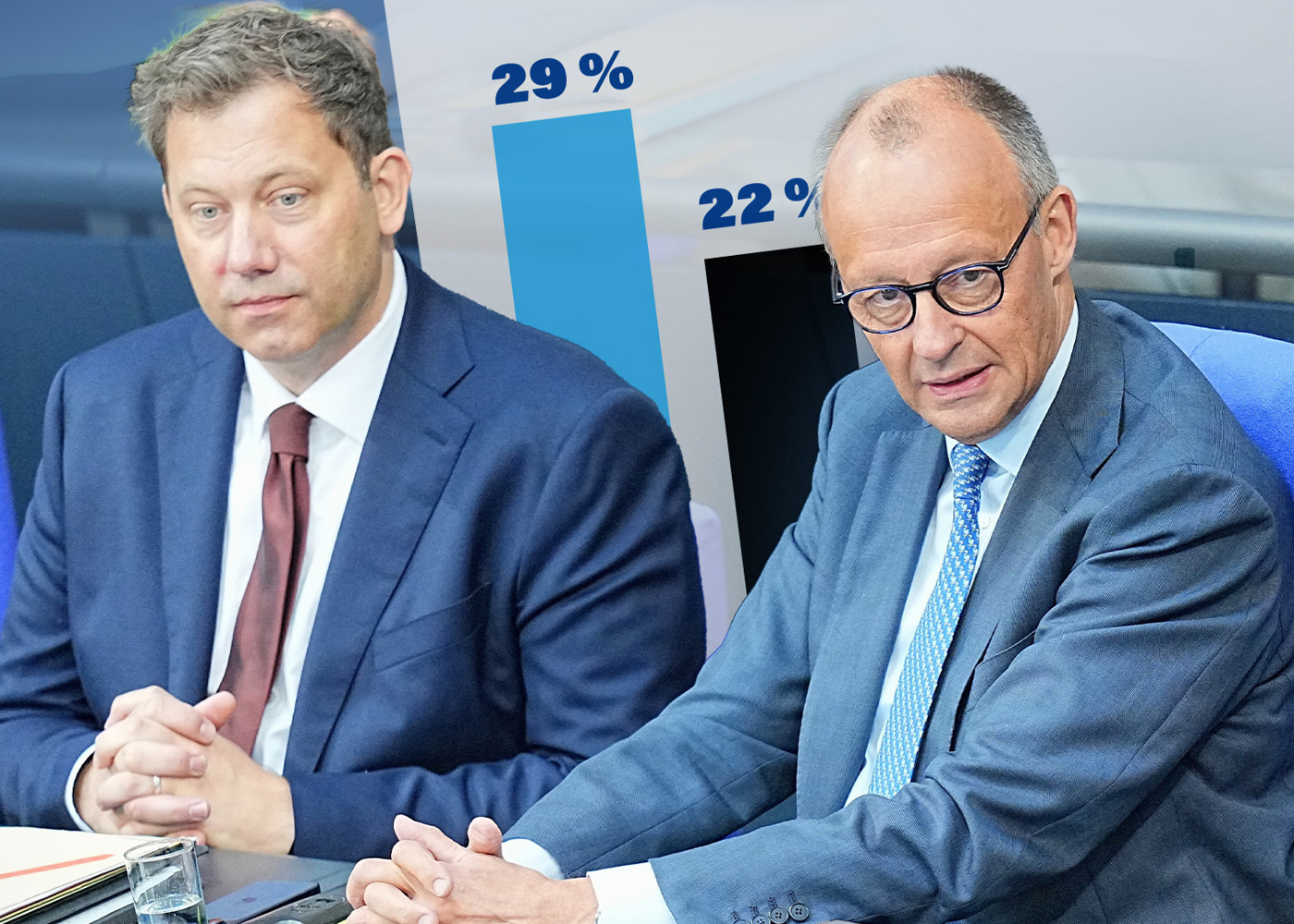

The Alternative for Germany has consolidated its position as the strongest political force in the country, holding steady at 29 percent in the latest polling data while the Christian Democratic Union trails by seven percentage points, according to Nius.
The INSA Sunday poll conducted for Bild shows the AfD maintaining its dominant position from the previous week. Meanwhile, the CDU/CSU alliance managed only a modest gain of one point, bringing them to 22 percent—still significantly behind the AfD’s commanding lead.
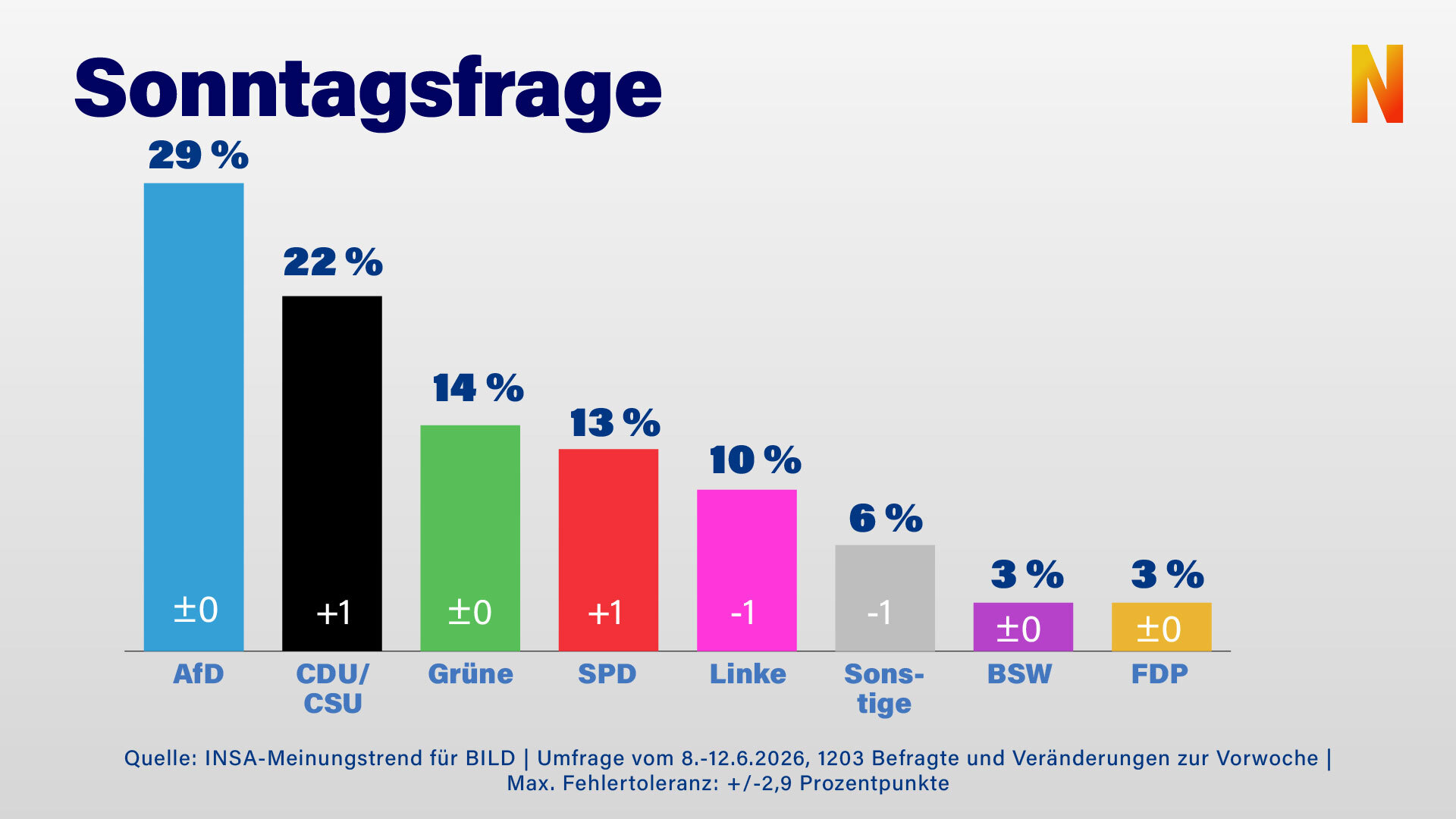
The Social Democrats also gained one percentage point to reach 13 percent, though they remain behind the Greens, who held steady at 14 percent. The Left party dropped one point to 10 percent in the latest survey.
Smaller parties continue to struggle for relevance in the current political landscape. The Sahra Wagenknecht Alliance remains stuck at three percent, while the Free Democratic Party also languishes at just three percent—well below the five percent threshold required for parliamentary representation. Other minor parties collectively account for six percent of voter intention.
The results paint a troubling picture for the federal government coalition. Combined, the SPD and Greens command only 27 percent support. Even a theoretical alliance with the Union would yield just 49 percent—hardly a comfortable governing majority.
Without AfD participation, forming stable governing coalitions would require politically difficult arrangements and unlikely partnerships. The mathematics of coalition building have become increasingly complex as traditional party structures fragment.
Union Struggles to Reclaim Conservative Leadership
For Friedrich Merz and the Christian Democrats, the persistent seven-point gap behind the AfD poses a fundamental challenge to their claim as the leading force in the conservative camp. The Union’s incremental one-point gain offers little comfort when measured against the AfD’s sustained dominance.
The question facing Merz remains whether the Union can restore its traditional position as the primary voice for center-right voters, or whether the gap with the AfD will continue to widen and solidify. The latest polling suggests the latter scenario remains a distinct possibility.
The small parties face an existential crisis. Both the FDP and BSW are polling at three percent, leaving them far from parliamentary viability. This concentration of support among the larger parties reflects a polarization of German politics that shows no signs of abating.
With information from Nius





