
America Becomes India’s Top Gas Supplier Amid Hormuz Crisis
The United States surpassed Qatar as India's top LNG supplier in May after Iranian attacks on Persian Gulf shipping disrupted traditional Middle Eastern energy routes.
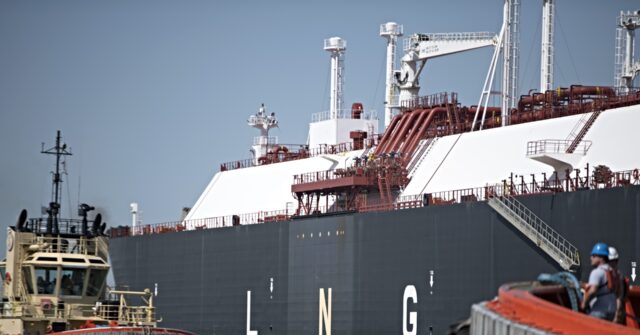

According to Breitbart News, America delivered approximately 900,000 tonnes of LNG to India last month, representing roughly 40 percent of the country’s total natural gas imports and triple the volume shipped just one month earlier. The dramatic increase fulfills predictions made by President Donald Trump during his February 2025 White House meeting with Indian Prime Minister Narendra Modi, when the American president expressed confidence that the United States would soon become a leading energy supplier to the South Asian nation.
Data compiled by the maritime analytics firm Kpler confirms the remarkable surge in American energy exports to India, which had historically relied on Middle Eastern suppliers due to proximity and lower transportation costs. Qatar previously dominated India’s LNG market with a 40 percent share as recently as this year, benefiting from short shipping routes that kept freight expenses manageable despite potentially higher base prices compared to American product.
The strategic calculus shifted dramatically following President Trump’s announcement of Operation Epic Fury on February 28, a military campaign targeting the Iranian terrorist regime’s ability to threaten regional stability. In retaliation, the Islamic Revolutionary Guard Corps launched attacks on more than a dozen neighboring countries and initiated a piracy campaign against commercial vessels transiting the Strait of Hormuz, through which approximately 60 percent of India’s LNG imports previously flowed.
The Iranian aggression forced QatarEnergy, the Gulf state’s national fossil fuel enterprise, to invoke force majeure clauses in March and cancel numerous contracts. The company specifically cited successive waves of Iranian attacks on its facilities as preventing fulfillment of contractual obligations to customers worldwide, including India.
Indian business sectors vulnerable to energy supply disruptions sounded alarms about potential economic damage. The National Restaurant Association of India issued warnings in March that cooking gas shortages could trigger catastrophic closures across the hospitality industry, with potential losses reaching $130 million daily for restaurants and hotels combined. The trade group emphasized that commercial operations depend predominantly on liquefied petroleum gas, making any supply interruption economically devastating.
Indian government officials moved to calm public concerns at the time, urging citizens not to panic while apparently securing alternative supply arrangements behind closed doors. Those efforts have now materialized in the form of substantially expanded American LNG imports.
The expansion of energy trade between Washington and New Delhi had been under discussion well before the current military operations began. During the February summit, Indian Foreign Secretary Vikram Misri indicated that bilateral energy purchases totaling approximately $15 billion in the previous year could climb to $25 billion in the near term, noting that the leaders focused considerably on increasing energy procurement from American sources.
The shift demonstrates how geopolitical instability in traditional energy corridors can rapidly reshape global supply chains, with American producers positioned to capitalize on disruptions affecting Middle Eastern competitors. Higher freight costs that previously discouraged Indian buyers from purchasing American LNG have become less relevant as security concerns and supply reliability take precedence over transportation expenses.
Maritime security conditions in the Strait of Hormuz remained fluid as U.S. Central Command continues operations against Iranian military capabilities in the region. The strategic waterway remains a critical chokepoint for global energy flows despite ongoing efforts by the Iranian regime to threaten commercial shipping.
With information from Breitbart News





